



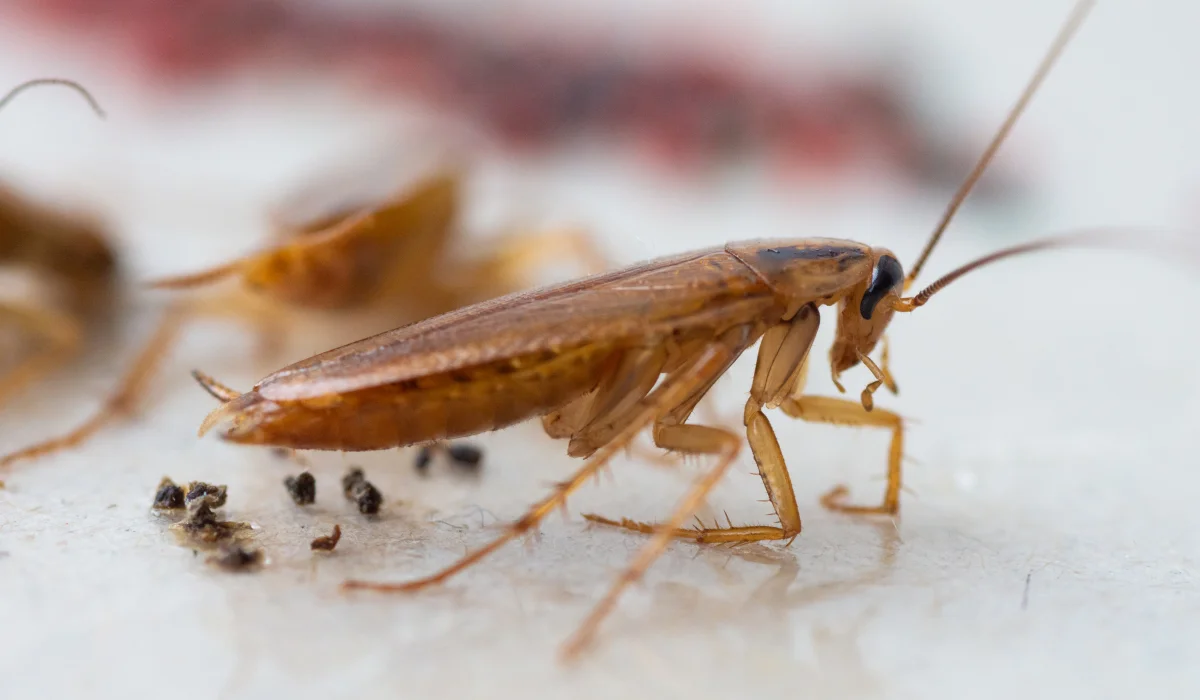
Cockroaches are good at staying hidden, but their droppings can give away where they have been. If you are asking what does cockroach poop look like, picture black pepper scattered inside a cabinet hinge, coffee-ground-like specks behind an appliance, or small dark pellets along a wall.
The appearance changes with the size and species of the cockroach. German cockroaches leave very small specks and stains. Larger roaches, including American cockroaches, leave more noticeable brown or black pellets.
That distinction is useful in Southern Louisiana, where homes may encounter German, American, Oriental, smokybrown, and other cockroach species. Once you know what to look for, you can compare the size, shape, and location of the droppings and decide whether you are seeing roach activity or signs of another pest.
Key Takeaways
- Small cockroach droppings can resemble black pepper, coffee grounds, or dark smudges.
- Larger cockroaches leave bigger brown or black pellets that may show ridges.
- Mouse droppings are generally larger, smoother, and more uniform than cockroach feces.
- In Southern Louisiana, the species and location of the droppings can help narrow down where the roaches are coming from.
- Recurring droppings after cleanup are a stronger sign of ongoing activity than one isolated speck.
What Does Cockroach Poop Look Like Up Close?
Cockroach poop is usually dark brown or black, but size is the easiest feature to compare. Droppings from small cockroaches can look like someone shook a pepper grinder over a shelf. You may see individual dots, clusters of specks, or dark marks in corners where roaches squeeze into tight spaces.
Larger cockroaches leave more obvious feces. Instead of dust-like specks, look for short pellets or small cylinders. Some have visible grooves along the sides. Think of the difference between a grain of ground pepper and a tiny dark seed. That size change can help you decide whether you are dealing with a small indoor species or one of Louisiana’s larger roaches.
Location adds another clue. Pepper-like dots around a refrigerator motor or cabinet hinge suggest something different from larger pellets near a garage, crawl space, or utility area. Droppings alone do not always identify the exact species, but the combination of appearance and location gives you a much better starting point.
What Does Cockroach Poop Look Like by Species?
German and American cockroaches create the clearest contrast. German cockroaches are about 1/2 to 5/8 inch long, so their droppings are correspondingly small. You may notice fine black dots around cabinet joints, drawer tracks, appliances, or areas close to food and water.
American cockroaches are much larger. Their droppings are easier to see and may look like short, dark pellets rather than pepper. Oriental and smokybrown cockroaches are also larger species, so their feces can be closer in appearance to American cockroach droppings than to the fine specks left by German roaches.
Use this chart as a visual reference when you cannot compare actual specimens side by side:
| Source | Picture It Like This | Typical Shape | Helpful Location Clues |
| German cockroach | Ground black pepper caught in a cabinet corner | Tiny dots, specks, or dark stains | Cabinet hinges, drawers, under sinks, behind refrigerators, around kitchen appliances |
| American cockroach | Small dark seeds or short grains | Larger pellets, sometimes with ridged sides | Garages, bathrooms, utility spaces, crawl spaces, and damp areas |
| Smokybrown cockroach | Small dark pellets rather than pepper dust | Pellet-like droppings | Attics, garages, roofline areas, and spaces near exterior openings |
| Oriental cockroach | Dark, compact pellets | Short, solid droppings | Drains, garages, crawl spaces, and other damp areas |
| Mouse | Dark rice grains | Smoother, more uniform pellets that often taper | Along walls, near stored food, inside cabinets, and along travel routes |
This comparison is more useful than color alone. Roach and mouse droppings can both appear dark brown or black, so look at size, texture, shape, and where you found them before making a call.
Roach Droppings vs. Mouse Droppings
Roach droppings and mouse droppings can look similar when you find only a few. The easiest difference is usually scale. Mouse feces tend to be larger and more uniform, while German cockroach feces look more like pepper flakes or coffee grounds.
Large-roach droppings require a closer look. They can overlap with small mouse droppings in color and general shape, but cockroach feces may show grooves or ridges. Mouse droppings are usually smoother and often taper toward the ends.
The pattern around the droppings can help, too. A scatter of fine specks tucked into cabinet hinges or appliance gaps fits cockroach activity. Larger, repeated pellets following a wall or appearing near damaged food packaging can point toward rodents. If the evidence does not match cleanly, identification should come before treatment.
Why You See Cockroach Droppings in Southern Louisiana Homes
Southern Louisiana supports several cockroach species, including German, American, Oriental, smokybrown, Australian, brown-banded, Asian, and Louisiana woods cockroaches. Because those species differ in size and habits, not every pile of roach droppings will look the same.
Humidity also changes where you are likely to notice activity. Kitchens and bathrooms provide water indoors, while garages, crawl spaces, drains, roof areas, and utility spaces can offer damp shelter to larger species. After wet weather, it is worth paying closer attention to those transition areas between the outside and the home.
German cockroaches are a different problem because they can establish themselves indoors around food, warmth, and moisture. Their activity is less dependent on outdoor conditions, which is one reason fine droppings around kitchen appliances deserve attention even when you have not seen a live roach.
Where to Find Cockroach Droppings
Cockroach feces usually collect close to the places where roaches rest, feed, or find water. In a kitchen, check cabinet corners, drawer tracks, pantry shelves, the space under the sink, and the narrow gaps behind a refrigerator or stove.
Bathrooms, laundry rooms, and utility areas are also worth checking. Larger roaches may leave evidence around garages, crawl spaces, plumbing openings, floor drains, or other areas with regular moisture.
Do not stop at the center of a shelf or floor. Look along edges. Roaches often travel where two surfaces meet, such as the back corner of a cabinet, the seam beside an appliance, or the line where a wall meets the floor.
What the Location of the Droppings Can Tell You
Droppings become more useful when you look at what surrounds them. Fine specks beside a refrigerator compressor, for example, point you toward a warm, sheltered area close to food. Larger pellets near a garage threshold or attic opening suggest a different route into the home.
That same evidence guides a professional inspection. LaJaunie’s standard inspection process includes checking the interior when needed, along with attics, garages, exterior windows, the base of the home, cracks, crevices, and other access points. The technician is looking for a pattern, not just one dropping.
Species identification matters because the response changes with the roach. LaJaunie’s service protocols treat German cockroach problems differently from larger species because German roaches require closer attention to their indoor breeding cycle and hiding areas. That is why the size and placement of the droppings can be useful before any treatment begins.
Why Cockroach Droppings Matter
Cockroach droppings are worth cleaning because roach feces, saliva, and body material can contain allergens.
Aside from being unsanitary, cockroach droppings carry serious health risks. As these pests scurry across your home, they leave behind feces that contain allergens and bacteria. This can lead to allergic reactions, trigger asthma attacks, especially in kids, and even spread harmful pathogens like Salmonella and E. coli.
This isn’t just a gross nuisance. It’s a public health issue. Droppings are also a telltale sign of an active infestation. Roaches don’t travel far from where they eat or nest, so where there’s poop, there are likely more nearby.
The Link Between Droppings and Roach Infestations
Cockroach droppings don’t just signal a roach infestation; they also contribute to it. Roaches communicate through pheromones in their feces, which can attract other roaches to the same location. This behavior helps explain why infestations tend to cluster in specific areas of the home.
Ignoring droppings can lead to larger, more stubborn infestations over time. And even if you clean up what you see, the underlying problem won’t go away unless the source is eliminated.
How to Clean Up Cockroach Droppings Safely
Cleaning up cockroach feces requires more than just a broom and dustpan. You’ll want to do it carefully to reduce your exposure to allergens and bacteria. Here’s how:
1. Wear disposable gloves and a mask to avoid inhaling particles.
2. Vacuum up dry droppings using a vacuum with a HEPA filter.
3. Wipe down the area with hot, soapy water.
4. Follow up with a disinfectant spray to sanitize the space.
This process doesn’t just make the area safer; it also removes the pheromone trail that attracts other cockroaches. Once the area is clean, check it again over the next several days. Fresh droppings appearing in the same place give you information that a one-time cleanup cannot.
How to Prevent Future Cockroach Activity
Start with the basics that remove what roaches need. Store food in sealed containers, clean crumbs and grease from kitchen surfaces, wash dishes regularly, and keep garbage containers closed.
Water matters just as much. Repair leaks below sinks, check moisture around appliances, clear clogged gutters, and address standing water near the home. In Southern Louisiana, damp areas can stay attractive to cockroaches for long periods.
Seal gaps around doors, windows, plumbing penetrations, and other entry points where practical. If you are already dealing with an active roach problem, avoid repeatedly applying store-bought sprays throughout the same areas. Heavy overuse of these products can interfere with bait-based treatment strategies.
When Recurring Droppings Point to an Active Roach Problem
If you clean an area and dark specks appear again, the more useful question is where the roaches are hiding. Recurring feces around appliances, cabinets, plumbing, or other sheltered areas can justify a closer inspection, especially when you also find egg cases or live roaches.
A technician can use the size and location of the droppings along with other evidence to identify the likely species and inspect nearby hiding areas. That is more useful than treating every dark speck as the same pest problem.
When to Call a Professional Pest Control Service
One cockroach dropping does not tell you the size of a pest problem. Repeated droppings, egg cases, live cockroaches, or new evidence after cleaning make a stronger case that the source is still active.
German cockroach activity deserves particular attention because these roaches can live and reproduce indoors. Larger species may require more focus on moisture, exterior access, garages, attics, or other routes into the structure.
If you are in Southern Louisiana and cannot tell what left the droppings, a professional inspection can help separate a cockroach issue from rodent activity or another pest problem. The goal is to identify what is there before deciding how to address it.
Making the Right Choice After Finding Cockroach Droppings
Learning what does cockroach poop look like gives you a practical way to read the evidence in your home. Fine pepper-like specks often fit smaller roaches, while larger dark pellets can come from American, Oriental, smokybrown, or other large species. Mouse droppings are generally larger and smoother, so shape and scale matter.
Clean the area, remove food and moisture sources, and check the same spot again. If the droppings return or you also find live roaches or egg cases, LaJaunie’s Pest Control can inspect the problem. We specialize in identifying and treating all types of cockroach infestations, from German cockroaches to American and Oriental species. Our cockroach control services are designed specifically for homes in Southern Louisiana and backed by a retreat guarantee.
We start with a thorough inspection to determine what cockroach species you’re dealing with, where they’re hiding, and how bad the infestation is. Then, we tailor a treatment plan that includes baiting, sealing entry points, and targeting breeding areas. Our goal isn’t just to get rid of the current infestation; it’s to prevent future ones from happening.
If you’ve spotted cockroach droppings or any other signs of a pest problem, don’t wait. The longer you delay treatment, the harder it becomes to manage.
Cockroach Poop: FAQs
What does cockroach poop look like?
Cockroach poop may look like black pepper, coffee grounds, dark smears, or small brown-to-black pellets. German cockroaches leave very fine specks, while larger species such as American cockroaches leave more noticeable droppings. Size, shape, and location can help you narrow down the source.
Roach droppings vs. mouse droppings: how can you tell the difference?
Mouse droppings are generally larger, smoother, and more uniform than cockroach droppings. German cockroach feces look more like pepper or coffee grounds. Droppings from larger roaches may resemble small pellets but can have ridged sides rather than the smoother shape common with mouse feces.
Is roach poop dangerous?
Cockroach droppings contain proteins that can act as allergens and may trigger asthma symptoms in sensitive people. Avoid stirring up dried feces while cleaning, wear gloves, wash the affected surface, and watch for fresh droppings that may indicate continuing cockroach activity.