



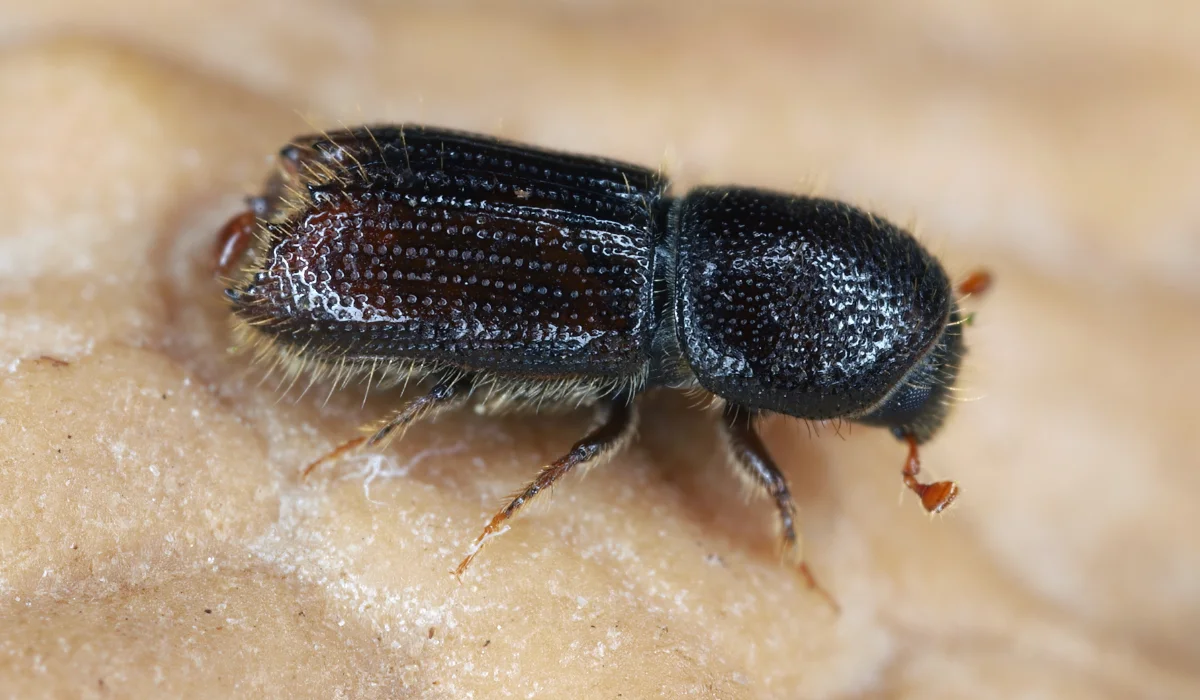
A Louisiana bark beetle usually develops beneath tree bark rather than inside finished flooring, trim, or furniture. That makes the location of the insect one of your best clues. A beetle near stacked firewood points you in one direction, while insects repeatedly emerging from hardwood flooring point you somewhere else.
South Louisiana also gives homeowners plenty of reasons to pay attention to tree health. Hurricanes, broken branches, dry periods, root damage, and tree removal can leave stressed or freshly cut wood around a property. Some bark beetles use exactly that kind of material.
Knowing the difference between bark beetle activity and other wood damage can keep you from treating the wrong pest. Here is where to look, what signs matter, when an indoor sighting needs a closer inspection, and when to get professional beetle control.
Where a Louisiana Bark Beetle Usually Lives
A Louisiana bark beetle is far more closely associated with trees than with finished household wood. Adults enter suitable bark and form galleries in the tissue underneath. Eggs and developing larvae remain protected there while they feed and grow.
Southern pine beetles are among the better-known bark beetles in the Southeast. According to the USDA Forest Service, an adult is only about 1/8 inch long. A beetle that small can be difficult to spot even when the tree shows obvious changes.
Different bark beetles use different parts of a tree. Some concentrate on trunks, while others favor limbs, treetops, weakened trees, or recently cut material. That is why identifying the source is more useful than judging the insect by size or color alone.
| Where Bark Beetles Occur | What You May Notice | Why It Matters |
| Beneath tree bark | Galleries, loose bark, boring material | Many bark beetles spend most of their development here |
| Pine trunks | Small bark beetle holes, bark changes, fading foliage | Several important Southern bark beetles attack pine trees |
| Limbs and treetops | Branch dieback or isolated decline | Some species favor smaller wood |
| Freshly cut wood | Exit holes or emerging adults | Beetles may remain after a tree or limb is cut |
| Damaged or weakened trees | Activity near injured bark | Tree stress can make some material more suitable |
Why Stressed Trees Need a Closer Look
A tree already dealing with damage may have fewer defenses against insects. Broken limbs, root injury, lightning, drought, construction work, and storm damage can all leave a tree under stress.
Those conditions are familiar in South Louisiana. A pine can survive a storm and still have damaged roots or branches. Heavy equipment used during repairs can compact soil, while a later dry spell may add another layer of stress.
None of those conditions confirms a bark beetle infestation. They simply tell you which trees deserve attention when beetles start appearing nearby.
Where Bark Beetles Hide Around South Louisiana Homes
Bark beetles around a house often trace back to bark-covered wood nearby. Stored firewood, fallen branches, dead trees, cut logs, and tree-removal debris are better places to begin your search than finished walls or furniture.
A Louisiana bark beetle can also emerge after infested wood has been moved. That is one reason a homeowner may suddenly notice beetles in a garage or near a fireplace even though the insects developed outside.
Firewood and Cut Logs
Firewood is one of the first places to check when beetles appear indoors. A log cut from an infested tree may still contain developing insects beneath its bark, and adults can emerge after the wood has been stacked.
Bringing stored firewood indoors moves that material directly into the living space. A few beetles near the fireplace can therefore come from the logs rather than the house itself.
Freshly cut wood deserves the same attention. Logs, tree sections, and bark-covered pieces left after pruning or removal may still contain bark beetle activity.
Fallen Limbs and Storm Debris
Strong winds and tree work can leave piles of limbs around a South Louisiana property. When bark remains attached, the material may provide habitat for certain bark beetles.
Check debris that has been sitting near the garage, fence, porch, or foundation. Small holes, loose bark, boring material, and galleries beneath the bark can help narrow down the source.
Garages, Sheds, and Porches
Garages and sheds often contain firewood, logs, unfinished wood, branches, or bark-covered decorations. Any of these can bring bark-dwelling insects closer to the house.
| Area | Possible Source | What to Inspect |
| Fireplace | Firewood brought indoors | Bark, holes, and loose material around logs |
| Garage | Stored firewood or bark-covered wood | Repeated beetle sightings near storage |
| Shed | Cut limbs or logs | Fresh holes and damaged bark |
| Porch | Nearby trees or firewood piles | Beetles on screens, walls, or windows |
| Window | Adult beetle entering or emerging indoors | Whether insects keep appearing in the same room |
One beetle tells you very little. Several appearing in the same place over a few days give you a much stronger lead.
Signs of Bark Beetles and Damage
The wood often tells you more than the beetle itself. Common signs of bark beetles include small holes in bark, loose sections of bark, boring material caught in crevices, and galleries beneath the surface.
Trees may also show decline. Depending on the pest and tree condition, you may notice fading foliage, dying branches, or sections of the canopy changing before the entire tree is affected. Those symptoms can have other causes, so they should not be used alone to diagnose a bark beetle infestation.
What Beetle Galleries Can Tell You
Gallery patterns are one of the more useful signs because different bark beetles create different paths beneath tree bark. Southern pine beetles are known for winding galleries. Engraver beetles create another pattern and may favor different portions of a pine.
Three major types of pine engraver beetles are found in the South. Their behavior differs, including the size and part of the tree they commonly use.
That matters when you inspect bark beetle damage. Activity limited to a dead branch is a different situation from galleries spreading through the trunk of a living pine.
Bark Beetles vs. Other Wood-Boring Pests
A small brown insect near wood is easy to misidentify. Bark beetles, powderpost beetles, and termites can all lead a homeowner to think the house itself is being damaged, but they do not behave the same way.
Bark beetles are strongly associated with trees and bark. Powderpost beetles are wood-boring beetles that can infest seasoned wood, depending on the species involved. Termites are not beetles and leave a different set of clues.
| Sign | Bark Beetles | Powderpost Beetles | Termites |
| Closely associated with tree bark | Yes | No | No |
| Often found around living, dying, or recently cut trees | Yes | Usually no | No |
| Can affect seasoned wood inside a home | Not the usual concern | Yes, depending on species | Yes |
| Small exit holes | Yes | Common | Not a main sign |
| Galleries beneath bark | Common | No | No |
| Fine powder near finished wood | Varies | Common clue | Different evidence |
| Tree condition matters | Yes | Usually no | No |
When Wood Damage Inside the House Matters More
Repeated insect activity from flooring, beams, furniture, trim, or other finished wood changes the investigation. That kind of evidence may point toward powderpost beetles or another wood-destroying insect rather than bark beetles.
Look at exactly where the holes begin and what material is collecting underneath. Beetles emerging from a bark-covered log and beetles coming from hardwood flooring should not be treated as the same problem.
Why South Louisiana Conditions Affect Bark Beetle Activity
Tree stress is common across South Louisiana because storms, saturated soil, construction, and dry periods can affect the same property at different times of year. These conditions do not create bark beetles, but they can influence the condition of trees and freshly damaged wood around your home.
Hurricanes can snap limbs, strip bark, or disturb roots. Tree removal leaves cut logs and stumps behind. Construction near a driveway or foundation can injure roots or compact soil around established trees.
The Texas A&M Forest Service connects engraver beetle activity with stressed and recently damaged pines. That makes nearby tree condition relevant when bark beetles keep turning up around Louisiana homes.
Check Nearby Trees Before Assuming the House Is Infested
Begin with the trees closest to the home, driveway, firewood stack, or garage. Look for dead branches, loose bark, fresh storm damage, recent cuts, or sections of foliage that have begun to decline.
Then inspect dead trees, logs, and woody debris that have not been removed. A source only a few feet from the building can make an outdoor bark beetle problem look like an indoor infestation.
Tree decline has many causes, including disease, root problems, weather injury, and other pests. When the tree itself is the main concern, a certified arborist can evaluate its health and safety.
What to Do When a Louisiana Bark Beetle Keeps Appearing
Start with the source rather than reaching for a treatment. Check stored firewood, recently cut logs, fallen limbs, dead trees, storm debris, and bark-covered material around the property. If the beetles appear near one of those areas, you have a useful clue about where they are developing.
Wood damage inside the house deserves a different response. Repeated holes in flooring, trim, furniture, beams, or structural wood may point to powderpost beetles or another wood-boring pest. An inspection can separate a bark beetle problem from insects that actually infest seasoned wood.
LaJaunie’s Pest Control provides beetle control and wood-destroying insect inspections throughout South Louisiana. If beetles keep appearing indoors or you cannot trace unexplained wood damage to an outdoor source, contact LaJaunie’s Pest Control to schedule an inspection. Finding out exactly what is causing the activity is the best place to start.