Tarantulas aren’t commonly found in Louisiana, but several large, hairy spiders living here can easily be mistaken for one. If you’ve spotted what looks like a tarantula in Louisiana, there’s a good chance you’re looking at a wolf spider or fishing spider instead.
Maybe you discovered one beneath a flowerpot or watched it race across your garage floor. True tarantulas live in parts of the southern United States, but their status as established wild residents of Louisiana isn’t confirmed by the sources used here. Knowing how to identify these spiders, understand their bite risks, and make your property less inviting can help you decide what to do next.
Key Takeaways
- True tarantulas aren’t common Louisiana spiders. Wolf spiders and fishing spiders are more familiar local lookalikes, and their appearance can lead to mistaken identification.
- Most encounters with large spiders don’t result in serious harm. Bites can cause pain and swelling, but severe symptoms or exposure to irritating hairs in the eyes require medical attention.
- Prevention starts around your home’s exterior. Adjusting outdoor lighting, removing clutter, and sealing entry points can reduce spider activity. Repeated indoor sightings may call for professional pest control.
Are There Tarantulas in Louisiana?
True tarantulas are large, heavy-bodied spiders with thick legs and a hairy appearance. Many North American species live in underground burrows and hunt insects or other small animals, rather than spinning large webs to catch prey.
The Texas brown tarantula is a well-known species in the south-central United States. However, its presence in nearby states doesn’t establish that it has a breeding population in Louisiana. Without confirmed local records, it’s misleading to describe tarantulas as common throughout the state or claim that they never occur here.
Where Do True Tarantulas Usually Live?
According to Encyclopaedia Britannica’s overview of tarantulas, these spiders occur in warm regions around the world, including parts of the United States. Their habitats range from dry ground and underground burrows to vegetation and trees, depending on the species.
For Louisiana homeowners, the spider’s location offers useful clues. A large spider running across a driveway or hiding behind a garage shelf isn’t necessarily a tarantula. Local wolf spiders and fishing spiders are worth considering first.
Large Spiders in Louisiana That Look Like Tarantulas
Several Louisiana spiders have the size and coloring that make homeowners think they’ve found a tarantula. Wolf spiders and fishing spiders are among the most recognizable examples, although their bodies and habits differ. Learning those differences can save you from mistaking a common yard visitor for an unfamiliar species.
Wolf Spiders
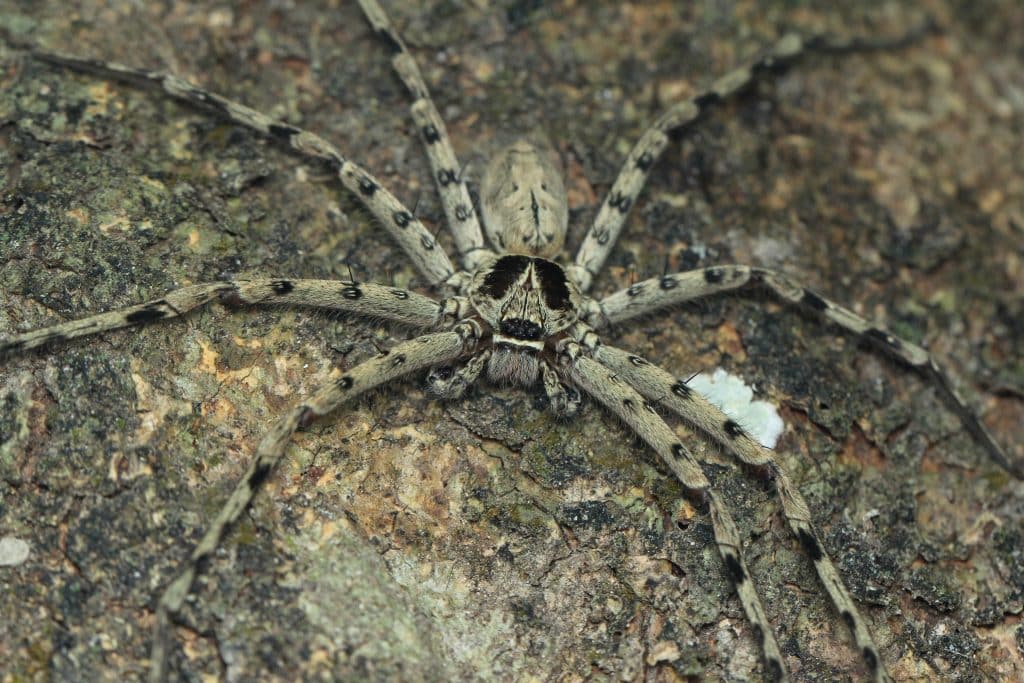
Wolf spiders have strong legs, stocky bodies, and brown or gray markings that help them blend into grass, soil, and fallen leaves. They hunt insects on the ground instead of relying on large prey-catching webs.
You’ll often find wolf spiders around gardens, garages, and landscaping materials. Some grow large enough to resemble small tarantulas. Female wolf spiders also carry their young on their backs, which is a useful identification clue.
Fishing Spiders

Fishing spiders have long legs and relatively flattened bodies. They’re often found near ponds, drainage ditches, damp vegetation, and tree trunks.
Some species can move across the water’s surface while hunting. If you find a large spider on a tree near a backyard pond in Houma or Thibodaux, a fishing spider is one possibility.
How to Tell the Difference
| Feature | Tarantula | Wolf Spider | Fishing Spider |
| Body shape | Heavy, thickset | Stocky, often hairy | Usually flatter |
| Legs | Thick and sturdy | Strong, built for running | Long and widely spread |
| Movement | Often deliberate | Fast ground hunter | Fast climber, sometimes moves on water |
| Common shelter | Burrows and ground cover | Leaf litter, rocks, and garages | Trees and damp areas |
| Identification clue | Heavy body and species-specific features | Females may carry young on their backs | Frequently found near water |
These features aren’t enough to identify every spider with certainty. If you can’t tell what you’ve found, take a clear photograph from a safe distance rather than attempting to pick it up.
Are Tarantula Bites Dangerous?
Tarantulas have fangs and venom that they use to capture prey. They can bite when threatened, especially if someone tries to handle them or accidentally traps them against their skin.
Bites from North American tarantulas generally cause localized pain, redness, or swelling rather than severe illness. Some tarantulas also release tiny defensive hairs that irritate the skin. These hairs can be especially troublesome if they enter someone’s eyes.
What to Do if a Tarantula Bites You
The MedlinePlus guide to tarantula spider bites describes bite symptoms, irritation from defensive hairs, and when medical care may be needed. The first step is to clean the affected area and avoid further contact with the spider.
| Situation | What You Should Do |
| Mild pain or redness | Wash with soap and water |
| Local swelling | Apply a cold compress wrapped in a towel |
| Worsening symptoms | Contact a healthcare professional or Poison Control at 1-800-222-1222 |
| Irritating hairs in the eyes | Avoid rubbing and seek prompt medical evaluation |
| Difficulty breathing or throat swelling | Call 911 immediately |
Never assume a bite came from a tarantula simply because the spider looked large and hairy. Louisiana also has black widow and brown recluse spiders, whose bites can cause more serious health problems. If you’re unsure which spider bit you, seek medical advice rather than attempting to identify it from the bite mark.
How to Keep Large Spiders Off Your Louisiana Property
Spiders look for places where they can find insects and shelter. Around Louisiana homes, those conditions often exist near outdoor lights, overgrown landscaping, garages, and storage areas.
You don’t need to remove every outdoor spider to protect your living space. Focus on reducing hiding places and preventing spiders from entering the areas your family uses most.
Change Your Outdoor Lighting
Porch lights attract flying insects at night, and spiders may gather nearby to hunt them. This can lead to more spider activity around doorways, windows, and patios.
Consider motion-activated fixtures instead of leaving exterior lights on for hours. Warmer-colored bulbs and shielded fixtures may also reduce the number of insects attracted to some outdoor lights.
Remove Clutter and Hiding Places
Old boards, stacked flowerpots, leaf piles, and firewood stored against the house give spiders places to shelter. Cluttered garages and sheds offer similar conditions, particularly when stored items remain untouched for months.
Move firewood away from exterior walls and clear unnecessary debris near foundations. Trim vegetation touching the house, organize storage spaces, and check beneath outdoor furniture before moving it.
Raised Louisiana homes deserve attention underneath the structure, where stored materials and shaded spaces can provide shelter.
Seal Gaps Around Your Home
Spiders can enter through openings beneath doors, damaged window screens, and gaps around pipes or utility connections. A worn garage door seal can also leave an opening along the floor.
Check your weatherstripping, replace torn screens, and seal suitable cracks around your home’s exterior. The University of California Integrated Pest Management Program identifies exclusion, cleaning, and reducing hiding places as useful prevention measures.
Sealing these openings also helps keep out the insects spiders feed on, reducing another reason for them to wander indoors.
When to Call a Spider Control Professional
Finding one large spider outdoors doesn’t necessarily mean you have an infestation. Spiders help control insect populations, and many stay outside without causing problems.
Professional spider control becomes worth considering when you repeatedly find spiders indoors, notice ongoing activity near entrances, or suspect a black widow or brown recluse. A technician can help identify the spider and determine why the activity continues.
What Can Professional Spider Control Address?
A proper inspection goes beyond removing visible spiders. It looks at entry points, sheltered areas, accessible webs, and insect activity that may be drawing spiders closer to your home.
LaJaunie’s Pest Control includes spiders in its Healthy Home pest control program. Technicians inspect areas such as foundations, doors, windows, garages, and other potential problem spots. Services can include targeted treatments and removing accessible spider webs when appropriate.
Keep Unwanted Spiders Away From Your Louisiana Home
Finding a spider that resembles a tarantula in Louisiana doesn’t mean you’ve discovered a true tarantula. Wolf spiders and fishing spiders share some of the same physical traits, but their behavior and habitats can help distinguish them. Identifying the spider correctly is the first step toward deciding whether you need to act.
Outdoor lighting changes, clutter removal, and sealing entry points can make your home less attractive to spiders. If you continue seeing them indoors, a professional inspection can help locate the source of the activity and identify areas that need attention.
Contact LaJaunie’s Pest Control if unwanted spiders keep appearing around your home. Serving Thibodaux, Houma, New Orleans, Baton Rouge, and surrounding communities, LaJaunie’s offers professional spider control. With trained technicians, targeted service, and a retreat guarantee for covered pest issues, you can address recurring problems with a plan tailored to your property.
Tarantula in Louisiana: FAQs
Are tarantulas native to Louisiana?
Tarantulas aren’t generally recognized as common spiders around Louisiana homes. Although true tarantulas occur in parts of the southern United States, their native distribution within Louisiana needs confirmation from reliable local records. Many apparent sightings involve other large spiders, including wolf spiders and fishing spiders, that can look similar.
What is the biggest spider you might find in Louisiana?
Some fishing spiders and wolf spiders are among the largest spiders homeowners encounter in Louisiana. Fishing spiders can appear especially large because of their long legs. The exact size varies by species, and leg span alone isn’t a reliable way to identify a spider or determine whether it’s dangerous.
Are wolf spiders dangerous to humans?
Wolf spiders can bite if they’re trapped against your skin or handled, but they generally avoid people. Their bites usually cause temporary pain, redness, or swelling. Clean the area and watch for worsening symptoms. Seek medical advice if you develop a concerning reaction or can’t identify the spider involved.
How do you keep spiders away from your porch?
Reduce the insects gathering around porch lights by using motion-activated fixtures and turning off unnecessary lighting. Keep flowerpots, stored materials, and leaves from collecting near entrances. Check your door sweep and window screens, too. These changes help reduce spider activity without requiring you to treat every spider outdoors.
Does pest control help with large spiders?
Professional pest control can help reduce recurring spider activity by identifying hiding places, inspecting entry points, removing accessible webs, and applying targeted treatments when appropriate. Results depend on the species and conditions around your property. Regular maintenance and exclusion work remain useful alongside professional spider control.