

You notice something small and dark on your child’s leg after an afternoon in the yard. Or your dog comes inside from the back fence line and you find a tick buried in its fur. These moments happen to Gonzales families more often than people expect. Ticks are not a problem reserved for hunters or hikers. Louisiana’s warm, humid climate keeps them active well beyond the summer months, and Ascension Parish’s mix of green yards, bayou edges, and suburban tree cover gives them plenty of habitat close to home. Knowing which illnesses ticks carry in this part of Louisiana, how to spot early symptoms, and what you can do around your property puts you in a better position to respond before things get serious.
Key Takeaways
- Ticks in Louisiana can spread serious illnesses, and symptoms often show up days or weeks after a bite, which makes it easy to miss the connection.
- Several tick species found in and around Gonzales are active for most of the year and can be picked up right in your own backyard.
- Keeping your yard maintained and treating your clothing before going outside lowers your risk, but a professional yard treatment reaches the spots that routine lawn care misses.
Tick-Borne Diseases That Affect Louisiana Residents
Rocky Mountain Spotted Fever
Rocky Mountain spotted fever (RMSF) is the tick-borne illness of greatest concern in Louisiana. The Louisiana Department of Health tracks it closely because of rising probable case counts and how fast the illness can progress without treatment. Early symptoms include fever, severe headache, and muscle pain. A spotted rash often appears a few days in but is not always present early, making RMSF easy to miss at first. Early antibiotic treatment is effective; delayed treatment is not.
Ehrlichiosis
Ehrlichiosis is primarily transmitted by the lone star tick. Symptoms, including fever, headache, chills, and fatigue, typically appear within one to two weeks of a bite. Most cases are mild to moderate, though severe illness is possible, particularly in older adults and people with compromised immune systems. Many patients do not recall a tick bite at all, which makes the diagnosis harder if a doctor isn’t already thinking about tick exposure.
Alpha-Gal Syndrome
Alpha-gal syndrome (AGS) is a growing concern across the Gulf South. A bite from the lone star tick can trigger an immune reaction to a sugar molecule called alpha-gal, found in red meat and dairy. Reactions range from hives to more serious responses and usually appear two to six hours after eating, not immediately. The link to a tick bite is rarely obvious, and symptoms can take weeks or even months to emerge, so AGS often goes undiagnosed for a long time.
Rickettsia parkeri Spotted Fever
Carried by the Gulf Coast tick, this spotted fever illness produces symptoms similar to but generally milder than RMSF, including fever, headache, and a dark scab-like lesion at the bite site. Gulf Coast ticks are most prevalent along coastal Louisiana parishes and bayou corridors, so residents who spend time fishing or hunting in those environments have a greater chance of contact.
A Note on Lyme Disease
Lyme disease is the most commonly diagnosed tick-borne illness nationally, but confirmed cases in Louisiana are rare. The Louisiana Office of Public Health links most in-state cases to travel from endemic regions in the Northeast and Upper Midwest. If you’ve recently spent time in those areas and develop symptoms after a tick bite, tell your doctor.
Ticks Found in the Gonzales Area
Gonzales sits in the heart of Ascension Parish, a landscape shaped by bayous, mature tree lines, and suburban neighborhoods that back up against wooded corridors. Four tick species are regularly encountered here.
Lone Star Tick
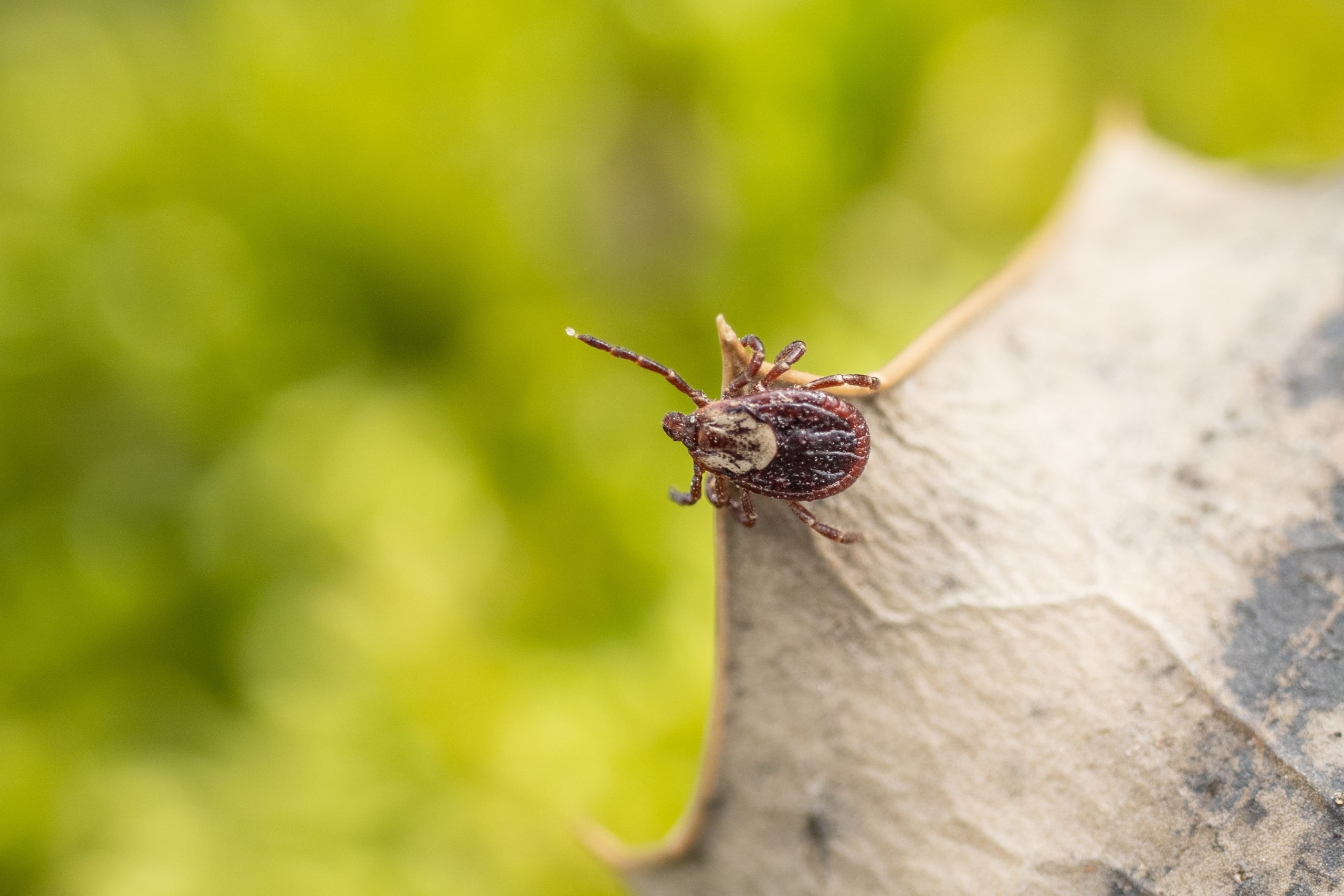
The lone star tick is the most abundant tick species in Louisiana’s wooded areas. Unlike most ticks, lone star tick adults actively seek out hosts rather than waiting on vegetation for a host to brush past. They are associated with ehrlichiosis and alpha-gal syndrome.
American Dog Tick
The American dog tick is a primary vector of Rocky Mountain spotted fever and is common in open grassy areas and along the transition zones between lawns and wooded spaces, the kind of edge habitat typical of many Ascension Parish neighborhoods.
Gulf Coast Tick
The Gulf Coast tick is most prevalent in coastal Louisiana parishes and along bayou corridors. It can transmit a spotted fever illness similar to Rocky Mountain spotted fever but generally milder.
Brown Dog Tick
The brown dog tick is unusual in that it can complete its entire life cycle indoors. That makes it a particular concern for households with dogs. Once it gets inside, it can establish itself without any further outdoor exposure.
Where Gonzales Residents Are Most Likely to Encounter Ticks
Ticks don’t chase you down. They perch on low vegetation (grass blades, shrubs, leaf litter) with their front legs extended, waiting for a warm body to brush past. The backyard is one of the most common pickup sites, especially where a maintained lawn meets a wooded or brushy edge. Other common points of contact include:
- Walking dogs in parks or along trails with mature tree cover and dense ground vegetation
- Yard maintenance in areas with leaf litter, tall grass, or overgrown shrubs near the property line
- Children playing at the edges of yards that adjoin wooded lots or undeveloped land
- Outdoor activities in grassy or brushy areas, especially near water or wooded corridors
Pets add another path indoors. Dogs and cats that go outside can carry ticks in without anyone noticing, and brown dog ticks are especially capable of settling in once they’re inside a home.
How to Spot a Tick Bite and When to See a Doctor
Most tick bites are painless. After time outdoors, check the full body: behind the knees, around the waistband, in the hairline, and in the groin. Ticks at the nymph stage can be as small as a poppy seed, so look carefully.
If you find an attached tick, remove it promptly. The CDC recommends fine-tipped tweezers, gripping as close to the skin as possible, and pulling upward with steady even pressure. Do not twist or jerk. Avoid petroleum jelly, heat, or nail polish, as these can cause the tick to release more fluid into the bite. Clean the area with rubbing alcohol or soap and water once it’s out.
See a doctor if you develop fever, rash, headache, or flu-like symptoms within a few weeks of a tick bite or time spent in tick habitat. Not everyone remembers being bitten, so mention any recent outdoor activity even when there is no visible bite.
How to Reduce Tick Exposure Around Your Home
Personal protection and yard management work together. Treating clothing and gear with 0.5% permethrin and applying EPA-registered repellents containing DEET, picaridin, or oil of lemon eucalyptus to exposed skin are among the most reliable personal protective measures you can use.
For your yard, a few consistent habits reduce the conditions ticks need to survive close to the house:
- Keep grass mowed and trim vegetation along fences and yard borders
- Clear leaf litter, brush piles, and debris from yard edges
- Create a wood chip or gravel buffer between your lawn and any adjacent wooded area
- Stack firewood in a dry, sunny spot away from the house
- Ask your veterinarian about tick prevention products for pets that go outdoors
None of these steps eliminates exposure on its own, particularly in a humid climate where ticks stay active for most of the year, but together they meaningfully shrink the odds.
Tick-Borne Diseases Awareness: Bottom Line
Ticks in Gonzales are not a seasonal problem you can wait out. The climate keeps them active through most of the year, the species present here can transmit serious illnesses, and symptoms often arrive days or weeks after a bite with no obvious connection to one. Routine yard care and personal repellents reduce your exposure, but they don’t reach the shaded corners, fence lines, and lawn edges where ticks concentrate.
Since 2008, LaJaunie’s Pest Control has helped homeowners across southeast Louisiana manage pest problems, including tick activity in Gonzales. Our tick control service starts with a free inspection for tick hotspots before treatment, so the service can focus on the areas where ticks are most active. Outdoor treatment combines a fogger with moisture-activated granules. Indoor treatment is added when needed, and a free two-week follow-up is included. Customers enrolled in the Healthy Home Protection Program receive re-treatment service if pest activity returns between scheduled visits. Request a free tick inspection from LaJaunie’s Pest Control and find out where ticks are active on your property.
Frequently Asked Questions
What tick-borne diseases are most common in the Gonzales, Louisiana area?
Rocky Mountain spotted fever is the tick-borne illness of greatest concern in Louisiana. Ehrlichiosis and alpha-gal syndrome, both linked to the lone star tick, are also relevant for Gonzales residents. Lyme disease, while nationally common, is rare in Louisiana and is mostly associated with travel to endemic regions in the Northeast or Midwest.
Are ticks in Louisiana active year-round?
Yes. Louisiana’s warm, humid climate means ticks don’t go fully dormant in winter the way they do in colder states. Activity peaks from spring through fall, but ticks can stay active on warmer winter days, particularly in leaf litter and shaded ground cover.
Can I get a tick bite in my own backyard in Gonzales?
Yes. The backyard is one of the most common tick pickup sites, especially where mowed lawn meets taller grass, dense shrubs, or wooded borders. Pets that go outside can also carry ticks indoors without anyone noticing.
What should I do if I find a tick on my child?
Remove it right away using fine-tipped tweezers, gripping as close to the skin as possible and pulling upward with steady pressure. Do not twist. Clean the bite area with rubbing alcohol or soap and water. Watch for fever, rash, headache, or fatigue over the following weeks, and call a healthcare provider if any of those develop.
Does LaJaunie’s Pest Control offer tick treatment in Gonzales?
Yes. LaJaunie’s serves the Gonzales area and offers tick control as a standalone service or as part of their Healthy Home Protection Program. Service includes a free inspection, outdoor yard treatment, indoor treatment when needed, and a free two-week follow-up visit.