




On wildlife calls across Southeastern Louisiana, LaJaunie’s technicians often trace raccoon activity to places homeowners rarely see during the day: attics, crawl spaces, roof voids, soffits, and sheltered areas around the outside of a home. So, where do raccoons hide during the day when they seem to disappear after sunrise?
Most raccoons spend daylight hours in quiet, covered areas where they can rest with little disturbance. Around Louisiana homes, that can mean an attic, the space beneath a raised house, a hollow tree, a shed, a brush pile, or a drainage area.
The exact hiding place often depends on the surroundings. Raccoons near the Atchafalaya Basin have access to wooded cover, wetlands, and tree cavities. In Northshore neighborhoods and developed parts of Slidell and Baton Rouge, they may use roof spaces, sheds, storm drains, or spaces beneath homes. Knowing where do raccoons hide during the day can help you make sense of nighttime noises, tracks, and damage around your property.
Key Takeaways
- Raccoons are nocturnal and hide in quiet, warm spots during the day, such as attics, crawl spaces, hollow trees, and storm drains, often very close to homes.
- Urban areas in Louisiana attract raccoons due to easy access to food (like trash and pet food) and shelter, especially in cities like New Orleans and Baton Rouge.
- Signs of a raccoon problem include nighttime noises, droppings, damaged vents, and a musky odor, even if the animals aren’t seen directly.
- Professional raccoon removal is the safest option; sealing entry points, using deterrents, and eliminating food sources are key to preventing raccoon infestations.
Where Do Raccoons Sleep Around Louisiana Homes?
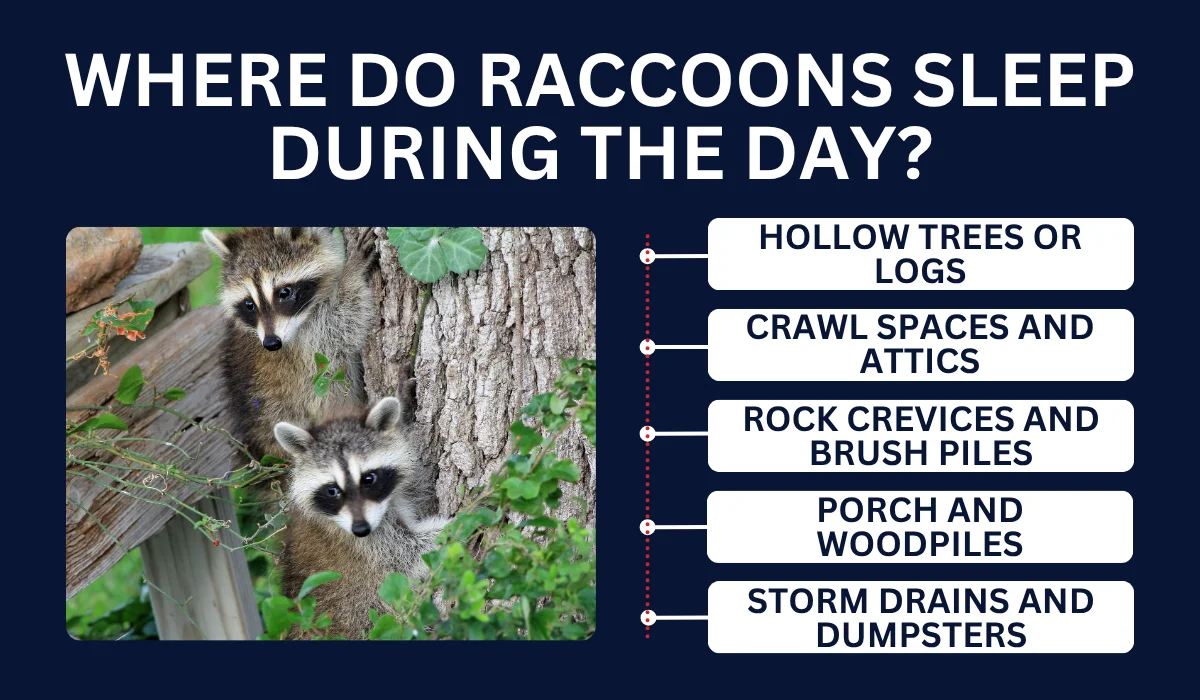
Raccoons often choose a daytime sleeping spot that gives them cover and limits disturbance. In a residential setting, attics and crawl spaces can provide both.
Raised homes deserve special attention. Openings beneath the structure, damaged crawl-space doors, or loose materials around the perimeter can give an animal access to a shaded area below the living space.
Raccoons are also strong climbers. Tree limbs, roof edges, damaged soffits, vents, and other openings can provide a route to an attic even when the lower part of the house looks secure.
Common spots include:
- Hollow trees or logs: Perfect natural shelters, especially in wooded areas.
- Crawl spaces and attics: These mimic the dark, secure dens raccoons seek in the wild.
- Rock crevices and brush piles: Often used in rural or suburban areas with less human activity.
- Porch and woodpiles: Raccoons use the cover and warmth they offer.
- Storm drains and dumpsters: More common in urban areas where natural shelters are limited.
If you’re a homeowner, these spots may sound uncomfortably close to your living space, and they are.
Where Do Raccoons Live in Louisiana?
Louisiana habitat changes quickly from one area to another, and raccoons make use of whatever shelter is available nearby. That is why the same animal can live comfortably near a swamp, a wooded subdivision, or a busy city neighborhood.
Around the Atchafalaya Basin, raccoons have access to wetlands, wooded areas, hollow trees, fallen logs, and dense vegetation. Those natural features can provide daytime shelter without bringing the animal into a building.
On the Northshore, neighborhoods around places such as Mandeville, Covington, and Slidell often combine mature trees, drainage areas, sheds, raised structures, and nearby woods. A raccoon may rest in natural cover one day and use a man-made space another.
In more developed Slidell and Baton Rouge urban areas, roof spaces, sheds, storm drains, dumpsters, and sheltered parts of buildings can fill the same role. Accessible trash, outdoor pet food, and fallen fruit may also keep raccoons returning to the same property after dark.
Why Raccoons Choose Homes and Buildings
A house can give a raccoon the same basic shelter it would look for in a tree cavity or other natural den. Attics, crawl spaces, sheds, and areas beneath porches stay covered and may go undisturbed for long periods.
Food can also bring raccoons closer to the structure. Unsecured trash, pet food left outdoors, bird feeders, fallen fruit, and accessible dumpsters may encourage repeat visits.
Once a raccoon finds a protected opening, it may begin using the structure as a resting or denning site. That is especially important when a female has young, because sealing an opening too soon can separate animals or trap them inside.
Signs a Raccoon May Be Hiding Around Your Home
You may hear a raccoon long before you see one. Heavier footsteps, scratching, or thumping at night or near dawn can point to activity in an attic, crawl space, or another enclosed area.
Check for damaged soffits, loose vents, scratches around an opening, tracks, droppings, disturbed insulation, or odor near the suspected area. These clues can help narrow down where the animal is spending the day.
The pattern matters. Tracks around garbage cans alone may mean a raccoon is visiting the yard, while damaged roof materials and attic noise suggest it may be using the house itself.
Are Raccoons Dangerous Around Homes?
Raccoons are wild animals, so bites and scratches are one concern when people or pets get too close. A raccoon outside during daylight does not automatically mean it has rabies. It may have been disturbed, be searching for food, or be moving between resting areas. You should still avoid approaching or handling it. According to the Centers for Disease Control and Prevention (CDC), rabies can spread when infected saliva enters the body through a bite, scratch, broken skin, or mucous membranes.
If the animal appears disoriented, cannot move normally, behaves aggressively without being approached, or has had contact with a person or pet, stay away and contact the appropriate local animal or wildlife authority.
Their droppings can also create a sanitation issue around den and latrine areas. The CDC notes that raccoon feces can contain Baylisascaris eggs, which can cause infection if infective eggs are accidentally swallowed. Avoid handling raccoon droppings with bare hands or disturbing heavily contaminated material.
Inside an attic or crawl space, raccoon activity can also disturb insulation and damage materials around entry points. If you find signs indoors, focus first on confirming where the animal is entering and resting.
What to Do if a Raccoon Is Hiding in Your Home
Once you know where do raccoons hide during the day, the next question is often how to get one out. That topic is better handled separately because removal depends on where the animal is located, how it entered, and whether young raccoons are present.
Do not immediately block an opening if you think a raccoon is still inside. For the full removal process, read How to Get Rid of Raccoons in Louisiana Safely.
Know When to Call in the Pros
If it’s the first time you’re dealing with a raccoon problem, don’t wait too long. The longer raccoons stay, the more likely they are to do real damage. Whether they’re crashing in your attic or nesting under the house, professional wildlife removal can handle raccoon removal and help make sure they don’t come back.
What Wildlife Technicians Check on Louisiana Jobs
When a homeowner hears movement but cannot see the animal, the hiding place is not always directly above or below the noise. Wildlife can enter through one opening and move through another part of the structure.
On LaJaunie’s wildlife inspections, technicians check the property from the outside in. That may include the yard, areas beneath raised homes, eaves, AC entry gaps, soffits, fascia, roof voids, chimneys, attic insulation, and openings around pipes or wires.
That inspection pattern reflects what technicians encounter on real Louisiana wildlife jobs. A noise above one bedroom, for example, may trace back to an opening along another part of the roofline. Looking at both the hiding area and the route into it gives a clearer picture of what is happening.
Finding the Raccoon Hiding Around Your Louisiana Home
If you are asking where do raccoons hide during the day, start with sheltered places near the activity you notice after dark. Attics, crawl spaces, hollow trees, sheds, porches, brush piles, and drainage areas are all common places to check.
Louisiana surroundings can help narrow the possibilities. Properties near the Atchafalaya Basin offer more natural shelter, while Northshore, Slidell, and Baton Rouge homes may give raccoons access to both trees and buildings.
If tracks, droppings, damaged vents, or nighttime noises suggest a raccoon is living inside the structure, LaJaunie’s Pest Control can inspect the property and identify likely entry points. We serve homeowners across Southeastern Louisiana, and we’re here for same-day and Saturday service.
If you’re hearing noises overhead or spotting raccoon tracks around your garbage cans, let’s take care of it before the babies arrive. Our pest control team provides raccoon removal using humane traps and safe techniques to ensure your home remains secure, day or night.
Frequently Asked Questions
Where do raccoons hide during the day?
Start with places that stay dark, covered, and relatively undisturbed. Raccoons are generally more active after dark, so they often spend daylight hours resting in a den or sheltered space. Natural hiding spots include hollow trees, fallen logs, brush piles, and wooded cover. Around homes and businesses, raccoons may use attics, crawl spaces, sheds, areas beneath porches, woodpiles, roof voids, and drainage systems.
Why would a raccoon be out during the day?
A raccoon can be active during daylight without being sick. It may have been disturbed, be looking for food, or be moving between den sites. Keep your distance, especially if the animal seems disoriented, unusually aggressive, or unable to move normally.
How can you tell if a raccoon is hiding in your attic?
Listen for heavier footsteps, scratching, or thumping at night, and check for damaged soffits, vents, disturbed insulation, droppings, or visible openings along the roofline. Because wildlife can travel through an attic, the entry point may not be directly above the room where you hear noise.
Do raccoons hide under houses during the day?
Yes. Crawl spaces and areas beneath raised homes can give raccoons shade, cover, and limited disturbance. If you suspect one is under your home, avoid reaching into the space or sealing an opening until you know whether the animal is still inside.