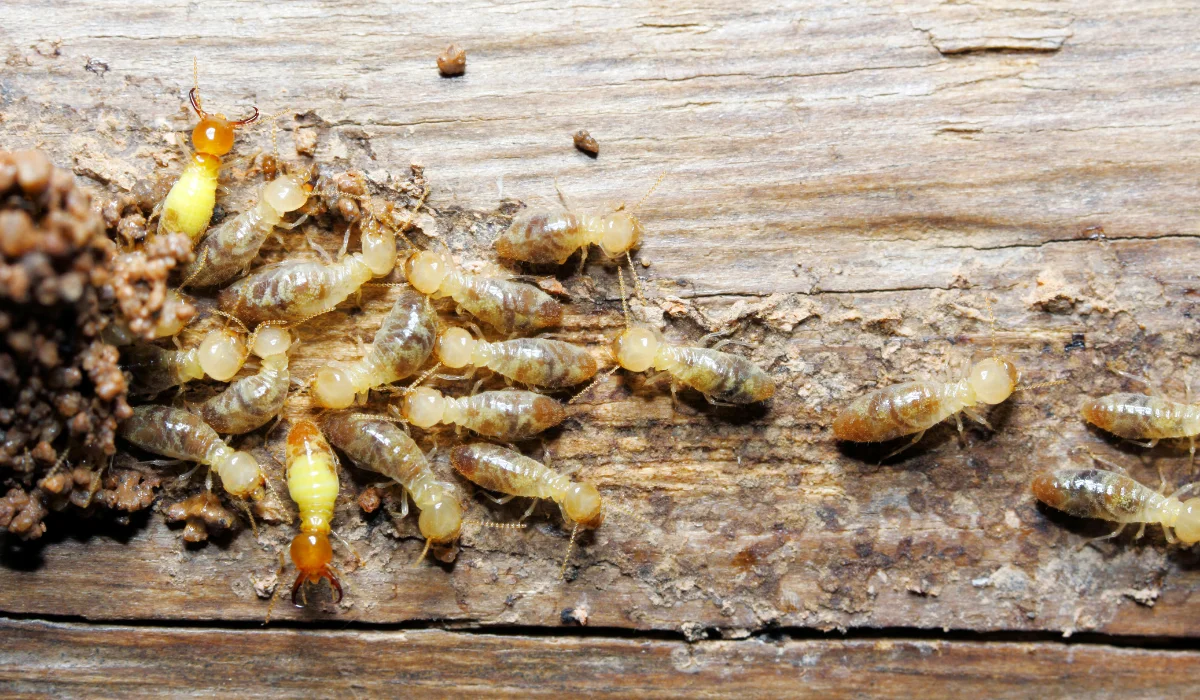
If you live in New Orleans or elsewhere in South Louisiana, seeing winged termites around porch lights or windows during spring and early summer can raise an immediate question: where do termites come from? Some Louisiana termite species swarm in late spring, while others may swarm from April through July.
When you find termites around your home, the visible insects are only part of the story. Where do termites come from often depends on the species, but common sources include soil, damp crawl spaces, old wood, landscaping near the foundation, and small openings that give termites access to the structure.
Below, you’ll learn where termites commonly start, how they move toward South Louisiana homes, and which conditions around your property can make that movement easier.
Key Takeaways
- Subterranean termites commonly come from colonies associated with the soil and travel toward wood through protected routes such as mud tubes.
- Crawl spaces, tree stumps, buried wood, mulch, drainage problems, and small structural gaps can create favorable routes or conditions for termite activity.
- In South Louisiana, termite swarming times vary by species, with some activity occurring in late spring and some extending from April through July.
- Mud tubes, shed wings, swarmers indoors, and damaged wood are signs that your home should be inspected for termite activity.
Where Do Termites Come From in Louisiana Homes?
When you ask where do termites come from, the answer for many South Louisiana homes begins in or around the soil. Subterranean termites move from colonies associated with the ground toward sources of wood, often using mud tubes to stay protected as they travel. The U.S. Environmental Protection Agency (EPA) identifies mud tubes as one of the signs homeowners may see with subterranean termite activity.
LaJaunie’s termite team works with Formosan, eastern subterranean, and drywood termites throughout South Louisiana. In raised homes, the team often recommends an in-person inspection because crawl spaces can contain moisture, wood-to-soil contact, and other conditions that need to be evaluated directly.
Underground Colonies
Most subterranean termite problems begin with colonies associated with the soil around your property. As worker termites search for food, they can build mud tubes that connect the ground to your foundation, piers, walls, or other wooden parts of the home.
These tubes help termites move while maintaining the conditions they need. Finding one along your slab, foundation, or wall is a good reason to have the area checked.
Crawl Spaces
Raised homes are common across South Louisiana, and the space underneath them can hold moisture and include wood-to-soil contact. Those conditions can give subterranean termites an easier route toward structural wood.
LaJaunie’s termite team handles raised homes differently from many slab homes because the conditions underneath need to be seen in person. An inspection can check for mud tubes, moisture problems, damaged wood, and direct soil contact before determining the right next step.
Tree Stumps and Buried Debris
Old tree stumps, roots, fallen limbs, and buried wooden debris provide termites with a nearby source of cellulose, which is the material they feed on.
Termites in a stump do not automatically mean your house is infested. Still, removing dead wood around the property and checking the nearby structure can help you catch activity before it goes unnoticed.
Mulch Beds
Mulch does not automatically cause a termite infestation, but a deep, damp layer next to your foundation can hold moisture around the soil. That can create favorable conditions for subterranean termites moving through the property.
Keep mulch shallow and avoid piling it directly against siding or the foundation. Leaving some visible space near the base of your home also makes mud tubes easier to spot.
Gutters and Downspouts
Clogged gutters can overflow and leave water collecting near the base of your home. In South Louisiana, frequent rain can keep soil and nearby wood damp for extended periods.
Keep gutters clear and make sure downspouts direct water away from the foundation. Correcting drainage problems removes one condition that can support termite activity near the structure.
Cracks and Crevices
Small gaps around foundations, siding, plumbing penetrations, and other parts of the structure can give termites another route into hidden areas.
The place where you first notice termites is not always where the colony originated. Activity near a window or wall may connect to soil beneath the slab, a crawl space, or another concealed part of the structure.
Where Do Termites Come From During Louisiana Swarm Season?
When homeowners ask where do termites come from during a swarm, they are usually seeing reproductive termites leaving an established colony. These winged termites take flight to pair up and begin new colonies, which is why large numbers may appear around lights, doors, and windows during certain parts of the year.
In South Louisiana, swarm timing varies by termite type. Some species swarm in late spring, while others may swarm from April through July. Activity can occur outside those periods as well, so the calendar alone cannot tell you which termite is present.
If termite swarmers are outside, the source may be somewhere else on or near the property. If you find swarmers indoors or piles of shed wings on windowsills, baseboards, or counters, the activity deserves a closer inspection.
What to Do When Termites Are Coming From These Common Sources
Now that you know where termites come from, focus on the conditions that help them reach your home. Managing moisture, reducing wood-to-soil contact, removing dead wood, and keeping the foundation visible can make it easier to spot termite activity early.
For subterranean termites, professional control may include bait systems or a treatment around the foundation based on the property and the activity found during the inspection. LaJaunie’s termite team also checks bait stations during ongoing service and looks for conditions that could contribute to future activity.
Treat the Soil and Baiting for Worker Termites
Subterranean termites often start in the soil, so control commonly focuses on the area around the foundation. Bait systems work by allowing worker termites to carry the bait back through the colony, while other treatment methods create protection around areas termites may use to reach the structure.
The right approach depends on the home, where activity is found, and whether the structure is slab-on-grade or raised. A professional inspection helps determine which option fits those conditions.
Manage Moisture in the Crawl Space
Termite prevention in crawl spaces includes keeping the area as dry as the structure allows. Repair leaking plumbing, address drainage problems, replace damaged wood when needed, and avoid leaving lumber or other wood directly against the soil.
A termite inspection can also identify mud tubes, moisture, and wood contact in areas that are difficult to see from outside the crawl space.
Remove Stumps and Debris
Don’t leave tree stumps or wooden scraps around your yard. These spots are perfect for termite colonies to start. Once a new colony is established, swarmers can spread quickly to your home. Clearing this debris cuts off a key source of food.
Adjust Landscaping and Mulch
Keep mulch beds a safe distance from your foundation and stick to a shallow layer. It helps reduce excess moisture, which in turn makes your home less appealing to termites looking for the right conditions to thrive.
Clean and Repair Gutters
Keeping your gutters clean and your downspouts flowing properly is a simple but effective way to manage moisture. Without standing water near your home, termites are less likely to settle in.
Seal Crevices and Inspect Wooden Structures
A small gap may give termites access to a hidden part of the structure. Sealing openings and checking decks, support beams, piers, and other wooden areas can help you catch conditions that may allow termite activity to continue unnoticed.
If you see mud tubes, shed wings, swarmers, or damaged wood, have the area inspected before disturbing it.
Stop the Swarm Before It Starts
If you are seeing swarmers or signs of damaged wood, the next step is to determine where the termites are coming from and which type is present. LaJaunie’s termite team works with Formosan, eastern subterranean, and drywood termites in New Orleans, Metairie, Kenner, Thibodaux, Houma, Mandeville, Covington, Baton Rouge, Slidell, and other South Louisiana communities.
A termite inspection can check the foundation, crawl space, accessible wood, and other likely activity areas before treatment is recommended. At LaJaunie’s Pest Control, we know how to handle every type of termite-from eastern subterranean to drywood termites. We perform thorough inspections, identify the termite species, and offer long-term solutions that protect your home and your peace of mind.
Whether you’re seeing swarmers or suspect termite damage to your wooden structures, we’re ready to help you get rid of termites before they take over. Serving homeowners across South Louisiana, we bring local experience and expert treatment you can trust. Give us a call, let’s stop termites before they start causing damage.
Where Termites Come From: FAQs
Where do termites come from in a house?
Subterranean termites commonly come from colonies associated with soil beneath or around your home. They can travel through mud tubes, crawl spaces, foundation gaps, and concealed openings to reach wood. Drywood termites differ because they can establish themselves directly inside dry wood without depending on soil contact.
What time of year do termites swarm in Louisiana?
Swarming times vary by termite type. In South Louisiana, some termites swarm in late spring, while others may swarm from April through July. Activity can occur outside those months, so finding winged termites indoors or piles of shed wings is a good reason to schedule an inspection.
Does finding termites in a tree stump mean they are in my house?
No. Termites in a stump show that termites are active on the property, but they do not prove that your house is infested. Remove dead wood when practical and check the nearby structure for mud tubes, shed wings, damaged wood, or other signs of termite activity.