



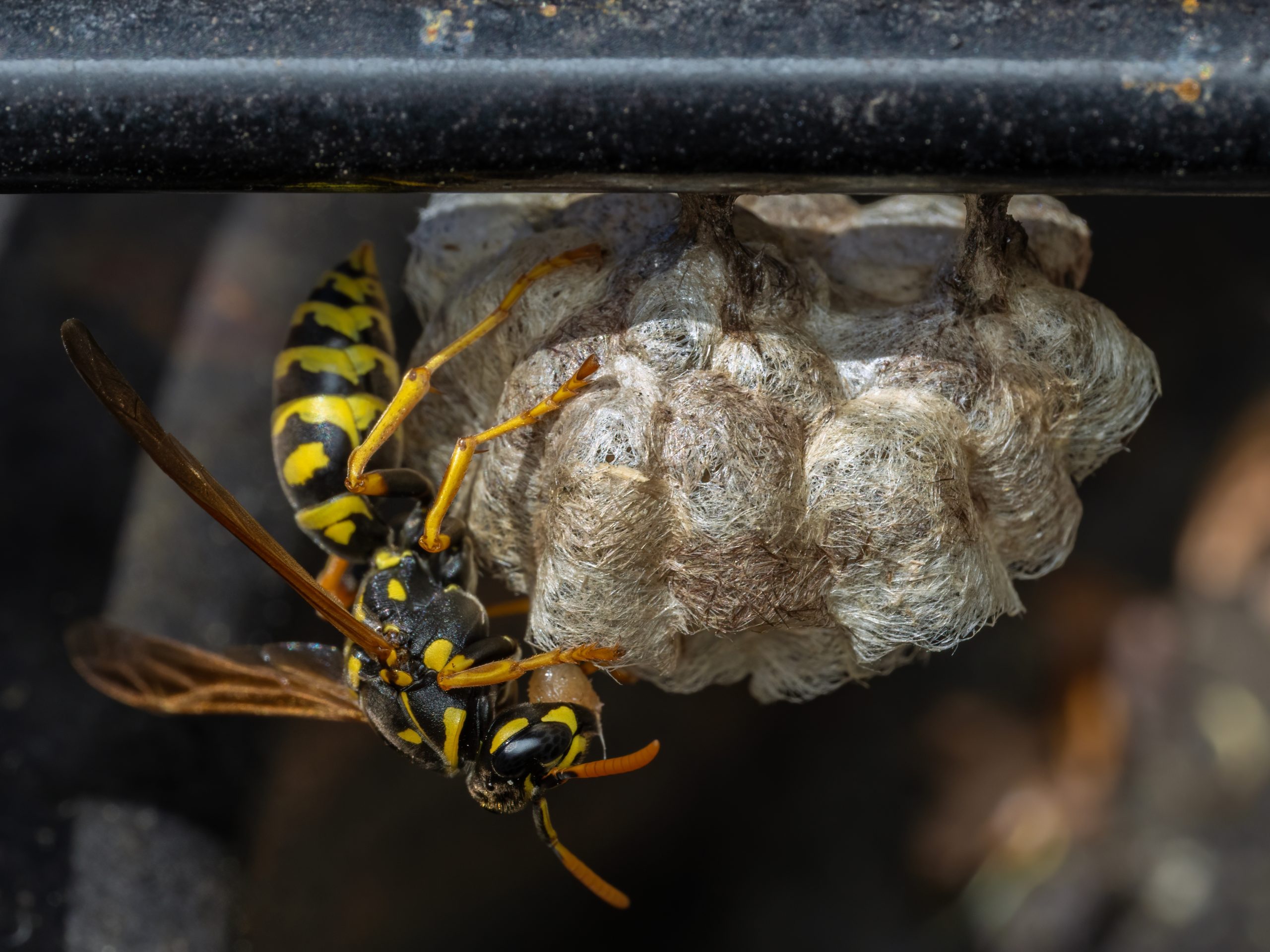
Yellow jacket stings can happen at any point during the warmer months, but many Louisiana homeowners notice more painful encounters as summer turns to fall. A family meal on the patio, a weekend football gathering, or routine yardwork can bring people surprisingly close to active yellow jackets.
The insects are not producing stronger venom simply because the season has changed. Instead, yellow jacket colonies are larger, more workers are defending each nest, and the insects spend more time searching for food near people. One disturbed nest can lead to several yellow jacket stings within seconds.
Fall also brings more outdoor activity across South Louisiana. Homeowners in Thibodaux, Houma, Metairie, and surrounding communities may spend cooler afternoons trimming shrubs, clearing leaves, mowing grass, or cooking outside. Each activity can disturb an underground nest or attract workers looking for meat, fruit, soda, and other food. Understanding why yellow jackets act differently in fall can help you recognize risky situations, respond correctly after a sting, and know when a nest requires professional attention.
Why Yellow Jacket Stings Hurt More in Fall
Yellow jacket stings may seem more painful in fall because encounters often involve more than one insect. A mature colony can contain thousands of workers by late summer or early fall, giving the nest a much larger defensive force than it had in spring. When a person steps near an underground opening or bumps a nest hidden inside a wall, several yellow jackets may respond at once.
Unlike honey bees, yellow jackets have smooth stingers that allow them to sting repeatedly. A single worker may sting more than once, and nearby workers may join the response when the colony is disturbed. The pain comes from venom injected during each sting, so several stings in a small area can cause stronger burning, swelling, and soreness than one isolated sting.
The seasonal difference is mainly about colony size, behavior, and the number of possible stings. Yellow jacket venom does not become more powerful because the weather is cooling. Homeowners simply have a greater chance of meeting a large, defensive colony at the same time that more workers are searching beyond the nest for food.
| Seasonal Factor | Spring | Summer | Late Summer and Fall |
| Colony size | Small and developing | Growing steadily | Near its largest size |
| Number of workers | Relatively low | Moderate to high | Often at its annual peak |
| Food activity | Focused on feeding larvae | Broad search for protein | Increased interest in sweets and human food |
| Chance of multiple stings | Lower | Moderate | Higher near a disturbed nest |
| Common homeowner encounters | Gardening and early mowing | Yardwork and outdoor meals | Leaf cleanup, football gatherings, cookouts, and fallen fruit |
Larger Colonies Have More Workers to Defend the Nest
Yellow jacket colonies begin with a queen that establishes a nest and raises the first workers. Those workers expand the nest, gather food, care for developing young, and protect the colony. As the season progresses, each new generation adds more workers, allowing the population to grow quickly through summer.
By fall, a nest that was easy to overlook in May may have heavy traffic moving through a small entrance in the lawn, landscape bed, wall void, or tree cavity. People often discover these nests while mowing, edging, moving outdoor furniture, or clearing overgrown plants. The vibration and movement near the entrance can trigger a defensive response before the person realizes a nest is present.
The University of California Integrated Pest Management Program explains that western yellow jacket colonies can contain several thousand workers and become especially troublesome during late summer and fall. Its yellow jacket management guidance also notes that these wasps commonly build nests underground, in wall spaces, and in other protected areas.
A yellow jacket defending its nest is reacting differently from one visiting a drink can or flower bed. Workers away from the colony may fly off when disturbed, but those guarding a nest are more likely to pursue a nearby threat. Swatting at them or standing over the entrance can make the situation worse.
Why Yellow Jackets Gather Around Food in Fall
Yellow jackets feed developing larvae protein-rich foods during much of the growing season. They hunt insects and collect pieces of meat to carry back to the nest. In return, the larvae produce a sugary secretion that adult workers consume.
As the colony’s life cycle changes near the end of summer, fewer larvae may be available to provide that food. Adult workers begin searching more aggressively for other sugar sources. Open soda cans, sweet tea, ripe fruit, desserts, barbecue sauce, and food residue inside garbage containers can draw them into areas where families are eating or relaxing.
This behavior explains why fall yellow jacket activity is often noticeable around tailgates, school events, outdoor kitchens, restaurant patios, and backyard gatherings. The insects may repeatedly land on plates, cups, and serving tables. They are not always defending a nest in these situations, but accidental contact can still result in a sting.
| Common Attraction | Why Yellow Jackets Visit | Practical Response |
| Open drink cans and cups | Sugary liquids provide an easy food source | Use covered cups and check cans before drinking |
| Outdoor trash containers | Food residue, meat scraps, and sweet liquids collect inside | Keep lids closed and rinse sticky spills |
| Fallen fruit | Overripe fruit releases sugar-rich juices | Collect fallen citrus, figs, pears, and other fruit |
| Pet food | Protein and moisture attract foraging workers | Bring bowls inside after feeding |
| Cookouts and tailgates | Meat, sauces, desserts, and drinks offer several food sources | Cover serving dishes and clean tables promptly |
| Recycling bins | Unrinsed cans and bottles hold sugary residue | Rinse containers and keep bins covered |
Where Louisiana Homeowners Encounter Yellow Jackets
Yellow jacket stings in Louisiana often occur when people unknowingly approach a hidden nest. Underground colonies may use abandoned rodent burrows or openings beneath tree roots. Other colonies settle inside wall voids, sheds, porch structures, landscape timbers, and gaps around exterior siding.
Ground nests can be difficult to see because the opening may be no wider than a coin. Repeated traffic is often the first clear sign. Several yellow jackets may fly in and out of the same spot every minute, following a direct route close to the ground.
Common problem areas include lawn edges, playgrounds, pasture fences, drainage ditches, woodpiles, and thick landscaping. In South Louisiana, long growing seasons and mild fall weather can keep workers active well after homeowners in colder regions stop seeing them. Warm afternoons may bring strong activity even when mornings feel cool.
Pay attention before running a mower over an area with repeated insect movement. A mower can vibrate the ground, pass directly over the opening, and place the operator close to the nest. The same risk applies when using a string trimmer near shrubs, fences, raised beds, and building foundations.
What Makes a Yellow Jacket Sting Painful?
A yellow jacket sting causes immediate pain because the insect injects venom through its stinger. The area may burn, redden, itch, and swell. For many people, discomfort remains concentrated near the sting and improves over several hours or days.
The location of the sting also affects how it feels. Stings on fingers, toes, lips, ears, and other sensitive areas may feel more intense because those areas contain many nerve endings or have limited room for swelling. Several stings close together can produce a larger area of soreness and inflammation.
Yellow jackets do not normally leave a stinger behind. Their smooth stinger lets them pull away and sting again, which separates them from honey bees. Checking the skin is still reasonable because people often do not see which insect stung them, and a honey bee stinger should be removed promptly.
| Reaction | What It May Look or Feel Like | Recommended Response |
| Typical local reaction | Sharp pain, redness, itching, and mild swelling around the sting | Wash the area, apply a cold pack, and monitor symptoms |
| Large local reaction | Swelling extends well beyond the sting site and may increase for a day or two | Contact a healthcare professional for guidance |
| Serious allergic reaction | Trouble breathing, throat tightness, facial swelling, dizziness, widespread hives, or fainting | Use prescribed epinephrine when available and call 911 |
| Numerous stings | Pain and swelling at several sites, sometimes with nausea, weakness, or other symptoms | Seek prompt medical advice, especially for children or older adults |
| Sting near the mouth or throat | Swelling in an area that may affect breathing or swallowing | Get emergency medical care |
How to Treat a Yellow Jacket Sting
After a yellow jacket sting, move away from the area before stopping to examine the skin. Remaining beside an active nest may lead to more stings. Walk quickly and steadily toward a building or enclosed vehicle rather than swatting at the insects.
Wash the sting site with soap and water, then apply a wrapped cold pack for short intervals to reduce pain and swelling. Avoid scratching because broken skin can become irritated or infected. A healthcare professional or pharmacist can advise you about over-the-counter options for itching and discomfort based on your health history.
Monitor the person closely during the first several minutes after the sting. Trouble breathing, swelling of the tongue or throat, widespread hives, dizziness, confusion, vomiting, or fainting may signal a severe allergic reaction. Call 911 immediately when these symptoms appear.
The American Academy of Allergy, Asthma & Immunology states that people with a known severe insect-sting allergy should carry prescribed epinephrine and use it as directed. Its stinging insect allergy information also recommends emergency medical evaluation after epinephrine because symptoms can return.
When Yellow Jacket Stings Require Medical Care
Most yellow jacket stings cause a local reaction that can be managed at home, but some situations deserve medical attention. A person should be evaluated promptly after being stung many times, especially if the victim is a young child, an older adult, or someone with heart or breathing problems.
Medical care is also appropriate when swelling continues to spread, pain becomes severe, or the site develops signs of infection. Increasing warmth, drainage, red streaks, or worsening tenderness may indicate a problem beyond the normal reaction to venom.
Stinging insect reactions can be fatal in rare cases. The Centers for Disease Control and Prevention reported 788 U.S. deaths from hornet, wasp, and bee stings between 2011 and 2021, averaging about 72 deaths each year.
People who have experienced a serious reaction should speak with an allergist rather than waiting for another sting. An allergist can assess the risk, prescribe epinephrine when appropriate, and discuss treatments that reduce sensitivity to insect venom.
How to Reduce the Risk of Yellow Jacket Stings
Preventing yellow jacket stings begins with reducing food sources and watching for nest activity. Keep outdoor garbage cans closed, rinse recycling, collect fallen fruit, and clean grills after use. During outdoor meals, cover food until it is served and avoid leaving sweet drinks open.
Wear closed-toe shoes while working in the yard, especially when grass or leaves make it hard to see the ground. Check shrubs, play equipment, sheds, and landscape borders before trimming or moving materials. Homeowners should also teach children not to throw objects at nests or investigate repeated wasp traffic.
Avoid wearing strong fragrances during periods of heavy yellow jacket activity because sweet scents can draw curious insects. Bright floral clothing may also attract attention in some outdoor settings. These steps will not stop every encounter, but they can reduce unnecessary contact.
Never block an active nest opening with soil, expanding foam, caulk, or another material. Yellow jackets trapped inside a wall or void may search for another exit, sometimes entering the home. An incomplete attempt can also leave defensive workers active around the original entrance.
Why DIY Nest Removal Can Be Risky
A visible nest opening rarely shows the nest’s full size or exact location. An underground entrance may lead to a chamber several feet away, while a gap in siding may connect to a large wall void. Treating only the opening may miss the colony and increase activity around the site.
Protective clothing used for ordinary yardwork does not offer the same coverage as equipment designed for stinging insects. Yellow jackets can crawl beneath loose cuffs, collars, pant legs, and face coverings. A homeowner standing on a ladder or operating equipment also faces a fall risk if several insects attack at once.
Store-bought products may be difficult to apply correctly when the nest is hidden, elevated, or close to a doorway. Spraying workers that are flying outside the nest does not remove the queen or the rest of the colony. The activity may continue, and surviving workers may become harder to approach.
Keep people and pets away from the area once you locate a nest. Mark the location from a safe distance so a pest control technician can find it without requiring another close inspection. This is especially helpful when the entrance is small or visible only during the warmest part of the day.
Getting Yellow Jacket Control in Louisiana
Yellow jacket control starts with correct identification and a careful inspection of the nest area. Paper wasps, hornets, honey bees, and solitary ground-nesting insects require different responses. Treating the wrong insect or focusing on the wrong location can waste time and increase the chance of stings.
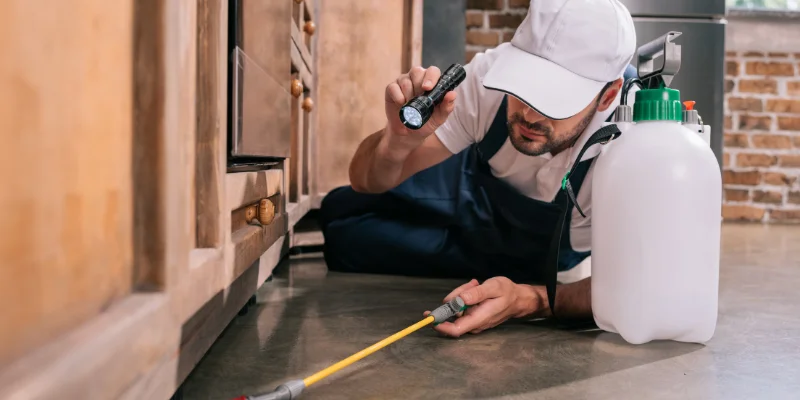
LaJaunie’s Pest Control begins by identifying the pest and locating the source of the activity. Our technicians are trained and certified, and they use family-friendly treatment methods selected for the conditions on the property. We can also inspect elevated areas, foliage, lawns, eaves, and structural gaps where stinging insects commonly nest.
For help with an active nest or repeated yellow jacket stings around your Louisiana property, contact LaJaunie’s Pest Control. Our team can identify the problem, explain the recommended service, and help you get back to using your outdoor space safely.