



If you live in New Orleans, ants are a familiar part of the warmer months, but the species moving across your patio or kitchen counter may not always be obvious. The common ants in New Orleans range from tiny ghost ants searching for moisture indoors to fire ants building visible mounds outside.
The city’s warm, humid conditions give ants access to moisture for much of the year. Around local homes, activity often shows up near damp landscaping, foundation edges, kitchens, bathrooms, and other places where food and water are easy to reach. Wet weather can also change where ants forage, making trails around protected areas of the home more noticeable.
Knowing the species helps you understand what is attracting it and where the colony may be located. This guide helps you identify the ants you are most likely to encounter around homes and understand when it’s time to get professional help for ant control in New Orleans.
Key Takeaways
Common New Orleans ants
The ants most likely to show up around New Orleans homes, ranked by the trouble they cause.
- New Orleans’ warm, humid conditions support several ant species around homes, lawns, and landscaped areas.
- Fire ants, carpenter ants, Argentine ants, ghost ants, and several smaller household ants are among the species you may encounter.
- Size, color, nesting location, and trail behavior are often more useful for identification than color alone.
- Food, moisture, and easy entry points can encourage ants to forage around or inside your home.
- Repeated trails, multiple nests, or activity around damaged wood may warrant a professional inspection.
Common Ants in New Orleans
The common ants in New Orleans do not all behave the same way. Some nest in soil, some favor humid indoor spaces, and others establish colonies around damp or damaged wood. Looking at where the ants are active can be just as useful as comparing their size and color.
1. Red Imported Fire Ants

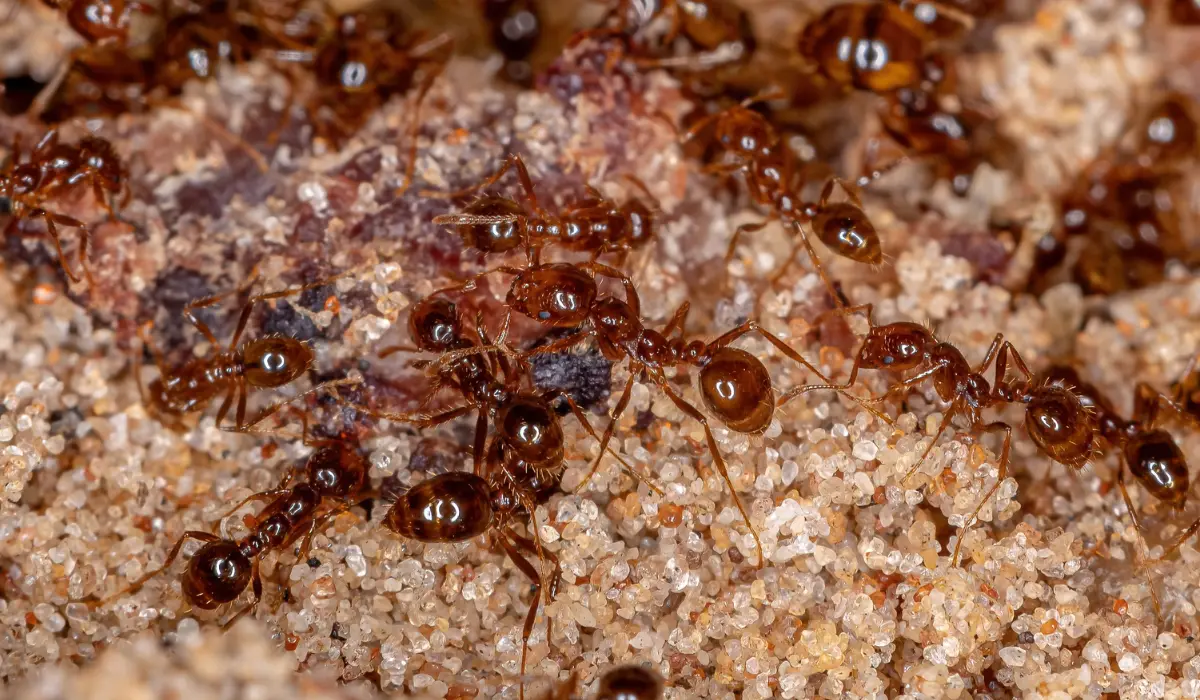
Red imported fire ants are notorious for their painful stings that can pose a health risk to Louisiana, Florida, Texas, and Mississippi homeowners.
Workers within a fire ant colony can vary noticeably in size. The LSU AgCenter also identifies soil mounds and reddish-brown color of different sizes (⅛ to ⅓ of an inch) as useful recognition clues.
| Aspects | Description |
|---|---|
| Appearance | Dark reddish-brown |
| Behavior | Aggressive when threatened |
| Nesting | Large, mound-shaped nests in the soil |
| Foraging Habits | Omnivorous, prefer meats and greasy foods |
| Identifying Characteristics | Painful sting, workers vary in size |
2. Pharaoh Ants
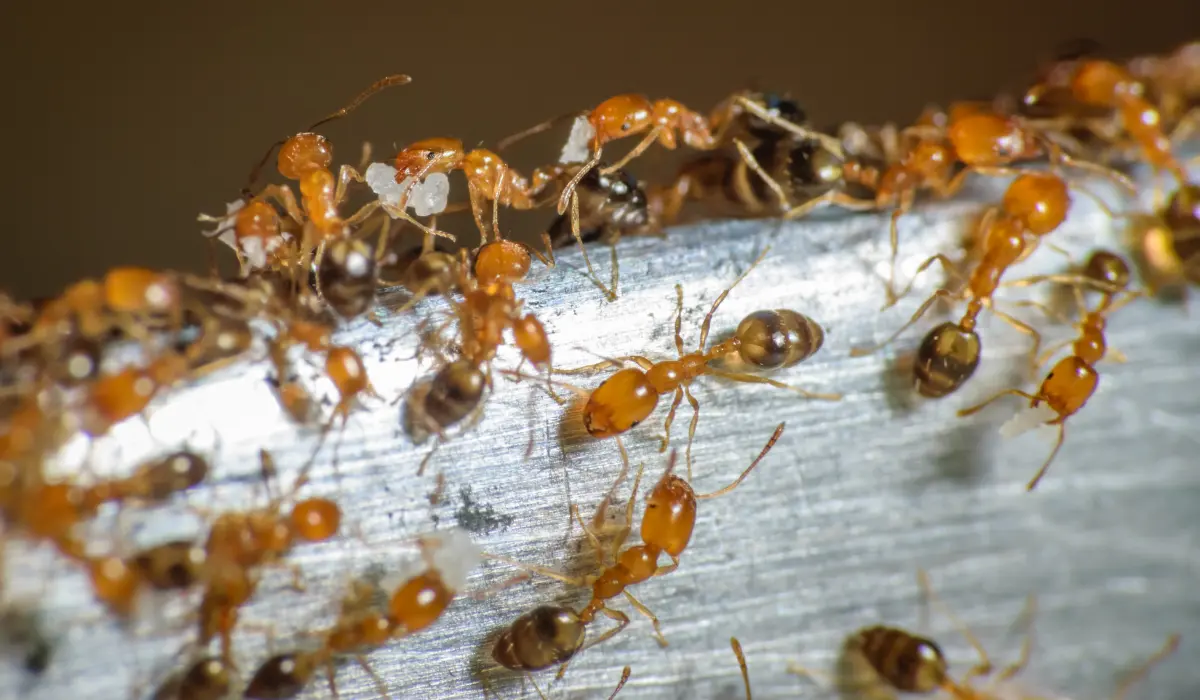
Pharaoh ants are a common household pest in many parts of the world. They are a menace because they can spread disease through various environments.
| Aspects | Description |
|---|---|
| Appearance | Light yellow to red |
| Behavior | Avoid confrontation, hard to eradicate |
| Nesting | Indoor nests in hidden locations, such as voids behind baseboards |
| Foraging Habits | Prefer sweets, fats, and proteins |
| Identifying Characteristics | Very small, about 1/16 inch long |
3. Odorous House Ants
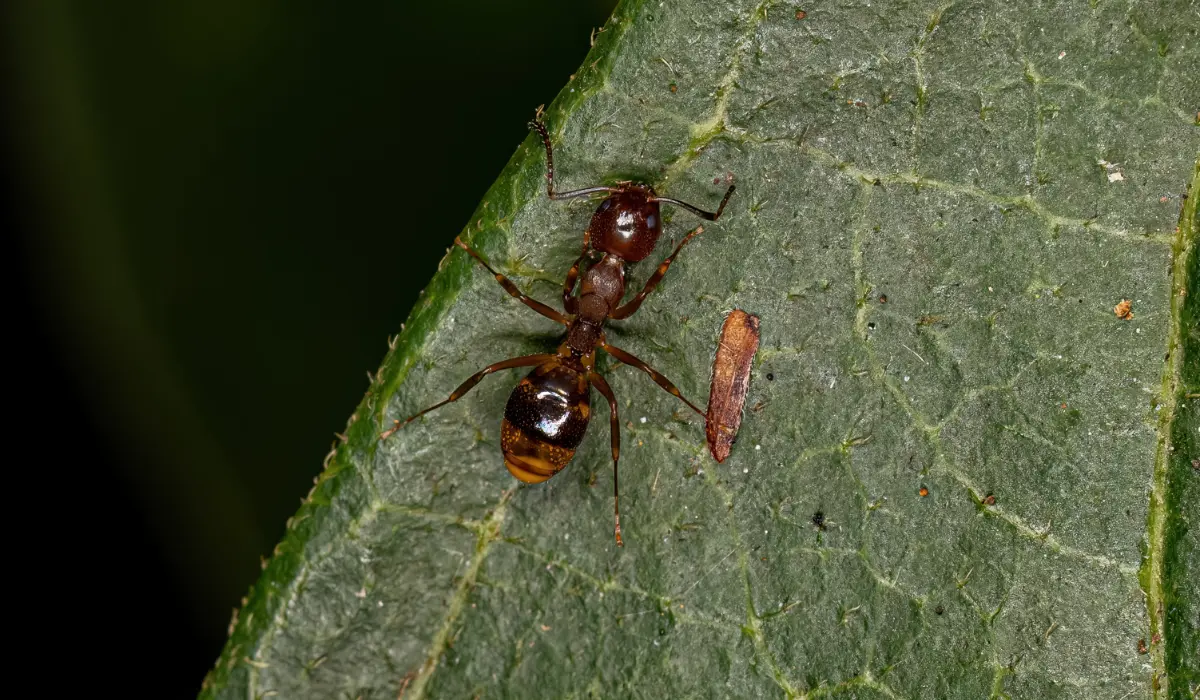
Odorous house ants can be a nuisance in homes. When crushed, they give off a rotten smell.
| Aspects | Description |
|---|---|
| Appearance | Dark brown to black |
| Behavior | Non-aggressive, colonies can be large |
| Nesting | Prefer moist areas, often found near heat sources |
| Foraging Habits | Sweet foods, but eat various household foods |
| Identifying Characteristics | When crushed, emits an odor similar to rotten coconut |
4. Acrobat Ants

These ants get their name from their distinctive ability to raise their abdomen over their thorax and head, especially when disturbed.
| Aspects | Description |
|---|---|
| Appearance | Light brown to black |
| Behavior | Agile climbers |
| Nesting | Inside wood damaged by moisture or termites |
| Foraging Habits | Eat a variety of foods, including sweets and proteins |
| Identifying Characteristics | Heart-shaped abdomen, capable of acrobatic movements |
5. Little Black Ants
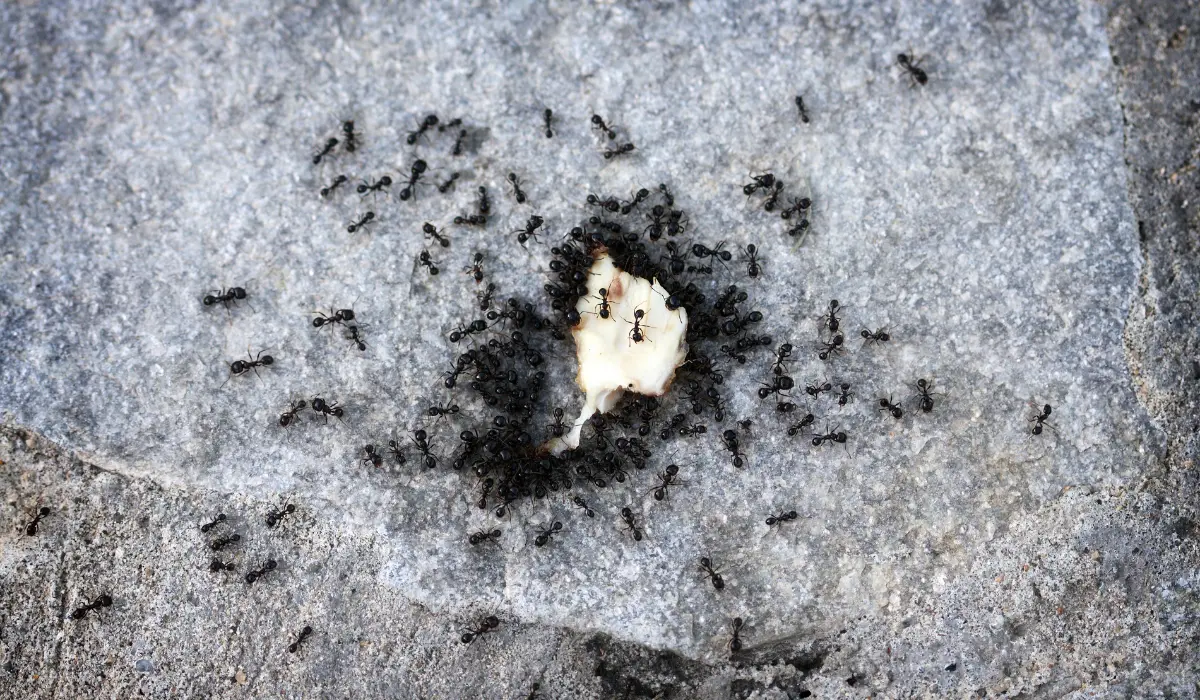
Although they pose no serious danger to residents, little black ants can be invasive pests when they invade homes and yards.
| Aspects | Description |
|---|---|
| Appearance | Dark brown to black |
| Behavior | Mild-mannered |
| Nesting | Live in cracks, crevices, or under rocks, also indoors |
| Foraging Habits | Eaters of both greasy foods and sweets |
| Identifying Characteristics | Small, monomorphic workers about 1/16 inch long |
6. Ghost Ants
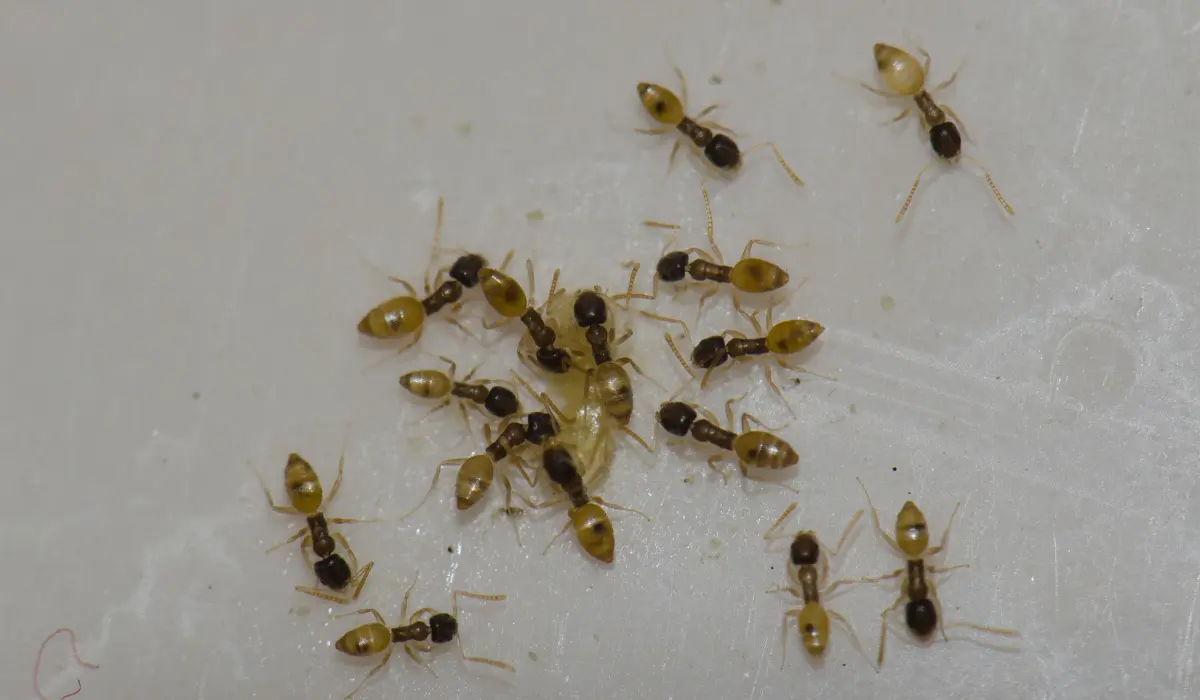
Ghost ants, or sugar ants, are so named for their pale color and elusive nature. Their coloring can make them especially difficult to see on light surfaces. Texas A&M University describes their pale legs and abdomen, very small size, and preference for warm conditions. They can contaminate food as they forage.
| Aspects | Description |
|---|---|
| Appearance | Pale, almost transparent legs and abdomen |
| Behavior | Skittish, elusive |
| Nesting | Prefer humid environments, nests often split into multiple locations |
| Foraging Habits | Fond of sweets, especially honeydew |
| Identifying Characteristics | Very small and hard to detect, ghost-like appearance |
7. Pavement Ants
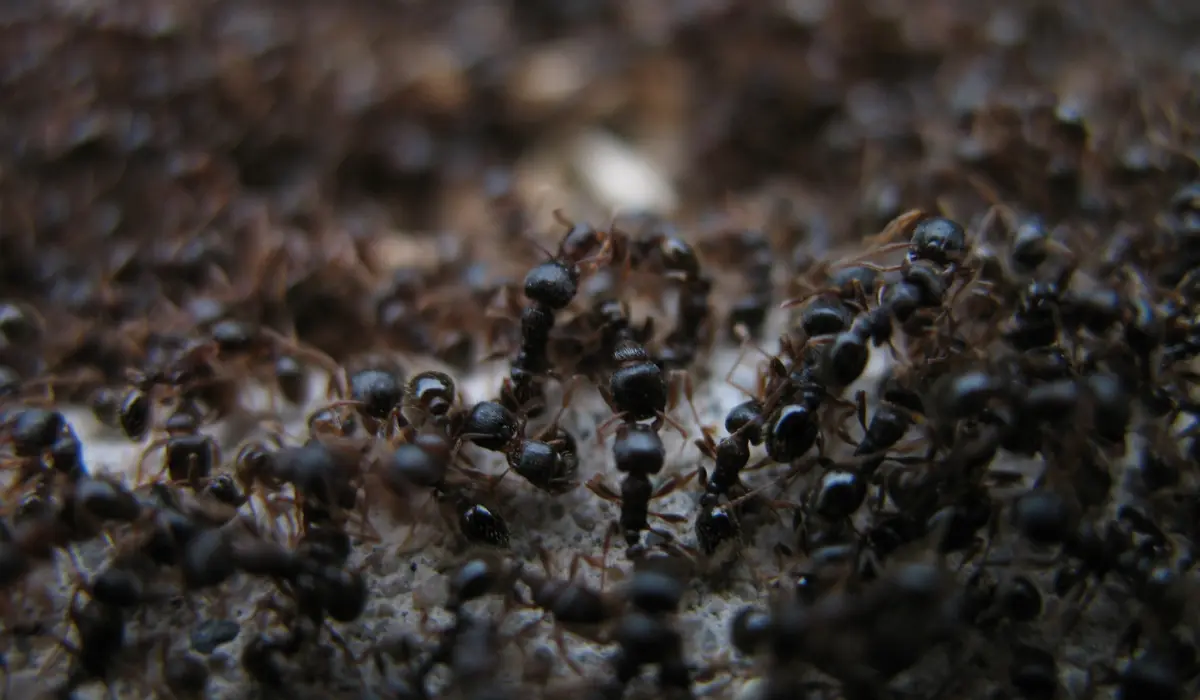
Though not typically harmful, Pavement ants pose a risk to humans primarily through the contamination of food sources and the annoyance of their persistent presence in and around homes.
| Aspects | Description |
|---|---|
| Appearance | Small, typically dark brown to black; about 2.5 to 4 mm in length |
| Behavior | Aggressive towards other ant species; form large colonies |
| Nesting | Prefers to nest under pavements, stones, and along curbs |
| Foraging Habits | Known to forage up to 30 feet from their nest in search of food |
| Identifying Characteristics | Antennae with 12 segments ending in a 3-segmented club; parallel lines on head and thorax |
8. Argentine Ants
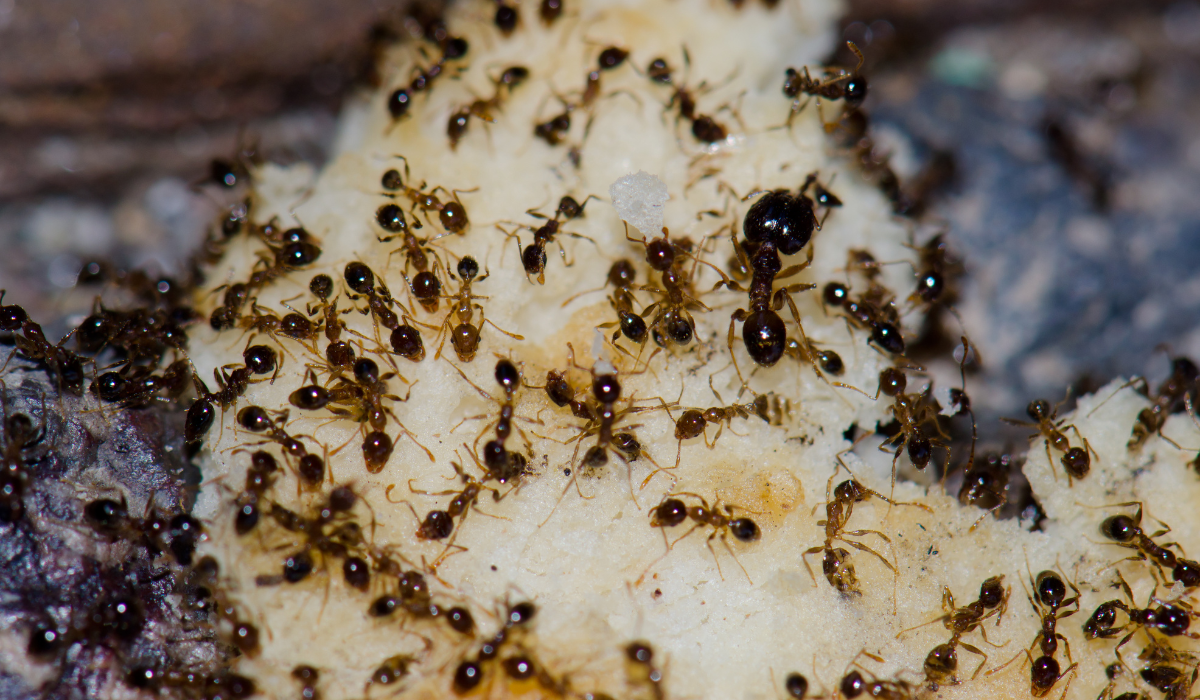
Native to South America, the Argentine ants pose a significant risk to residents in New Orleans due to their aggressive nature, which leads to the displacement of native ant species and disrupts the local ecosystem. The University of Georgia describes them as having large colonies that can reach a million or more worker ants and hundreds of queens, trailing behavior, and preference for moist nesting sites.
| Aspects | Description |
|---|---|
| Appearance | Small, light to dark brown, shiny, uniform in size |
| Behavior | Highly social, aggressive, form supercolonies |
| Nesting | Prefer moist areas, often found in soil, under boards or stones |
| Foraging Habits | Form long trails, actively seek out food day and night |
| Identifying Characteristics | Lack the constriction between the abdomen and thorax typical of other ants |
9. Carpenter Ants
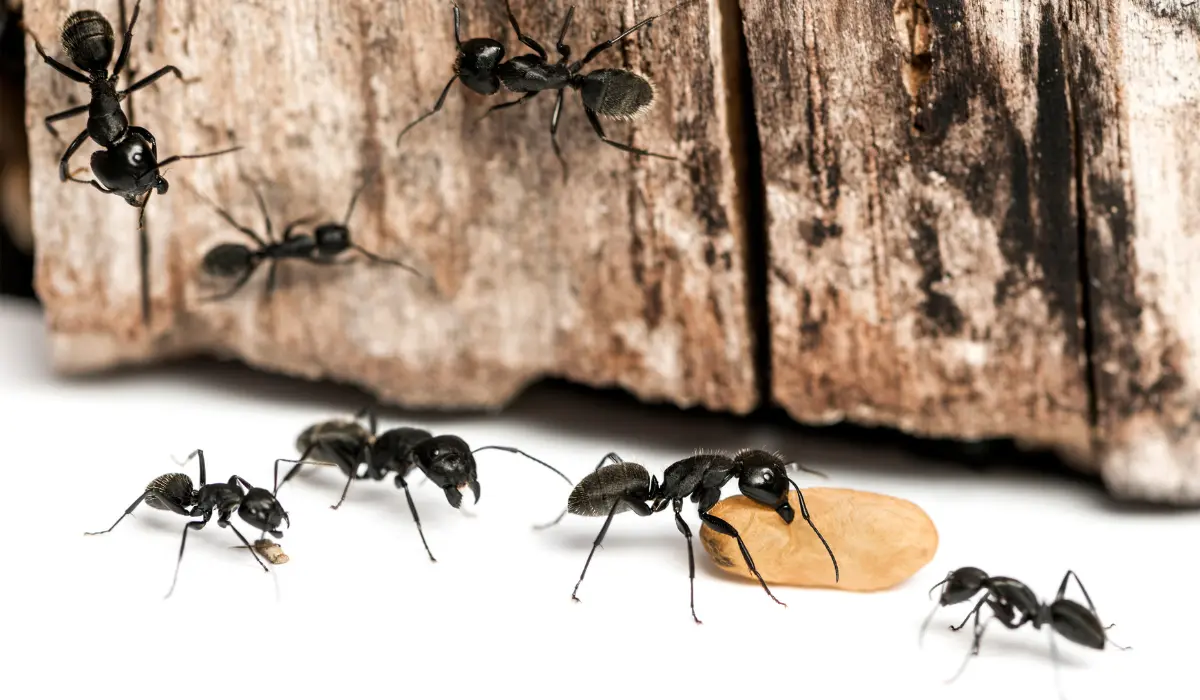
Carpenter ants excavate wood to create their nests, compromising the integrity of buildings over time. This poses a risk primarily because they can cause structural damage to homes.
| Aspects | Description |
|---|---|
| Appearance | Large ants, typically black, red, or a combination of black and red |
| Behavior | Social insects with a strong preference for moist, decayed wood |
| Nesting | Create nests in wood by chewing wood grain to form smooth galleries |
| Foraging Habits | Active at night, form long foraging trails to food sources |
| Identifying Characteristics | Elbowed antennae, a smoothly rounded thoracic profile, and a single node between the thorax and abdomen |
Signs of Ant Problems in New Orleans
Seeing one ant does not always mean you have a large colony indoors. More useful signs include trails that return to the same location, repeated activity in kitchens or bathrooms, visible nesting material, or ants entering through the same opening day after day.
Around New Orleans homes, moisture can provide another clue. Activity near plumbing, damp wood, foundation gaps, or shaded exterior areas may help point toward where ants are nesting or entering.
What Are the Signs
Knowing when ants are becoming a problem is crucial. As residents, you should keep an eye out for:
- Ant Pathways: Consistent lines of ants, indicating a pheromone trail from their nest to food sources.
- Nest Sites: Small piles of soil or debris within the premises show where ants may have established colonies.
- Kitchens & Bathrooms: Increased ant sightings in these areas often signal a nearby ant infestation.
- Property Damage: Potential damage caused by some ant species (e.g., acrobat ants nesting in wood).
Where to Look
Identifying the typical hiding spots for ants effectively helps target the ant problem. Critical areas to inspect include:
- Kitchens: Due to easy access to food, these areas are hotspots for ant activity.
- Bathrooms: Moist environments attract ants searching for water.
- Basements: Often out of sight, basements can harbor large ant colonies.
- Foundation Perimeter: Regular checks around the home’s foundation can reveal ant entry points and nesting spots.
Keeping Ants Away From Your New Orleans Home
Keeping common ants in New Orleans away from your home starts with reducing the food, moisture, and access points they use. Humidity makes moisture control especially relevant, so pay attention to leaks, standing water, damp landscaping, and areas around plumbing.
The existing prevention steps below address the conditions ants commonly use around a home. Sealing gaps, cleaning food residue, storing food securely, trimming vegetation, and correcting moisture issues can all make your property less attractive to foraging ants.
Home Prevention Tips
When it comes to keeping ants away in Louisiana, it’s about staying ahead of the game. Here’s how you can prevent large numbers from setting up shop.
| Tasks | Details |
|---|---|
| Inspect seals and gaps | Check windows, doors, and utility lines for openings. |
| Garbage disposal | Remove food waste and rinse containers. |
| Countertop cleaning | Wipe surfaces to remove crumbs and spills. |
| Store food securely | Use airtight containers for pantry items. |
| Landscape maintenance | Keep vegetation trimmed away from the house. |
| Monitor moisture | Fix leaks and eliminate standing water. |
Professional Ant Control Solutions in New Orleans
Professional ant control starts with identifying the species and determining where the activity is coming from. A fire ant mound in the yard calls for a different approach than carpenter ants around damp wood or tiny household ants traveling through a kitchen.
An inspection may include the foundation, exterior walkways, windows, garage, attic, and indoor areas where activity has been reported. From there, the service can focus on nesting areas, entry points, cracks, crevices, and other conditions tied to the infestation.
If ant trails continue to return, LaJaunie’s New Orleans ant control service can help identify the species and determine where the colony is active.
Should You Get in Touch With Pest Control Professionals?
You may be able to correct occasional ant activity by removing a food source, repairing a leak, or sealing an obvious opening. Persistent trails, several colonies, or ants coming from wall voids or damaged wood can be harder to trace without an inspection.
Identification becomes especially useful when several small brown or black species look alike. LaJaunie’s inspection process looks at visible activity as well as likely entry points, exterior conditions, attics, garages, and interior problem areas when needed.
If ants continue to show up despite prevention efforts, local pest control in New Orleans can address the problem at its source. LaJaunie’s also serves homeowners throughout the other Louisiana service areas.
New Orleans Ants: FAQ
What are the most common ants in New Orleans?
Why do ants come inside New Orleans homes?
How can you tell what kind of ant is in your home?
.