



Finding a small tan or pale spider inside your Louisiana home can make you wonder whether you are dealing with a yellow sac spider or a brown recluse. The yellow sac spider vs. brown recluse comparison matters because the two can appear similar at a glance, but their markings, hiding habits, and bite risks differ. Brown recluses do live in Louisiana, although homeowners see them less often than many assume, while yellow sac spiders may turn up along walls, ceilings, windows, and other indoor areas. Knowing what to look for can help you identify the spider more accurately and decide when professional or medical help is appropriate.
Key Takeaways
- Yellow sac spiders are generally pale yellow to light tan, while brown recluses are brown and may have a darker violin-shaped marking behind the head.
- Yellow sac spider bites commonly cause localized pain, redness, and swelling, while brown recluse bites can cause more serious skin damage in some cases.
- Spider bites cannot always be identified from the skin reaction alone, so worsening symptoms or serious reactions should be evaluated by a medical professional.
Yellow Sac Spider vs. Brown Recluse: Key Differences
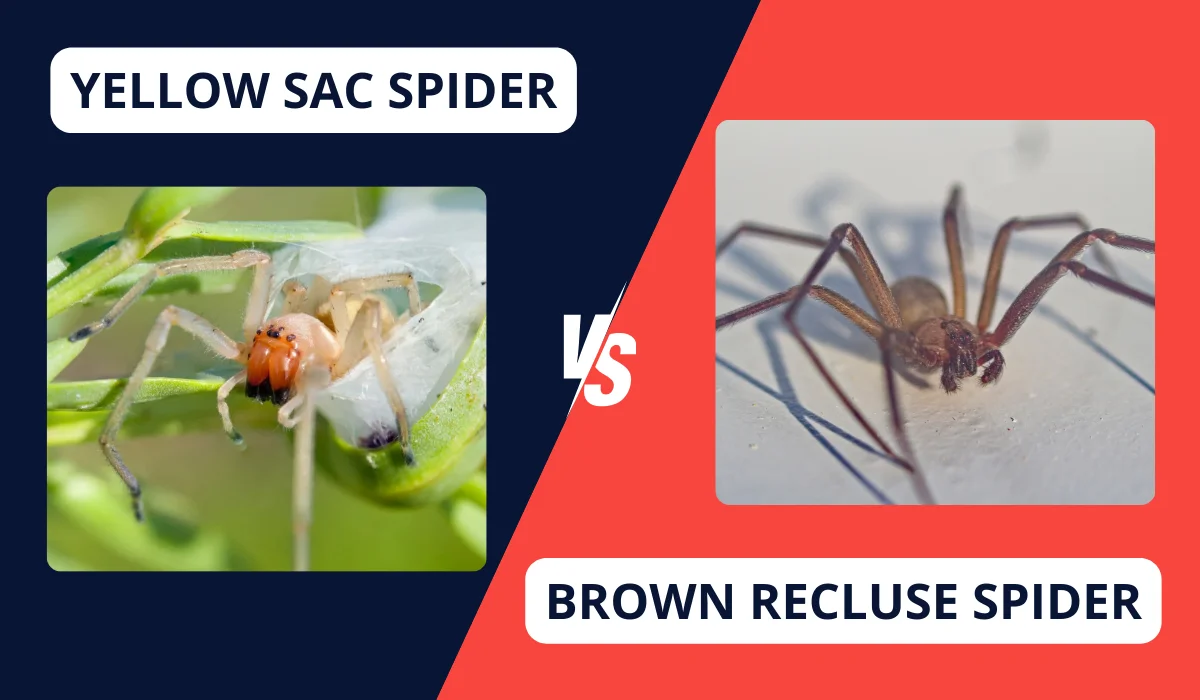
A yellow sac spider and brown recluse can both look plain and lightly colored, which makes a quick identification difficult. The better approach is to compare several features at once rather than relying on color alone.
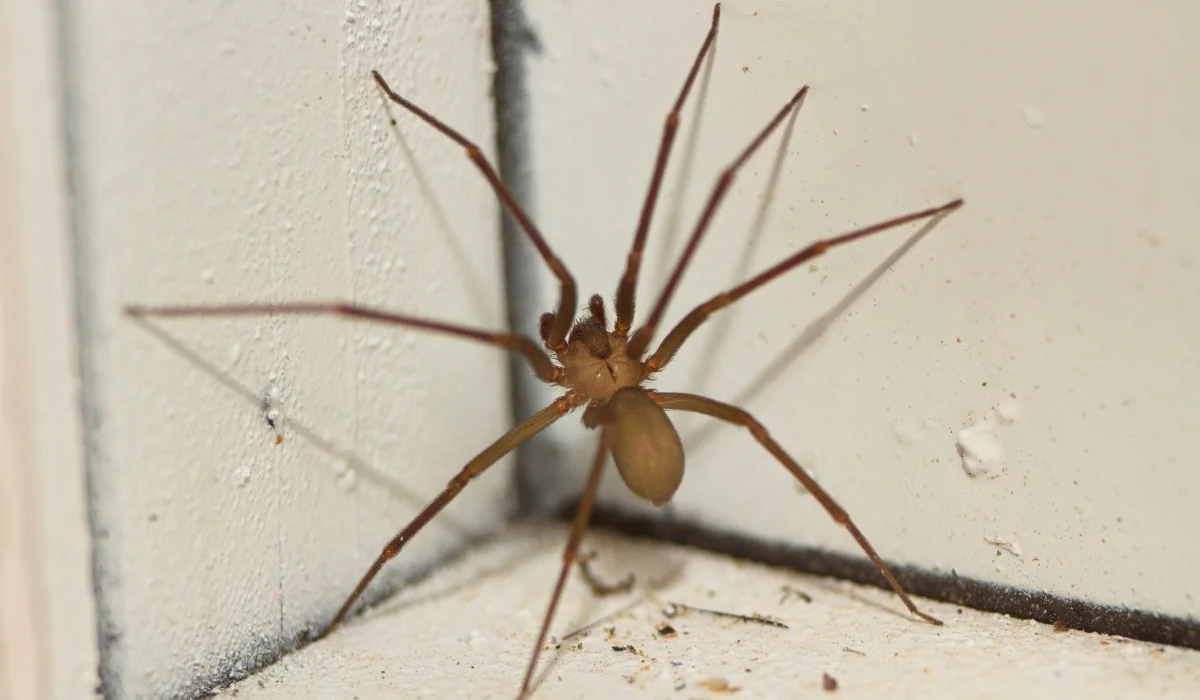
Brown recluses are light to dark brown and typically measure about ¼ to ½ inch in body length, excluding the legs. Yellow sac spiders tend to be pale yellow, yellow-green, or light tan and lack the darker violin-shaped marking associated with a brown recluse.
| Feature | Yellow Sac Spider | Brown Recluse |
|---|---|---|
| Color | Pale yellow, yellow-green, or light tan | Light to dark brown |
| Markings | Usually lacks a prominent dark marking | May have a darker violin-shaped marking behind the head |
| Body Appearance | Pale, relatively uniform coloring | Brown body with relatively plain legs |
| Typical Indoor Areas | Walls, ceilings, window areas, corners, and secluded retreats | Attics, crawl spaces, storage rooms, boxes, shoes, and folded clothing |
| Outdoor Hiding Areas | Protected areas around the structure | Woodpiles, sheds, garages, and other secluded areas |
| Bite Concern | Usually localized pain, redness, and swelling | Can range from mild irritation to more serious tissue damage |
| Behavior | Wandering hunter that creates small silk retreats | Secretive spider that prefers quiet, undisturbed spaces |
No single feature confirms the species. A violin-like mark can be difficult to see, and several harmless brown spiders are mistaken for recluses. Location, body shape, coloring, and other physical features should all be considered together.
How to Identify a Yellow Sac Spider
Yellow sac spiders get their name from the small silk retreats they make in protected areas. Indoors, you may notice these pale spiders along walls, ceiling corners, windows, or other places where they can rest during the day.
Their coloring is usually one of the easiest clues. Yellow sac spiders tend to be pale yellow, yellow-green, cream, or light tan without the darker brown coloring associated with a typical brown recluse.
Look for Pale, Even Coloring
A yellow sac spider generally has a light-colored body without a bold pattern. Depending on the individual and lighting, the spider may look yellowish, greenish, or tan.
That plain coloring is one reason homeowners sometimes mistake them for young brown recluses or other light-colored spiders. Instead of relying on color alone, consider where the spider was found and whether it has the brown recluse features described below.
Check Walls, Ceilings, and Window Areas
Yellow sac spiders may be noticed wandering across walls or ceilings, especially indoors. They also create small silk retreats in protected spaces rather than large, obvious webs designed to catch prey.
For broader information about their behavior and identification, LaJaunie’s coverage of yellow sac spiders in Louisiana focuses specifically on this species rather than comparing it with brown recluses.
How to Identify a Brown Recluse Spider
Brown recluse spiders are light to dark brown and are known for the darker violin-shaped marking that may be visible on the upper body. Adult brown recluses generally measure about ¼ to ½ inch in body length, not including the legs.
Because several spiders can be mistaken for a recluse, understanding how brown recluse spiders in Louisiana differ from other local species can make identification more accurate. The marking alone should not be treated as proof.
Look at the Overall Body
Brown recluses have a relatively plain brown appearance without the stripes, bands, or bold patterns seen on many other spiders. Their legs are also generally plain rather than heavily banded.
Louisiana homeowners may encounter several brown spiders that can be mistaken for a brown recluse, which is why body shape, markings, hiding location, and other physical features should be considered together.
True brown recluses have six eyes arranged in three pairs, unlike most spiders, which have eight. Eye arrangement can help with professional identification, but getting close enough to count a spider’s eyes is not a practical or recommended DIY identification method.
Check Quiet, Undisturbed Areas
Brown recluses prefer secluded areas where they are less likely to be disturbed. In Louisiana homes, LaJaunie’s existing spider guidance identifies attics, crawl spaces, storage rooms, boxes, shoes, and folded clothing as places where they may hide.
Outside, they may shelter around woodpiles, sheds, garages, or other protected spaces. Bites can occur when a hidden spider becomes pressed against the skin, such as when someone puts on stored clothing or reaches into a box.
Where Yellow Sac Spiders and Brown Recluses Turn Up in Louisiana Homes
Both spiders can occur in Louisiana, but finding one does not mean you have a widespread infestation. Brown recluse sightings are less common than many homeowners assume, and several other spiders found around Louisiana homes can be mistaken for them.
Knowing the appearance and habits of common house spiders in Louisiana can help put an unfamiliar indoor spider in context before assuming it is a brown recluse. LaJaunie’s technicians focus inspections on places that provide shelter and access to insect prey, including attics, crawl spaces, garages, storage areas, cracks, and exterior hiding spots.
Yellow Sac Spider Hiding Areas
Yellow sac spiders are more likely to be noticed moving through visible indoor areas such as walls, ceilings, window areas, and corners. Their small silk retreats may be tucked into protected spaces where the spider rests.
Repeated sightings in the same room can be a reason to check for gaps around windows and doors and for other insects that may be providing a food source.
Brown Recluse Hiding Areas
Brown recluses favor darker, quieter locations. Storage areas are especially worth checking because boxes, folded fabrics, shoes, and other items can remain undisturbed for long periods.
Reducing clutter and checking stored belongings before handling or wearing them can reduce accidental encounters. Keeping firewood and other stored materials away from the home can also remove potential hiding areas.
Yellow Sac Spider Bite vs. Brown Recluse Bite
A skin reaction by itself cannot reliably tell you which spider caused a bite. Many skin conditions and other insect bites can resemble spider bites, and people often never see the spider responsible.
The safest approach is to watch the symptoms rather than trying to diagnose the spider species from the wound alone. Yellow sac spider bites and brown recluse bites can both cause localized discomfort, but brown recluse bites have a greater potential for serious tissue injury.
What a Yellow Sac Spider Bite May Look Like
A yellow sac spider bite may cause localized pain, redness, and swelling. The discomfort is sometimes compared with a sting, and uncomplicated reactions generally remain limited to the bite area.
Because skin reactions can vary, knowing what to expect from a yellow sac spider bite can help homeowners understand which symptoms are commonly associated with these spiders. If redness spreads, pain increases, swelling becomes severe, or symptoms develop beyond the bite area, seek medical advice.
What a Brown Recluse Bite May Look Like
A brown recluse bite can vary considerably from one person to another. Some bites cause relatively mild symptoms, while others may develop increasing redness, swelling, blistering, or skin damage.
A suspected bite can change over the following day or several days, so there is no single 24-hour or 72-hour appearance that proves a brown recluse was responsible. Worsening pain, blistering, darkening skin, an open sore, fever, or other systemic symptoms warrant medical evaluation.
Because many conditions can resemble a brown recluse bite, a healthcare professional should evaluate concerning symptoms rather than relying on photos online to make the diagnosis.
When to Seek Medical Care for a Spider Bite
Most mild skin reactions can be monitored, but certain symptoms need prompt medical attention. Contact a healthcare provider if a suspected spider bite becomes more painful, develops significant blistering, shows spreading redness or swelling, or fails to improve.
Seek urgent or emergency medical care for serious symptoms such as difficulty breathing, swelling of the face or throat, fainting, severe weakness, high fever, rapidly worsening pain, or a wound that is quickly deteriorating.
If you safely photographed the spider before it disappeared, the image may help with identification. Do not risk another bite trying to capture or handle a spider for identification.
How to Prevent Yellow Sac Spiders and Brown Recluses
Spider prevention works best when you reduce hiding places and the insects spiders feed on. Both yellow sac spiders and brown recluses can use cracks, storage areas, and other protected spaces around a home.
Focus on practical changes that make those locations less accessible:
- Seal accessible cracks and gaps around doors, windows, baseboards, and utility openings.
- Reduce clutter in attics, closets, garages, and storage areas.
- Store clothing and other fabrics in closed containers when they will sit unused for long periods.
- Shake out shoes, gloves, or clothing that have been stored in dark areas before putting them on.
- Remove visible webs, silk retreats, and egg sacs when they can be reached safely.
- Keep firewood and similar stored materials away from the home.
Spiders are included in LaJaunie’s residential pest control, which also addresses many of the insects spiders use as prey. Reducing those pest populations can make indoor areas less attractive to hunting spiders.
When Professional Spider Control Makes Sense
Professional help makes sense when you repeatedly find spiders indoors, discover egg sacs, suspect a brown recluse, or cannot confidently identify the species. Identification is especially useful when a harmless brown spider could otherwise be mistaken for a recluse.
LaJaunie’s Louisiana-certified technicians inspect likely hiding areas and can identify spider activity around attics, crawl spaces, storage rooms, garages, and other parts of the property. Treatment can then focus on the areas where spiders and their insect prey are active rather than treating every space the same way.
Choosing the Right Spider Control Approach for Your Louisiana Home
The yellow sac spider vs. brown recluse comparison is easier when you look at several clues together. Pale coloring and indoor wandering are more consistent with yellow sac spiders, while a plain brown body, secluded hiding habits, and a possible violin-shaped marking point more toward a brown recluse. A concerning bite, however, should be evaluated based on symptoms rather than trying to identify the spider from the skin reaction alone.
LaJaunie’s Pest Control provides spider control as part of its residential pest services throughout Southeast Louisiana. If you are seeing multiple spiders, finding egg sacs, or are unsure whether a spider is a brown recluse, contact LaJaunie’s to schedule service and have the problem properly identified.
Frequently Asked Questions
How Can You Tell a Yellow Sac Spider From a Brown Recluse?
Yellow sac spiders are usually pale yellow, yellow-green, or light tan and lack a prominent dark marking. Brown recluses are light to dark brown and may have a violin-shaped marking behind the head. Because appearance varies, hiding location and other physical features should also be considered.
Are Yellow Sac Spider Bites as Dangerous as Brown Recluse Bites?
Yellow sac spider bites generally cause localized pain, redness, and swelling. Brown recluse bites have a greater potential to cause blistering and tissue damage, although not every bite becomes severe. Seek medical care if symptoms worsen, spread, or involve more than the immediate bite area.
Are Brown Recluse Spiders Common in Louisiana Homes?
Brown recluse spiders do live in Louisiana, but homeowners see them less often than many assume. They prefer quiet, undisturbed locations such as storage areas, attics, crawl spaces, boxes, shoes, and folded clothing, which can make them difficult to spot directly.