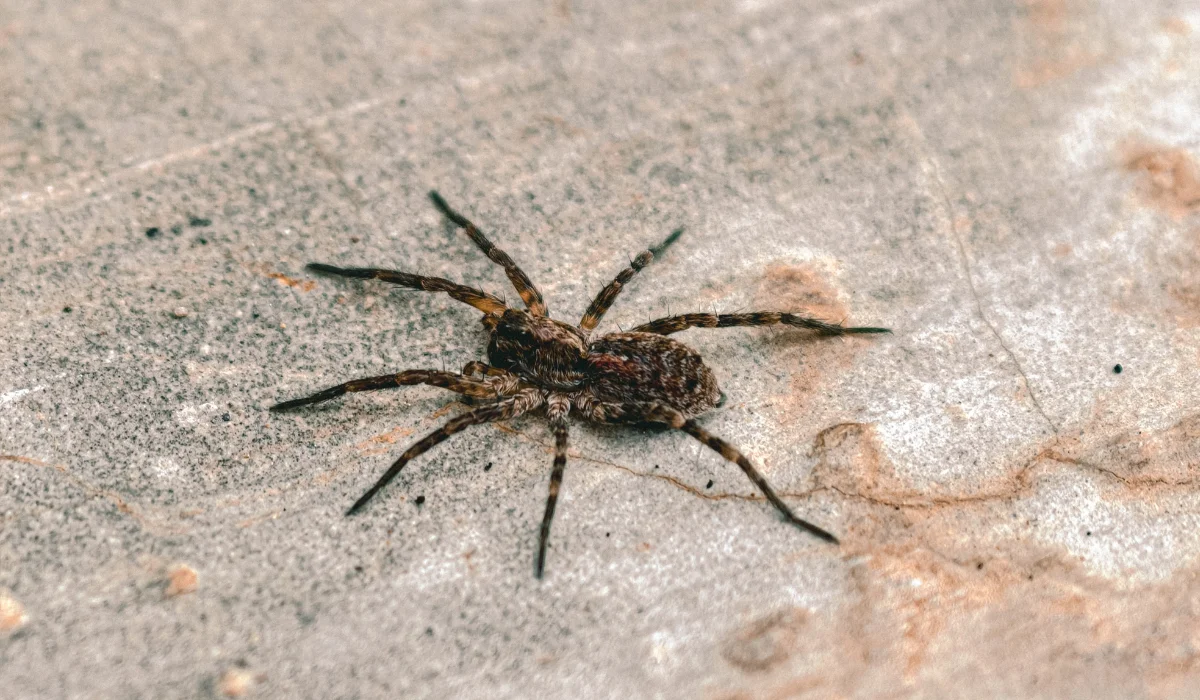




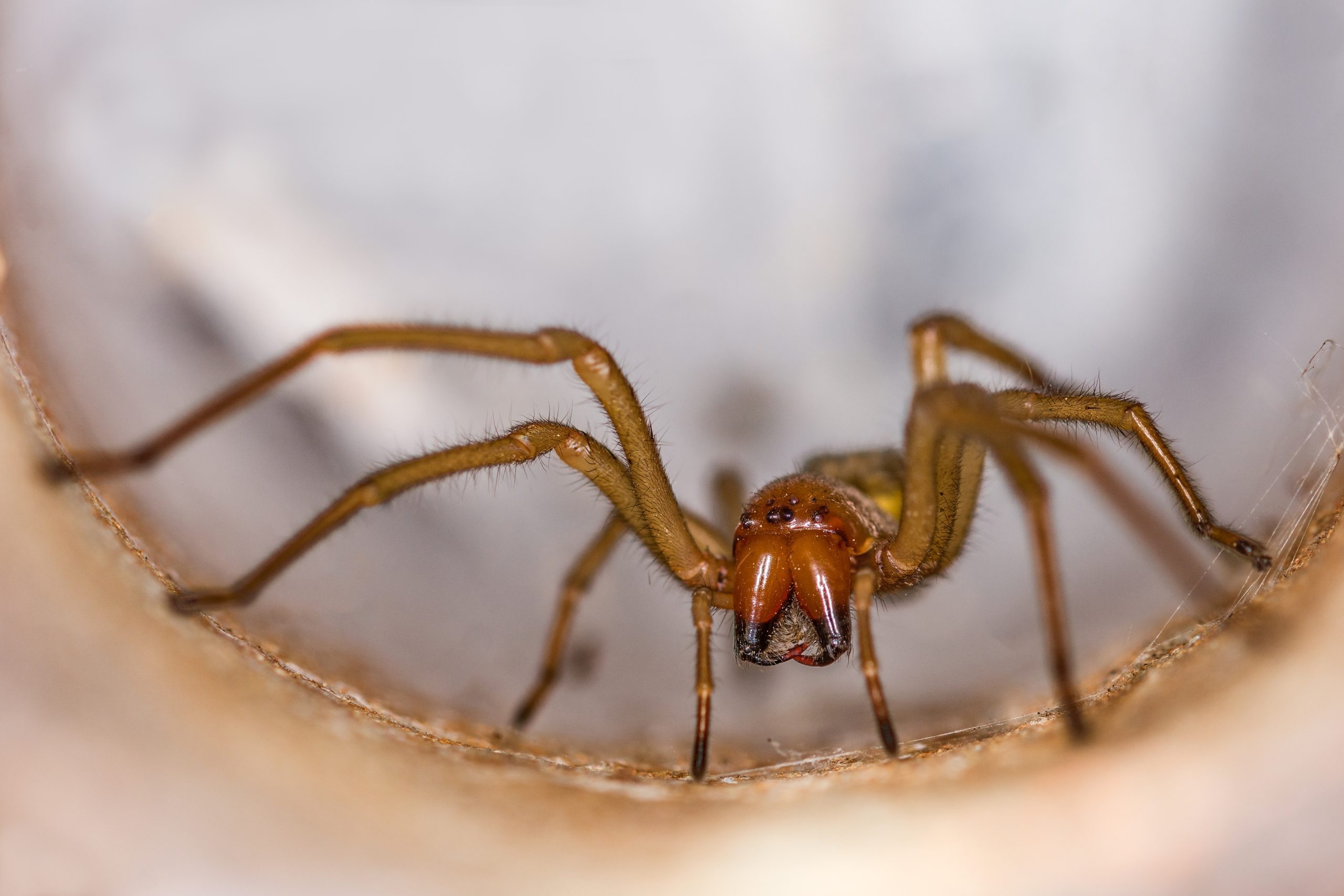
In Louisiana, several common spiders are brown, such as the Southern house spider, wolf spider, and common house spider. But while most are not a serious threat, the hard part is knowing which one deserves more caution.
Among brown spiders in Louisiana, the brown recluse is the main lookalike homeowners worry about because its bite can be medically significant. You can narrow the identification by checking the spider’s body shape, eyes, web, hiding place, and where you live in the state. This guide shows you the common brown spiders you may see, how to spot a brown recluse, and what to do if one keeps showing up around your home.
Common Brown Spiders Around Louisiana Homes
Brown is a weak identification clue on its own. Southern house spiders, wolf spiders, common house spiders, brown widows, and brown recluses can all look brown or tan.
A quick comparison can narrow things down before you start worrying about a recluse.
| Spider | What You May Notice | Where You May Find It | Concern Level |
| Brown recluse | Plain tan or brown body, thin legs, six eyes in three pairs | Storage areas, closets, garages, sheds | Medically significant |
| Southern house spider | Long-legged brown body, often near a crevice web | Brick, shutters, windows, wall cracks, garages | Low |
| Wolf spider | Heavier body, visible hair or patterns, fast movement | Floors, patios, garages, yards | Low |
| Common house spider | Small brown or tan body with rounded abdomen | Corners, windows, garages, sheds | Low |
| Brown widow | Rounded abdomen, mottled brown coloring, orange marking underneath | Patio furniture, planters, sheds | Medically significant |
A brown widow also has medically significant venom, so not every brown spider besides a recluse belongs in the harmless category. Its rounded abdomen and widow-like shape, though, make it look quite different from the plain, flatter spiders people usually mistake for brown recluses.
So, for most homeowners, the real identification challenge is telling a brown recluse from the common brown spiders that share similar size, color, or hiding places.
How Common Are Brown Recluse Spiders in Louisiana?
Where you live changes the odds of finding a true recluse. According to the LSU AgCenter, brown recluses are common in roughly the northern half of Louisiana, north of a line through Alexandria. LSU describes them as extremely infrequent in southern Louisiana and identifies the southern house spider as the species most often mistaken for a recluse in the state.
That matters if you live around Thibodaux, Houma, New Orleans, Metairie, Kenner, Mandeville, Covington, or Slidell. A brown recluse can still show up in South Louisiana, but the location should be part of the identification.
Why South Louisiana Gets So Many False Alarms
A male southern house spider can look like a recluse when you only get a quick glance. Its brown color, slim body, and long legs line up with what many homeowners expect a recluse to look like. The spider may also wander away from its web while searching for a female. That can put it on walls, around shutters, or inside garages with no obvious web nearby.
If you can, take a sharp photo before the spider disappears. A photo gives you more to work with than a description such as “medium-sized brown spider.”
How to Tell a Brown Recluse From Other Brown Spiders
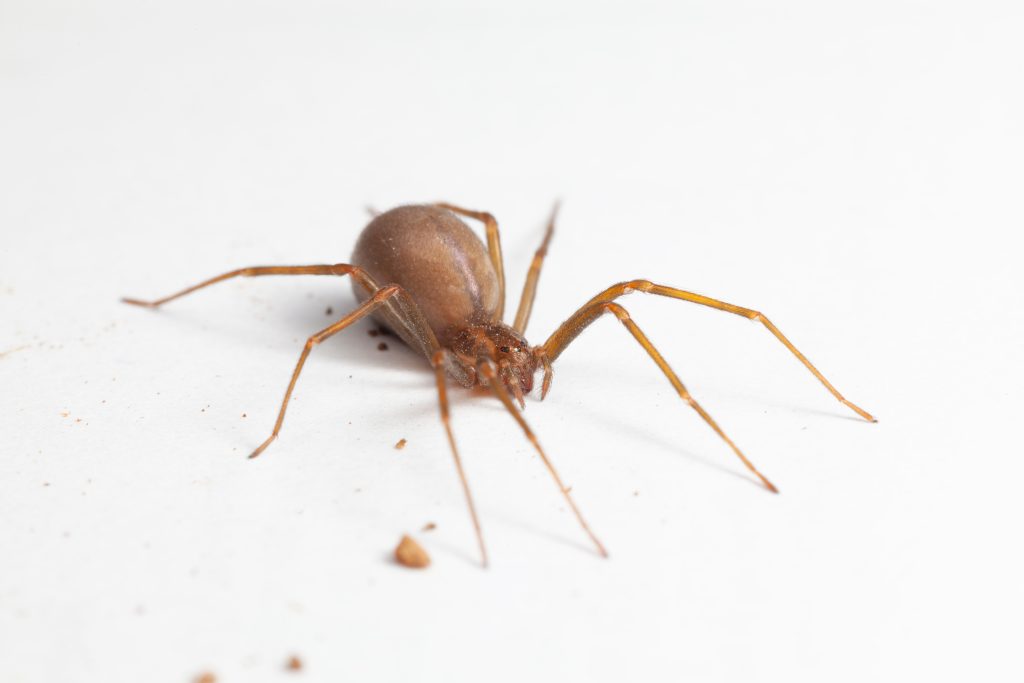
A true brown recluse has a fairly plain appearance. Heavy body hair, bold stripes, obvious leg bands, or a strongly patterned abdomen usually point toward another spider. The best identification comes from several clues together rather than one famous marking.
Check the Whole Body, Not Just the Violin Mark
Brown recluses are known for a darker violin-shaped mark on the upper part of the body. It can help, but it should not be your only test.
Other brown spiders can have dark patches that look similar from certain angles. Poor lighting can make an ordinary marking look more dramatic than it is.
Look at the rest of the spider too. A brown recluse tends to have a plain tan or brown body and relatively uniform legs.
Use a Photo to Check the Eyes
Brown recluses have six eyes arranged in three pairs. Most spiders have eight.
That is one of the stronger differences, but you should not lean close to a live spider to count them. Use the zoom on your phone instead. If the spider is already dead, place it in a sealed container for identification. A clear image also helps when the body shape or markings are hard to judge from memory.
Check the Web and Hiding Place
Brown recluses spend much of the day in sheltered spaces and come out to hunt. You are more likely to disturb one behind stored material than find it sitting in the center of a large web.
Southern house spiders leave a different clue. Females build tangled webs that lead into cracks or holes where they hide.
Wolf spiders do not rely on prey-catching webs. They hunt on foot and often draw attention by running quickly across a floor or patio.
| Identification Clue | Brown Recluse | Southern House Spider | Wolf Spider |
| Body | Plain tan or brown | Brown and slender in males | Heavier, hairier, often patterned |
| Eyes | Six in three pairs | Eight | Eight |
| Web | Retreat silk in hidden spaces | Tangled web leading into a crevice | No prey-catching web |
| Movement | Often hidden during daylight | Males may wander | Fast ground hunter |
| Useful Homeowner Clue | Plain body plus correct range | Crevice web or wandering male | Hair, pattern, heavier build |
Southern House Spiders
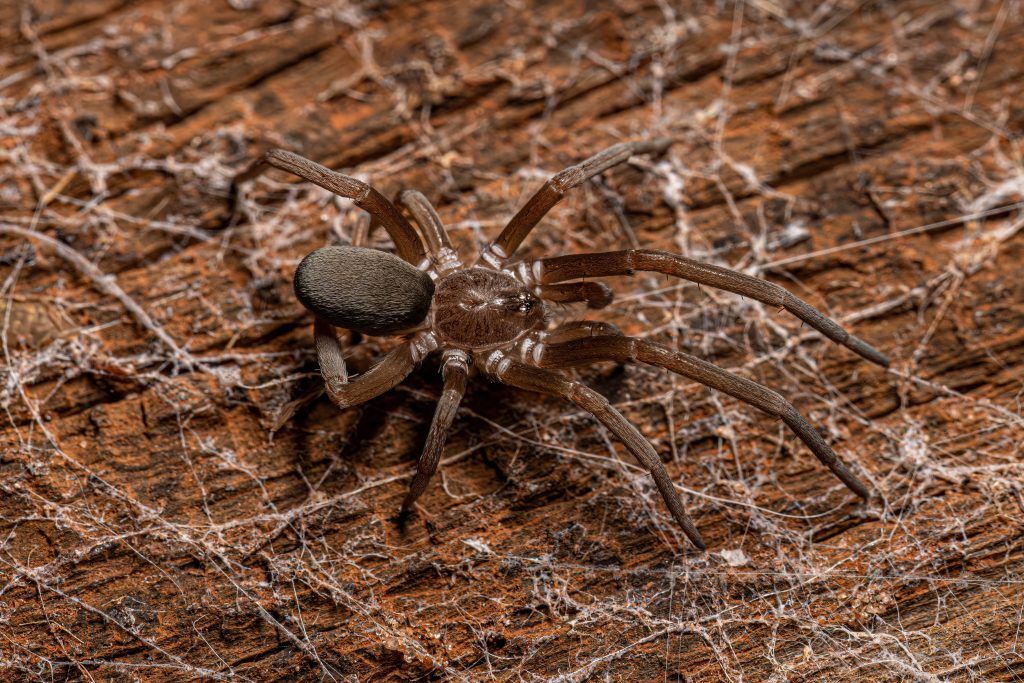
The southern house spider causes more brown recluse confusion in Louisiana than most other species. Males have long legs and slimmer brown bodies, so a quick sighting can look convincing. Females are heavier and tend to remain near their crevice webs. You may find them around brick, shutters, window frames, garages, wall cracks, and outbuildings. Their venom is not considered medically significant.
Wolf Spiders
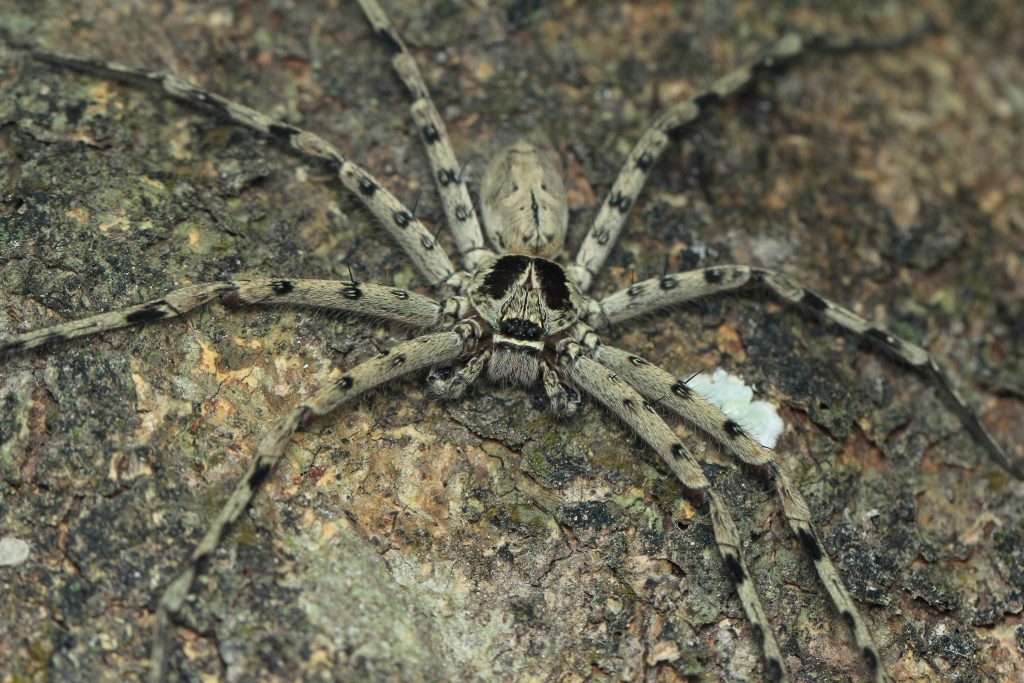
A wolf spider vs. brown recluse comparison becomes easier once you see the body clearly. Wolf spiders usually look heavier and hairier. Many have visible striping or mottled patterns that a recluse should not have. They also move fast because they chase prey instead of waiting in a web.
One may run across a garage, bathroom, patio, or hallway and disappear before you get close. That speed can be startling, but the body is quite different from a recluse.
Brown Widows
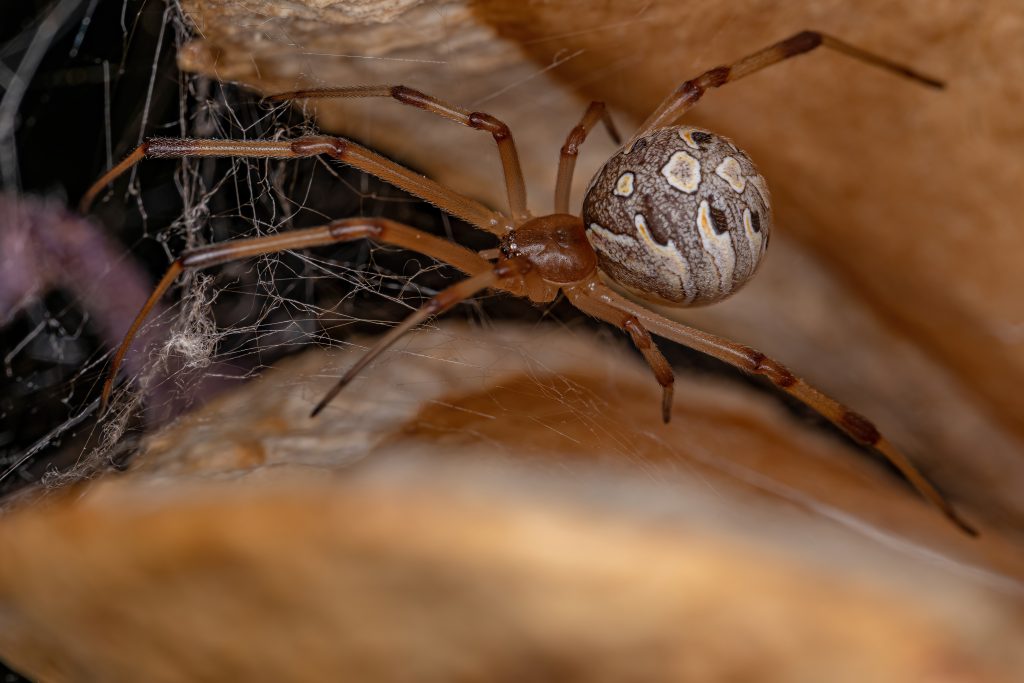
Brown widows need more caution, but their shape does not closely match a brown recluse. Females have rounded abdomens and may show tan, cream, orange, and brown markings. An orange or yellow-orange hourglass can appear underneath. Their egg sacs also have pointed silk projections instead of a smooth surface.
Bites are reported as rare and are usually less severe than bites from other widow species, though significant symptoms can occur.
Where Brown Recluses Hide and How Bites Happen
Think about the parts of your home that stay untouched for weeks or months. Those are the kinds of places a recluse can use for shelter.
Cardboard boxes, stored materials, closets, sheds, garages, attics, work gloves, and shoes can all give spiders a protected hiding place.
How Accidental Bites Happen
A bite is more likely when the spider gets trapped against your skin. You may put on a glove it was hiding inside. You may lift a box and press the spider against your arm. You may reach behind stored material without seeing it first. The spider does not need to chase you for contact to happen.
How to Lower Your Risk
Simple habits can reduce accidental encounters with brown spiders and other pests hiding in storage areas.
| Situation | What to Do |
| Moving old cardboard boxes | Wear gloves and check the hidden sides |
| Putting on stored shoes or boots | Shake them out first |
| Reaching behind stored items | Use a flashlight |
| Handling firewood or lumber | Wear gloves and inspect covered surfaces |
| Cleaning a garage or shed | Move items where you can see behind them |
| Finding an unknown spider | Photograph it instead of handling it |
Closed plastic storage bins also remove many of the folds and hidden spaces that cardboard provides.
What to Do About a Suspected Brown Recluse Bite
A skin sore alone cannot confirm a brown recluse bite. In many suspected cases, nobody ever sees or identifies the spider.
A bite may not hurt at first. Pain and skin changes can develop later, and some confirmed bites damage tissue around the site. Poison Control notes that serious illness and death are rare and that there is no specific antidote for brown recluse venom. Treatment depends on the wound, symptoms, and possible complications.
Wash a suspected bite with soap and water. Seek medical advice if pain, swelling, skin damage, fever, weakness, or other concerning symptoms develop.
If you can photograph the spider without touching it, take the picture. A dead specimen can be kept in a sealed container. Identifying the actual spider gives a medical provider more useful information than trying to identify the cause from the wound alone.
How to Reduce Brown Spiders in Louisiana Homes
Spiders are more likely to stay around homes where they can find insects, shelter, and easy entry points. Clear old cardboard from storage areas, repair damaged screens and door seals, trim plants away from the house, and remove webs from eaves, windows, and garage corners.
Exterior lights can also attract insects that spiders hunt. Check doors, windows, patios, and garages where bugs gather after dark.
When Professional Spider Control Helps
Repeated activity in the same areas can point to more than one wandering spider. Webs, entry gaps, protected hiding spots, and insect prey can keep the activity going.
LaJaunie’s Pest Control offers spider control services. We inspect common trouble spots around the home, address cracks and access points, and remove reachable webs as part of the service.
If you keep finding brown spiders in Louisiana and do not want to guess what they are, contact LaJaunie’s Pest Control. We can identify the activity, inspect the areas supporting it, and recommend the right next step for your home.