

You step outside for the evening and the mosquitoes find you before you’ve made it off the porch. By the time you head back in, you have bites on your ankles and arms and still no idea where they’re all coming from. For Thibodaux homeowners, that usually comes down to the same question: fogging or barrier treatment?
Fogging clears adult mosquitoes fast, but the effect fades within a day or two. A barrier treatment works differently. A treatment solution is applied to the shrubs, eaves, and shaded surfaces where mosquitoes rest, dries in place, and keeps killing mosquitoes that land there for up to three weeks. Knowing which method fits your yard and schedule can save you from paying for the wrong one.
Key Takeaways
- Fogging kills adult mosquitoes on contact, but relief typically lasts only 24 to 72 hours before mosquitoes return.
- Barrier treatments coat the surfaces where mosquitoes rest and remain effective for up to three weeks per application, making them better suited for season-long protection.
- Thibodaux’s low-lying yards, proximity to Bayou Lafourche, and long warm season sustain breeding conditions that one-time fogging alone will not resolve.
How Mosquito Fogging Works
Fogging uses a backpack or mounted machine to disperse a fine mist of treatment product into the air. Mosquitoes that fly through the fog contact it and die. The CDC describes this approach as ultra-low volume (ULV) spraying, a method that covers broad areas quickly with minimal product, which makes it a practical option for clearing an outdoor space before guests arrive or responding to a sudden surge in activity.
The Tradeoff Is Duration
Most fogging treatments provide relief for roughly 24 to 72 hours: the time window most often cited by pest management professionals for ULV applications before mosquitoes from surrounding areas begin returning. Once the product disperses, mosquitoes move back in.
In Thibodaux, where drainage ditches and low-lying yards hold standing water well after rain, that turnaround is fast. Fogging also has limited reach underneath dense foliage, where mosquitoes spend most of the day. If they are not actively flying when the fog is released, many will not be affected.
For a backyard cookout or a graduation party, fogging works well as a same-day solution. For families who want to use their yard regularly through a South Louisiana summer, fogging alone tends to require more frequent visits to maintain any real difference.
How Barrier Treatments Work
A barrier treatment applies a liquid control product to the shrubs, dense vegetation, eaves, and shaded areas around your yard. Mosquitoes are weak fliers and spend most daylight hours resting in those spots. When the product dries on plant surfaces, it stays in place and kills mosquitoes that land there throughout the protection window.
Why the Residual Effect Matters
Because the product bonds to surfaces rather than dispersing into the air, barrier treatments hold up better after light rain and wind. Most applications remain effective for up to three weeks, which is why monthly service schedules are standard for homeowners who want consistent protection through the season.
Barrier treatments can also be directed at areas around standing water and low-lying depressions common in Thibodaux yards, particularly those near Bayou Lafourche. This lets technicians target resting adults and disrupt breeding in the same visit, rather than only addressing the mosquitoes that happen to be flying at the time of treatment.
Why Thibodaux’s Conditions Make Ongoing Treatment Necessary
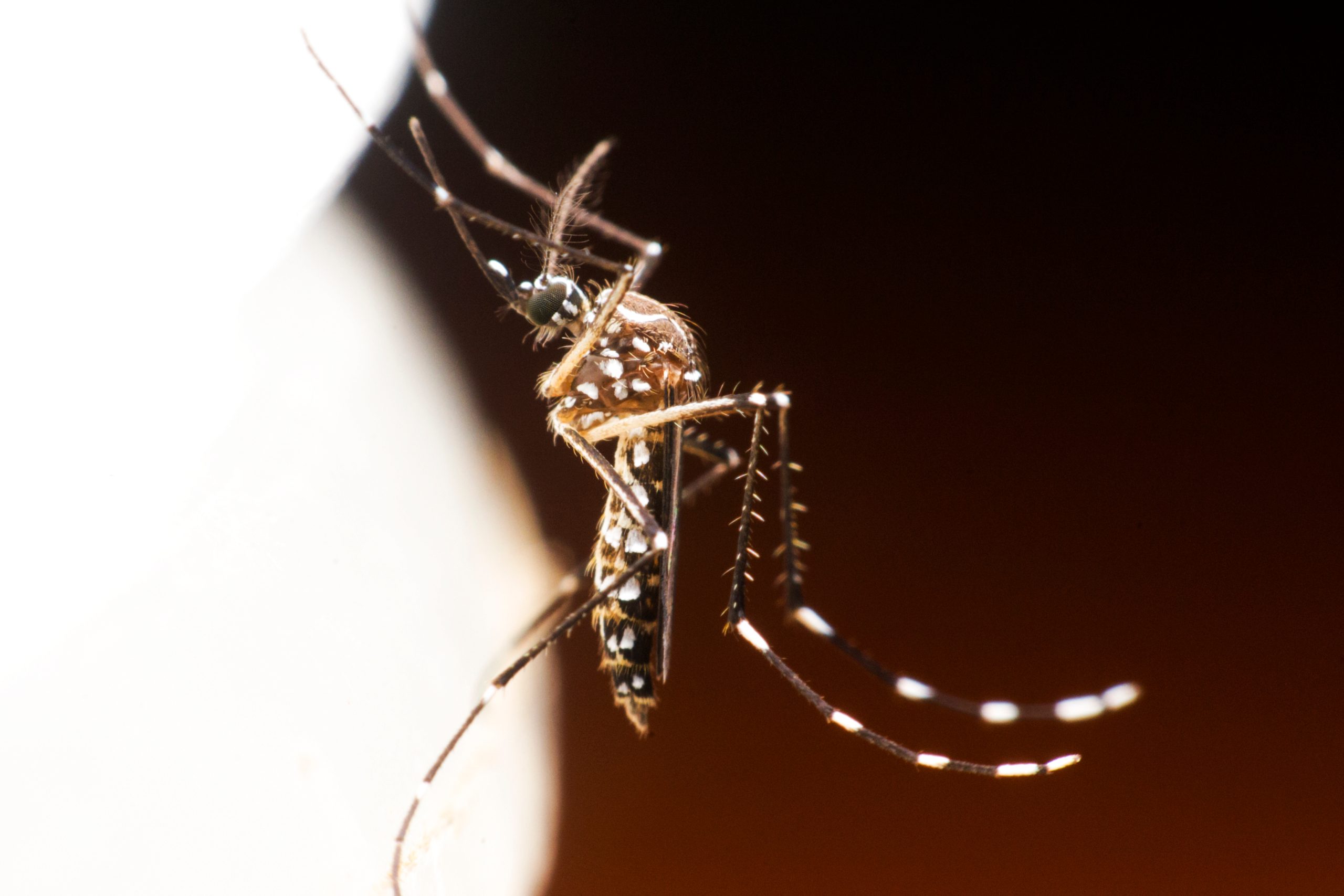
Mosquito pressure in Thibodaux stays elevated for most of the year. The City of Thibodaux has issued West Nile Virus alerts tied to mosquito samples collected within city limits, and the city funds its own mosquito control program year-round. The Southern House Mosquito, a known West Nile Virus vector, has tested positive in Thibodaux-area samples. The Asian Tiger Mosquito is also active throughout the area and is a recognized nuisance and disease-concern species, as documented by the LSU AgCenter’s mosquito research program.
The Landscape Keeps Breeding Conditions Active
Slow-draining soils, clogged gutters, planter saucers, and yard depressions that hold water after a rainstorm can all become breeding sites: conditions common across Thibodaux and much of South Louisiana.
Mosquitoes can complete their life cycle in two weeks, which means a single yard can cycle through multiple generations in a single month. A treatment that only addresses adult mosquitoes in the air, without disrupting the breeding cycle, will keep falling behind as new generations emerge.
Mosquito Fogging vs Barrier Treatment: Which One to Use?
Three situations come up most often:
- You have an upcoming outdoor event: Fogging is the practical choice. A treatment applied a few hours before your gathering clears adult mosquitoes from the immediate area and makes the space more comfortable for guests.
- You want to use your yard through the season: A monthly barrier treatment program is the better fit. Your yard stays treated between visits, and the population decreases over time instead of spiking back between appointments.
- Your yard has standing water issues: Neither fogging nor barrier spray alone addresses active breeding sites. Pairing a barrier treatment with a biological control tool like the In2Care system targets larvae at the source, using the mosquitoes themselves to carry a sterilizing agent to nearby breeding sites - interrupting the reproductive cycle even in water that accumulates after rain.
Professional Mosquito Control for Thibodaux Properties
Effective mosquito control for a South Louisiana yard typically involves more than a single method. A well-structured program addresses mosquitoes at two stages: adult populations in the foliage and larvae in standing water. Fogging handles the immediate adult pressure; a residual barrier treatment maintains protection between visits; and a biological tool targets breeding sites before new adults emerge. Together, these approaches reduce overall population pressure rather than just clearing what’s visible on any given day.
How LaJaunie’s Approaches It
LaJaunie’s Pest Control has served Thibodaux and surrounding communities since 2008. Our mosquito control service combines backpack fogging with One Guard and the In2Care biological sterilization system in a single monthly visit.
Treatments are designed to be safe for children and pets. The service includes a re-treat guarantee: if mosquitoes return between scheduled visits, LaJaunie’s will come back at no additional cost. Plans run month-to-month with a 30-day written notice to cancel. Same-day and Saturday appointments are available.
Mosquito Fogging vs. Barrier Treatment: Bottom Line
For a single event, fogging does the job. You get a fast knockdown of the adult mosquitoes in the immediate area, and your guests are comfortable. But if mosquitoes are keeping your family off the porch regularly, a one-time fog is not what fixes that. Barrier treatments work on the surfaces where mosquitoes actually spend their time, and a monthly program keeps that protection active across the whole season. Pair it with a breeding-site tool like In2Care, and you are addressing the problem at both the adult and larval stages, which is the approach that reduces population pressure over time rather than just clearing it for a few days.
LaJaunie’s Pest Control has been combining monthly fogging with breeding-site control in Thibodaux since 2008. If you want to know what’s driving mosquito pressure in your yard and which treatment plan fits your property, schedule a free inspection.
Frequently Asked Questions
Is fogging or barrier treatment better for long-term mosquito control in Thibodaux?
Barrier treatment holds up longer. A properly applied barrier spray can remain effective for up to three weeks, while fogging typically provides relief for 24 to 72 hours. For ongoing protection through Thibodaux’s extended mosquito season, a monthly barrier-based program, ideally paired with the In2Care system to address breeding, keeps your yard treated between visits in a way that fogging alone cannot.
How soon can my family use the yard after a mosquito treatment?
After a barrier spray treatment, families are generally asked to stay off treated areas for a short window while the product dries, typically around 30 minutes depending on conditions. Once dry, the yard can be used as normal.
Will treatment protect against mosquitoes coming in from neighboring properties or the bayou?
No treatment creates a completely sealed perimeter, especially in an area where waterways and low-lying land keep breeding conditions active much of the year. A monthly barrier treatment combined with the In2Care system helps reduce the population that establishes itself on your property and discourages mosquitoes from neighboring areas from resettling in your yard.
What is the In2Care system, and how does it differ from fogging or barrier spray?
The In2Care system uses water-filled stations that attract egg-laying mosquitoes. When a mosquito enters a station, it picks up a biological sterilizing agent that it then carries to other nearby breeding sites, spreading the treatment beyond the station itself. This targets the larval stage rather than adults, making it a practical complement to fogging and barrier spray.