



In most Louisiana homes, bed bugs can survive about 20 days to several months without feeding, while adults under ideal cool, humid conditions have survived much longer in controlled research. Leaving a bedroom, apartment, or vacant house empty for a few weeks is not a dependable way to eliminate them. Temperature, humidity, life stage, hiding conditions, and occasional access to a person or another warm-blooded host all affect how long bed bugs remain alive.
Key Takeaways
- Bed bugs can survive about 20 days to several months without feeding in many homes, while adults can persist longer under favorable cool conditions.
- Young nymphs need blood meals to progress through their five developmental stages, while adults generally tolerate fasting longer.
- Leaving a Louisiana home or bedroom empty is not a reliable control strategy because hidden bed bugs can survive until another host becomes available.
How Long Can Bed Bugs Live Without a Host?
How long bed bugs can live without a host depends heavily on where they are hiding. Adult bed bugs generally tolerate fasting better than young nymphs, and cooler conditions can slow their metabolism enough to extend survival.
Under controlled conditions, adult bed bugs have been reported to survive for many months and, in some cases, close to a year without feeding. Those extreme laboratory results should not be treated as the expected timeline inside every Louisiana home.
In an occupied or vacant home, survival is more likely to range from weeks to several months. Even occasional access to a person can allow bed bugs to feed and extend how long the infestation remains active. A guest sleeping in an infested room for one night may provide the blood meal some bugs need to continue developing or reproducing.
How Louisiana Conditions Affect Bed Bug Survival
Louisiana’s mild winters do not provide a reliable seasonal break from bed bugs, especially when the insects are living inside climate-controlled homes. Bed bugs hiding in bedrooms, apartments, hotels, and other occupied buildings remain protected from many outdoor temperature swings.
Humidity also matters because bed bugs lose water while fasting. Research on bed bug survival has shown that cooler conditions around 68°F combined with higher humidity can help unfed bed bugs survive longer by slowing water loss and metabolic activity.
Louisiana’s warm climate does not automatically help unfed bed bugs survive longer. Higher temperatures can increase metabolism and water loss, while cooler indoor conditions can extend fasting survival.
Air-Conditioned Homes Can Shield Bed Bugs From Temperature Extremes
During a hot Baton Rouge or New Orleans summer, most bed bugs are not exposed to outdoor heat. They are more likely to be hiding inside an air-conditioned bedroom, apartment, hotel room, or upholstered piece of furniture.
Mattress seams, box springs, furniture joints, baseboards, outlets, and wall voids can all provide relatively stable hiding areas. These locations protect bed bugs from the high outdoor temperatures homeowners may assume will kill them.
This is why leaving a room unused for a few weeks does not reliably solve an infestation. The bugs can remain concealed until someone returns.
Higher Temperatures Can Shorten Fasting Survival
Higher temperatures can speed up a bed bug’s metabolism and water loss, which can shorten the amount of time it survives without feeding.
That does not mean leaving furniture outside or turning off the air conditioner will eliminate an infestation. Hidden areas inside mattresses, furniture, walls, and other materials may never reach or maintain temperatures needed to kill every bed bug and egg.
Effective treatment has to account for the insects protected inside those hiding places, not just the bugs exposed on a surface.
How Bed Bug Life Stage Affects Survival Without Feeding
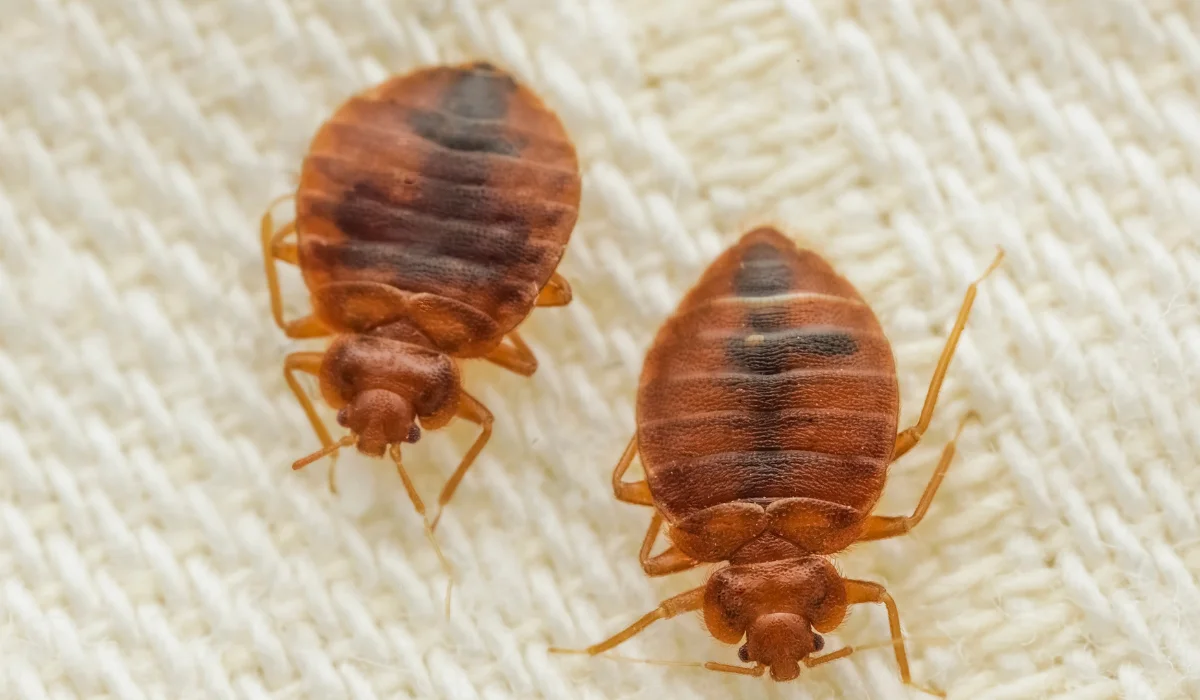
Bed bugs develop through five nymph stages, called instars, before becoming adults. Each nymph needs a blood meal before it can molt into the next stage.
Younger bed bugs generally tolerate fasting for less time than adults. Temperature, humidity, and the insect’s condition can still make survival vary considerably within each stage.
These categories are intentionally broad because there is no reliable way to predict when a hidden bed bug will die based on life stage alone. An adult inside a cool bedroom can survive very differently from a newly hatched nymph in a hot, dry space.
First Through Third Instars
The youngest bed bugs need blood meals for both survival and development. A first-stage nymph cannot continue growing while it waits for someone to return to the room.
After feeding, it molts into the second stage and repeats the process through each following instar. Removing access to hosts interrupts development, but it does not guarantee that every nymph will die within a predictable number of days.
This is why an empty room can appear free of activity for a while, only for bed bugs to become noticeable again when someone starts using the room.
Fourth and Fifth Instars
Later-stage nymphs generally tolerate fasting better than newly hatched nymphs, but they still need a blood meal before each molt.
They may remain hidden in furniture, mattress seams, wall gaps, or other protected spaces while waiting for a host. If someone occasionally sleeps in the room, those insects may feed and continue developing.
Guest rooms and second properties can be difficult to evaluate for this reason. Low occupancy does not necessarily mean the infestation has died out.
Adult Bed Bugs
Adults generally tolerate fasting better than young nymphs. Cooler conditions slow their metabolism, which can allow them to remain alive much longer than homeowners expect.
Adult females that receive a blood meal can also produce eggs. Even one feeding opportunity can allow an infestation to continue after a long period when a room appeared unused.
Waiting for adults to starve is therefore far less predictable than locating and treating the infestation directly.
Can Bed Bugs Survive in an Empty House?
Yes. Bed bugs can survive in an empty house long enough that vacancy alone should not be considered a treatment strategy.
When people leave, bed bugs tend to remain hidden near the areas where hosts previously slept or rested. Mattresses, box springs, bed frames, upholstered furniture, baseboards, electrical outlets, and wall gaps can all provide shelter.
If someone returns periodically, even for a short stay, the bugs may gain another opportunity to feed. Property owners, guests, contractors, cleaning crews, or new tenants can all become available hosts.
Vacant Homes Still Provide Hiding Places
An empty house removes regular access to a person, but it does not remove the cracks, seams, and voids where bed bugs hide.
Furniture left behind can provide plenty of shelter. Even a nearly empty bedroom still has baseboards, outlets, trim, flooring gaps, and wall voids.
For that reason, LaJaunie’s technicians focus on where bed bugs are likely to hide rather than assuming a room is clear because nobody has slept there recently.
What LaJaunie’s Technicians Look for During Bed Bug Inspections
LaJaunie’s bed bug team starts by confirming whether bed bugs are actually responsible for the problem. Many calls begin because someone has unexplained bites, but bites alone cannot confirm an infestation.
During an inspection, technicians concentrate on areas close to where people sleep or rest. LaJaunie’s service experience shows that roughly 80% of bed bugs are found within three to five feet of the headboard, which is why mattresses, box springs, bed frames, headboards, and nearby furniture receive close attention.
Technicians may also inspect electrical outlets, picture frames, furniture drawers, mattress labels, and the interior of box springs. These less obvious hiding places matter when a homeowner has not seen a live bed bug but continues finding other evidence.
Early Evidence Around the Bed
Blood spots on sheets, dark fecal marks, cast skins, eggs, and live bugs can all point toward an infestation.
Many homeowners miss the smaller clues because young bed bugs can be difficult to see. Knowing the early signs of bed bugs most people miss can help you recognize activity before the infestation becomes easier to notice.
If you find something suspicious but are not sure what it is, learning how to check for bed bugs can help you focus on the areas where physical evidence is most likely to appear.
Bed Bug Bites Do Not Tell You How Long the Infestation Has Been There
A bite appearing this morning does not mean the bed bug arrived last night. Bite reactions vary considerably from one person to another, and some people show little or no visible reaction.
Visible marks can appear within hours or may take several days. That delay makes it difficult to use the timing of a skin reaction to determine exactly when or where exposure occurred.
For Louisiana residents trying to connect a recent trip or overnight stay with a skin reaction, understanding when bed bug bite marks can appear helps explain why the source is not always obvious.
Do Not Identify Bed Bugs From a Bite Alone
Bed bug bites can resemble reactions caused by fleas, mosquitoes, and other pests. Skin appearance also varies significantly from person to person.
Other pests can cause skin reactions that may be confused with bed bug bites, including spiders such as yellow sac spiders. That is why physical evidence around the bed matters more than the appearance of a bite alone.
If a bite or skin reaction causes severe swelling, spreading redness, trouble breathing, or other concerning symptoms, contact a qualified healthcare provider.
How Bed Bugs Reach Louisiana Homes
Bed bugs are effective hitchhikers. They can move in luggage, clothing, upholstered furniture, bags, and other belongings without being noticed.
Hotels and other high-turnover lodging create opportunities for bed bugs to move between travelers and their belongings. That does not mean every hotel has bed bugs, but checking the sleeping area before unpacking can reduce the risk of carrying them home.
Travelers can review common bed bug concerns in Baton Rouge hotels to understand where to inspect luggage and sleeping areas before and after a stay.
Secondhand Furniture Can Also Move Bed Bugs
Used mattresses, bed frames, couches, chairs, and other upholstered furniture can carry bed bugs into a home. Inspect seams, folds, screw holes, joints, labels, and hidden fabric before bringing secondhand furniture indoors.
Seeing no live bed bugs during a quick glance is not enough to rule them out. Eggs, nymphs, and adults can fit into very narrow spaces.
Why Waiting for Bed Bugs to Die Usually Fails
Trying to starve bed bugs sounds reasonable because they need blood to survive. The problem is that their fasting tolerance is much longer than most homeowners expect.
You also have no practical way to know whether every bed bug has been completely deprived of a host. One overnight guest or occasional visit can provide another feeding opportunity.
Eggs already present may also hatch while the room is unused, leaving new nymphs waiting for their first meal.
Moving to Another Room Can Spread Bed Bugs
Sleeping somewhere else inside the same home may encourage hungry bed bugs to move in search of a host. That can turn a problem concentrated around one bedroom into activity in another part of the house. Carrying bedding, furniture, clothing, or other belongings between rooms can also move bed bugs.
If you suspect an infestation, avoid moving affected furniture through the home unless it has been properly contained.
How LaJaunie’s Treats Bed Bug Infestations
LaJaunie’s treatment process begins with identification and preparation. Once bed bugs are confirmed, customers receive preparation instructions so bedrooms, clothing, bedding, furniture, and other affected items are ready for service.
Technicians work through the target room and inspect or treat cracks, crevices, bed frames, headboards, box springs, mattress seams, side tables, furniture footings, and other hiding places based on what they find.
LaJaunie’s schedules a follow-up roughly two weeks later so technicians can check for continued activity and address bed bugs that may have hatched after the initial service.
Preparation Helps Prevent Accidental Spread
LaJaunie’s preparation guidance includes removing bedding from affected rooms and laundering appropriate items using hot wash and hot dry cycles.
The service team also advises against carrying an unwrapped infested mattress or piece of furniture through the house. Bed bugs can fall from the item during movement and create activity elsewhere.
Clothing and loose belongings in targeted rooms should be handled according to the preparation instructions provided before service.
What Bed Bug Problems Look Like in Baton Rouge
Baton Rouge homes, apartments, hotels, student housing, and other properties can all experience bed bugs because these insects move primarily with people and belongings rather than entering from the yard.
Baton Rouge summers may be hot outside, but indoor air conditioning keeps many bedrooms and apartments within temperatures where bed bugs can remain hidden and survive for extended periods. Seasonal heat outside does not guarantee that bugs inside furniture or wall gaps will be exposed to lethal temperatures.
Because bites alone cannot confirm an infestation, bed bug control in Baton Rouge starts with confirming activity and locating the areas where bed bugs are hiding.
When Professional Bed Bug Control Makes Sense
Professional service makes sense when you find live bed bugs, eggs, cast skins, recurring fecal marks, or repeated signs around sleeping areas. It is also worth considering when activity returns after cleaning or when you cannot determine where the bugs are hiding.
Waiting for the room to remain empty does not address eggs, concealed adults, or nymphs protected inside furniture and structural gaps.
LaJaunie’s bed bug control service can address the hiding areas and life stages that vacancy alone will not eliminate.
Making the Right Bed Bug Control Choice in Louisiana
How long can bed bugs live without a host? In many Louisiana homes, the answer is weeks to several months, with adults capable of surviving much longer under favorable cool conditions. That makes starvation an unreliable control strategy, especially when even occasional access to a host can allow bed bugs to feed again.
LaJaunie’s Pest Control has served Louisiana homeowners since 2008, and its bed bug process focuses on identification, hidden hiding areas, preparation, treatment, and follow-up rather than waiting for an infestation to disappear. If you continue finding fecal marks, shed skins, eggs, or live bed bugs, you can contact LaJaunie’s Pest Control to have the activity evaluated.
Frequently Asked Questions
Can Bed Bugs Survive in an Empty House?
Yes. Bed bugs can survive for weeks or months in an empty house, and adults may survive considerably longer under favorable cool conditions. An occasional visitor can also provide another blood meal. Because they hide in furniture, baseboards, outlets, and wall gaps, vacancy alone is not a dependable control method.
How Long Can Bed Bugs Live Without a Human Host in Summer?
Warm conditions generally increase bed bug metabolism and water loss, which can shorten fasting survival compared with cooler environments. However, most bed bugs inside Louisiana homes are protected by air conditioning and indoor hiding places. They can still survive for weeks or months without regular access to a person.
Can Bed Bug Nymphs Live Without Feeding?
Yes, but nymphs generally tolerate fasting for less time than adults. Bed bugs pass through five nymph stages, and each stage requires a blood meal before the insect can molt. Without feeding, development stops, but a nymph can remain alive for a period that varies with its stage and environmental conditions.