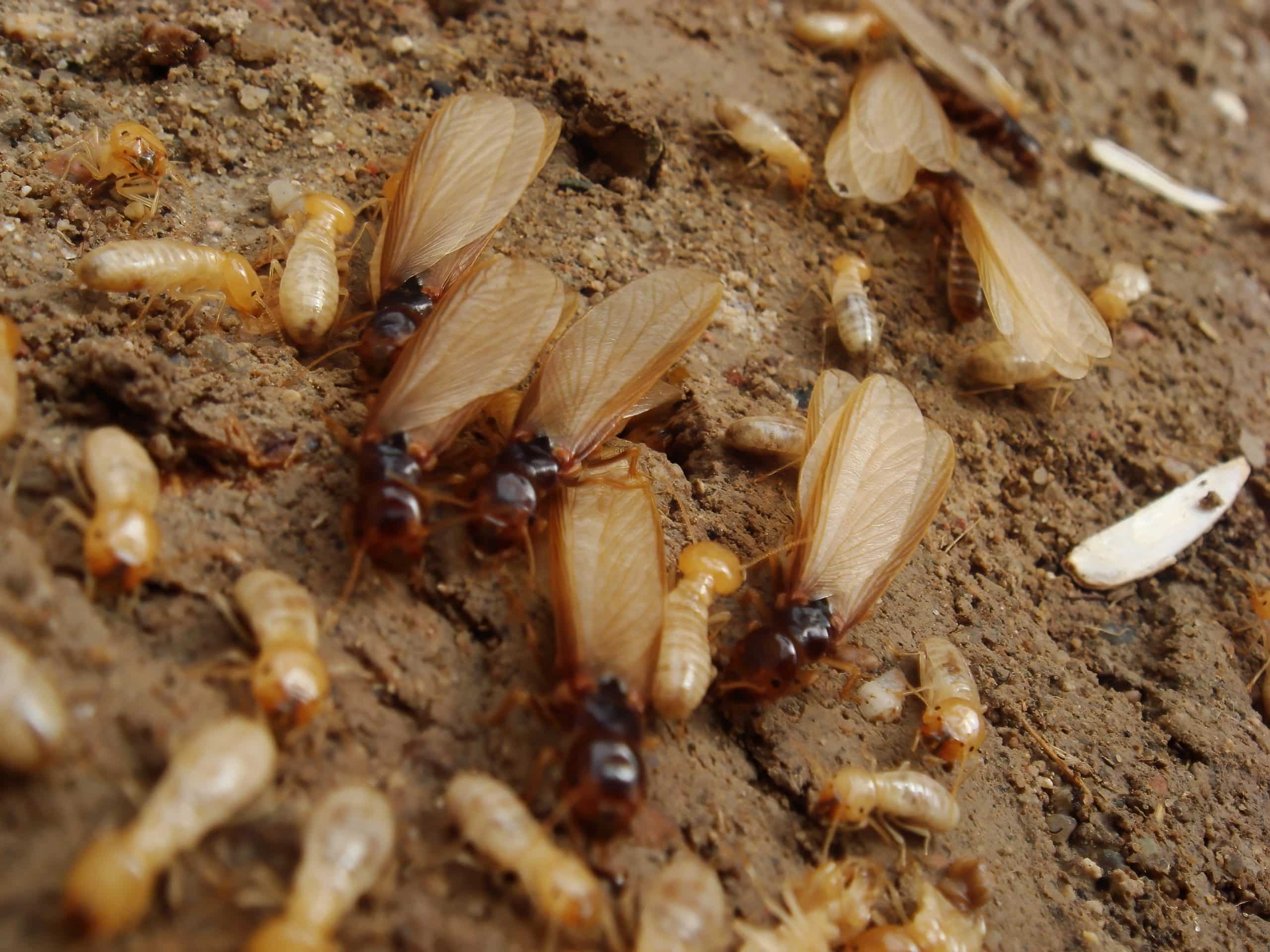
Flying termites in Louisiana don’t bite or sting people, but their presence signals a mature termite colony nearby. The real concern is the worker termites, which feed on wood and can damage your home’s structure.
On a warm, humid evening in New Orleans or Baton Rouge, you might find dozens of winged insects circling your porch light or gathering near a window. Seeing flying termites in Louisiana doesn’t automatically mean your home is infested, but finding them indoors deserves attention. Knowing when termites swarm, how to identify them, and what their wings reveal can help you decide when to call a professional.
Key Takeaways
- Flying termites don’t bite or sting. However, they come from established colonies where worker termites can damage wooden structures.
- Termite swarms are common during Louisiana’s warmer months. Formosan termites are especially noticeable during late spring and early summer, often gathering around lights after dark.
- Indoor swarmers and discarded wings deserve attention. Photograph what you find, avoid random spraying, and schedule a professional inspection to check for termite activity.
Are Flying Termites in Louisiana Dangerous?
Flying termites aren’t a direct threat to your family’s health. They don’t sting, feed on blood, or seek out people to bite. These winged insects, also called termite swarmers, leave established colonies to mate and attempt to start new ones.
The concern comes from the worker termites that remain in the colony. These workers feed on cellulose found in wooden framing, floor joists, and other building materials. Subterranean termites can enter homes from the soil through concealed openings around foundations and plumbing.
According to the U.S. Environmental Protection Agency (EPA), termites can damage buildings and other wooden structures. Since termites often feed inside wood or travel through hidden passages, homeowners may not notice the damage until the infestation has progressed.
Does Seeing a Termite Swarm Mean Your House Is Infested?
Swarmers flying around your porch or yard may have traveled from a colony in nearby soil, trees, or another property. Their presence alone doesn’t prove that termites are living inside your house.
The situation becomes more concerning when flying termites emerge directly from an interior wall, floor, or baseboard. That suggests termite activity within the structure and calls for a prompt inspection.
When Do Flying Termites Swarm in Louisiana?
Termite swarming season in Louisiana varies by species. Some subterranean termites swarm during spring daylight hours, while Formosan subterranean termites generally swarm after dark in late spring and early summer.
Warm temperatures and moisture influence these reproductive flights. That’s why Louisiana homeowners may notice sudden termite activity following periods of rain, especially when the weather remains warm.
Why Formosan Termite Swarms Get So Much Attention
Formosan termites are a particular concern in Southeast Louisiana because their colonies can contain large populations of wood-feeding workers. They can establish activity around older homes and newer construction when conditions allow them to reach suitable materials.
Their swarms are hard to miss. On some evenings, winged termites gather around porch lights, garage entrances, and illuminated windows. A large swarm outdoors can look alarming, although its size doesn’t tell you whether the insects originated inside your property.
Do All Louisiana Termites Swarm at the Same Time?
Eastern subterranean termites commonly swarm during spring, often in daylight. Formosan termites are more associated with evening swarms during late spring and early summer.
Drywood termites follow different seasonal patterns and can establish colonies directly inside suitable wood without maintaining contact with soil. Since these termite types behave differently, identifying the species helps determine the appropriate control method.
How to Tell Flying Termites From Flying Ants
Flying ants and termites with wings can look almost identical when they’re moving across a window or circling a light. Both have six legs and two pairs of wings, but a closer look reveals several differences.
Flying Termites vs. Flying Ants
| Feature | Flying Termites | Flying Ants |
| Antennae | Straight or gently curved | Bent or elbowed |
| Waist | Broad, without a narrow pinch | Narrow and clearly pinched |
| Wings | Four wings of nearly equal length | Front wings longer than back wings |
| Body shape | Relatively straight and uniform | Distinct body sections |
| Color | Often brown, black, or yellowish-brown | Varies by ant species |
Termite swarmers have front and back wings that are nearly equal in length. Flying ants have larger front wings and a noticeably narrower waist. These features are more reliable than body color, which varies among species.
If you aren’t sure which insect you’ve found, take a clear photograph showing the body and antennae. You can also save a specimen in a sealed container for professional identification.
What Do Discarded Termite Wings Mean?
After a reproductive flight, termite swarmers shed their wings as they pair up and look for a place to establish a new colony. The insects may disappear, leaving small piles of transparent wings behind.
Finding termite wings outside after a neighborhood swarm doesn’t necessarily indicate an infestation. However, repeated piles along indoor windowsills, door frames, or baseboards warrant closer investigation.
Other Signs of a Termite Infestation
Discarded wings aren’t the only evidence to look for. Different termite species leave different signs, and some are easy to overlook.
| Warning Sign | What It Could Mean |
| Discarded wings indoors | Swarmers entered the house or emerged from within |
| Mud tubes along foundations | Subterranean termites traveling between soil and wood |
| Hollow-sounding or damaged wood | Possible internal termite damage |
| Small, hard pellets beneath wood | Possible drywood termite droppings |
| Repeated swarms from an indoor opening | Possible colony activity inside the structure |
Subterranean termites construct mud tubes to move through protected passages between the soil and their food sources. You might notice these narrow, dirt-colored tunnels along foundations, crawl space supports, or surfaces leading toward wooden framing.
The NC State Extension explains the role of inspections and treatment in managing termite problems. An inspection helps distinguish termite activity from moisture damage or damage caused by other wood-destroying insects.
What to Do if Flying Termites Appear in Your House
Finding flying termites indoors doesn’t mean you need to start tearing into walls or spraying every insect you see. A few careful steps can help preserve evidence and make the inspection more useful.
Take Photos Before Cleaning Up
Photograph the insects while they’re visible, especially their wings, bodies, and antennae. Take a wider picture showing the window, wall, or doorway where they appeared.
Record the date, time, and location of the swarm. If insects seem to be emerging from a crack or wooden surface, photograph that area without disturbing it. Saving a few specimens in a sealed container can also help with identification.
Once you’ve documented everything, vacuum dead insects and loose wings. Check the same area over the following days for additional activity.
Don’t Spray Randomly or Disturb the Evidence
Household bug sprays may kill visible swarmers, but they won’t eliminate workers hidden underground or inside wooden structures. Spraying the insects you see doesn’t address the established termite colony.
Avoid applying sprays into electrical outlets, wall openings, or foundation cracks. Don’t scrape away mud tubes or pull apart suspicious wood before an inspection, either. These signs can help a technician track termite activity. If you notice severely damaged or unstable wood, avoid placing weight on the affected area until a qualified professional can assess it.
Schedule a Professional Termite Inspection
A professional termite inspection helps establish whether termites are active inside your home and where accessible evidence of their activity appears.
During an inspection, a technician can examine the foundation, crawl space, attic, and other accessible wooden areas. They’ll look for termite activity, visible damage, moisture problems, and conditions that allow termites to reach the building.
The findings help determine whether termite treatment is necessary and which approach suits the termite species involved. Addressing the source is more effective than repeatedly removing swarmers without investigating the colony.
Protect Your Louisiana Home With Professional Termite Control
Flying termites in Louisiana are worth investigating, especially when they appear indoors or leave piles of discarded wings. Knowing what to photograph, which warning signs to look for, and when to request an inspection helps you respond before concealed termite activity causes further damage.
LaJaunie’s Pest Control offers termite inspections and treatment options suited to Louisiana homes. Our technicians assess termite activity and recommend solutions such as termite bait stations, foundation treatments, or targeted no-tent treatments for qualifying drywood termite problems.
If you’ve discovered flying termites around your home in New Orleans, Baton Rouge, Houma, Thibodaux, or another Southeast Louisiana community, contact LaJaunie’s Pest Control to schedule a termite inspection. A trained local team can investigate the warning signs and help you choose the right termite control plan for your home.
Flying Termites in Louisiana: FAQs
Why are there suddenly flying termites around my house?
Flying termites appear during reproductive swarms when mature colonies release winged termites to establish new colonies. Warm, humid weather can encourage swarming, and certain species are attracted to outdoor lights. Seeing them around your property doesn’t confirm an indoor infestation, but repeated activity inside the house deserves professional attention.
Do flying termites go away on their own?
A termite swarm usually ends without intervention, and the visible insects may disappear quickly. However, the established colony that produced them can remain active. If termites are already feeding inside your home’s wood, the end of a swarm doesn’t mean the infestation has ended or that treatment is unnecessary.
Are flying termites attracted to lights?
Yes. Formosan termite swarmers are strongly attracted to lights during their evening flights. This is why Louisiana homeowners often notice them around illuminated porches, windows, and garage doors. Seeing termites near a light doesn’t identify their colony’s location, since the insects can fly in from surrounding areas.
What should I do if I find termite wings on my windowsill?
Take photographs of the wings and note where you found them. Look nearby for additional signs, including mud tubes or damaged wood, without disturbing suspicious areas. If wings repeatedly appear indoors or you notice live swarmers emerging from the structure, schedule a termite inspection to determine whether an infestation is present.