



In the field, LaJaunie’s technicians often hear the same question from South Louisiana homeowners: “Is this pile of debris termite droppings or just sawdust?” Knowing how to identify termite droppings can help you recognize when a small pile near a windowsill, baseboard, or piece of wood needs a closer look.
These tiny pellets, commonly called frass, are most closely associated with drywood termites. But not every pile of debris means termites are present. Ant debris, sawdust, and cockroach droppings can look similar from a distance.
That distinction matters in South Louisiana, where both drywood and subterranean termites are common concerns. Raised homes with crawlspaces, slab homes, warm temperatures, and high humidity all affect where termite activity may show up. In this article, you’ll learn how to identify termite droppings, where to look for them, how to compare them with similar debris, and what to do next.
Key Takeaways
- Drywood termite droppings are tiny, hard pellets that range from light brown to dark brown. They often collect beneath small openings in infested wood.
- Termite frass is more uniform than sawdust or ant debris. Under magnification, the pellets may look oval or capsule-shaped with subtle ridges.
- Subterranean termites usually do not leave visible pellet piles. Mud tubes along foundations, piers, or walls are a more common sign of their activity.
- If fresh pellets keep appearing in the same place, have the area inspected. Recurring frass can point to termite activity inside nearby wood.
How to Identify Termite Droppings by Color
Termite droppings are often confused with coffee grounds or pepper, especially when they appear on window sills, near baseboards, or in crawlspaces.
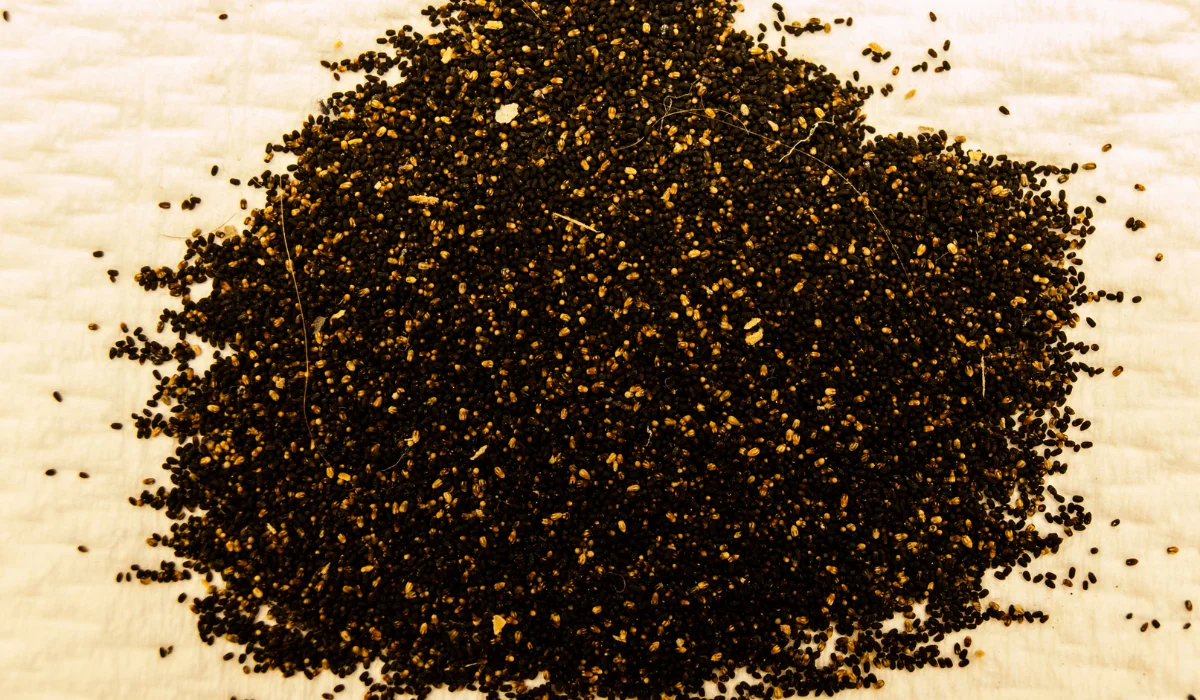
Drywood termite droppings usually range from light brown to dark brown. They can vary depending on the type of wood. Because termites digest cellulose, their droppings often take on a fibrous, wood-toned look.
If you notice fine, gritty material collecting around trim, wooden furniture, or exposed wood, look at the shape and texture before assuming it is ordinary debris.
How to Identify Termite Droppings by Shape
A defining feature of drywood termite frass is its shape. The droppings are usually oval or capsule-shaped with rounded ends and subtle ridges along the sides.
That uniform shape helps separate them from wood shavings, ant debris, and many types of household dirt. A magnifying glass can make the differences easier to see.
If the material consists of consistently shaped pellets instead of uneven flakes or fibers, drywood termite frass becomes a stronger possibility.
How to Identify Termite Droppings by Size
Drywood termite droppings are very small, usually around 1 millimeter long. They are much smaller than a grain of rice and often appear in groups rather than as single pellets.
Termites push the waste out through small openings in the wood, sometimes called kick-out holes. Because they may use the same opening repeatedly, the droppings can form a small pile beneath the infested area.
If you remove a pile and new pellets appear in the same spot, that is a useful detail to share during an inspection.
Where to Find Termite Droppings in South Louisiana Homes
Drywood termite frass often appears near window sills, baseboards, door frames, attic framing, wooden furniture, and exposed beams. In raised South Louisiana homes, crawlspaces and structural wood beneath the living area may also need attention.
Home construction can affect where termite signs appear. LaJaunie’s service information notes that raised homes often require an in-person inspection because crawlspaces and other conditions beneath the home can create more areas that need to be checked. Slab homes require attention around the foundation, plumbing penetrations, wall areas, and other points where termites can reach structural wood.
Subterranean termites behave differently from drywood termites. Instead of leaving dry pellet piles, they commonly build mud tubes that allow them to travel between soil and wood. These mud tubes are one of the first signs homeowners may notice with subterranean termite activity.
What Termite Droppings Feel Like
Many homeowners mistake termite frass for sawdust or dirt. Sawdust tends to be soft, flaky, or fibrous, while drywood termite pellets are hard and hold their shape.
Rather than rubbing unknown debris between your fingers, inspect it with a flashlight or magnifying glass. True drywood termite frass should look compact and pellet-like rather than powdery or made of loose wood fibers.
Termite Frass vs. Ant Frass, Sawdust, and Cockroach Droppings
Knowing how to identify termite droppings becomes easier when you compare them with other debris commonly found around Louisiana homes.
| Material | Appearance | Texture | Common Location | Main Clue |
| Drywood termite frass | Tiny tan, brown, or dark pellets with rounded ends | Hard and gritty | Beneath small holes in wood, window frames, trim, furniture, or beams | Pellets are fairly uniform and may keep returning in the same spot |
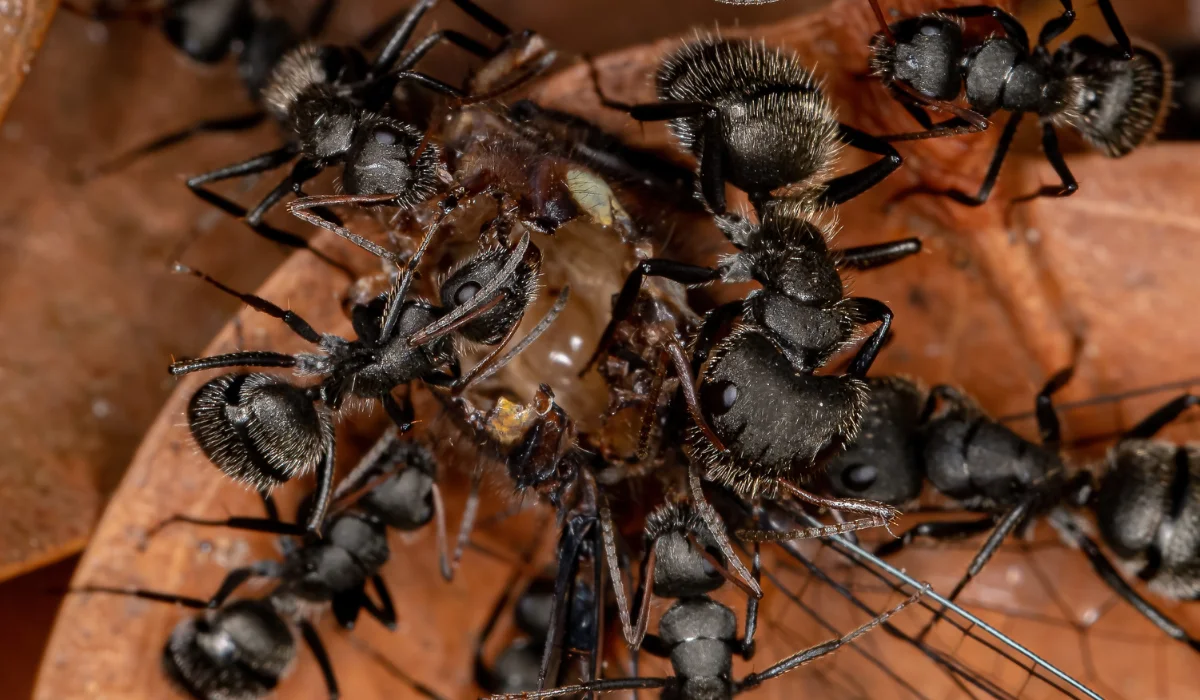
| Ant frass | Irregular debris that may contain wood fibers, dirt, or insect parts | Loose and uneven | Near wall voids, damaged wood, or nesting areas | Less uniform than termite pellets |
| Sawdust | Fine powder, flakes, curls, or wood shavings | Soft, fibrous, or flaky | Near drilling, woodworking, damaged wood, or repairs | Lacks the consistent pellet shape of drywood frass |
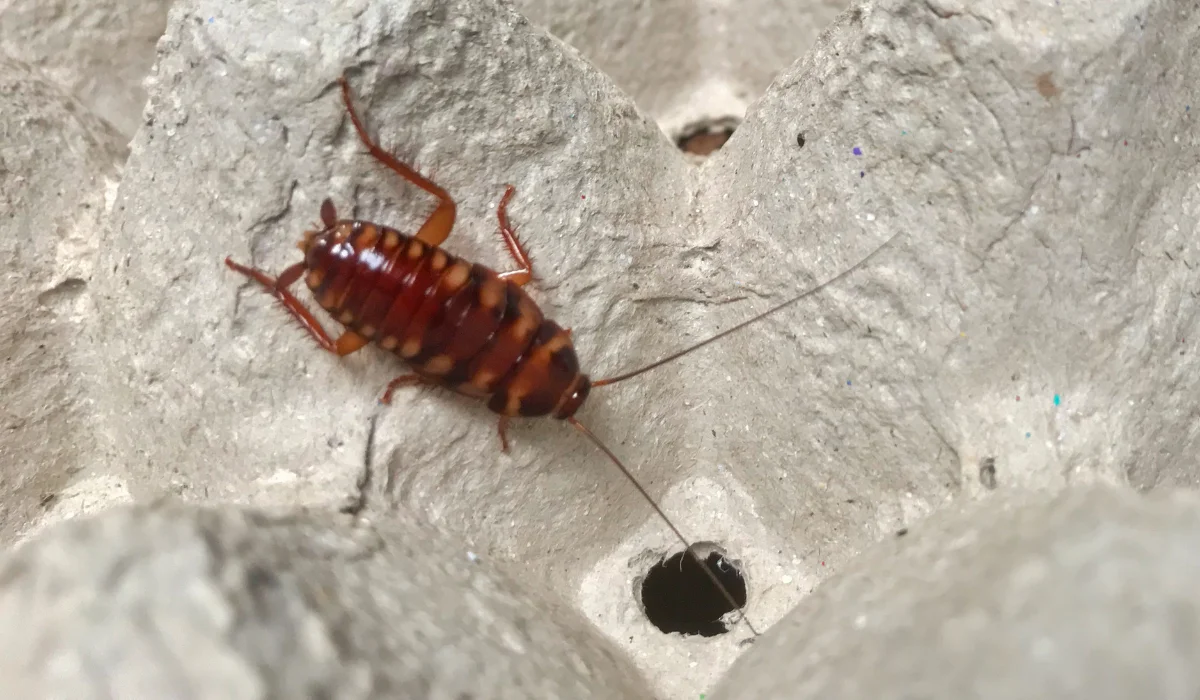
| Cockroach droppings | Dark specks, stains, or small cylindrical droppings | Dark and less wood-like | Kitchens, cabinets, appliances, bathrooms, and sheltered areas | Usually found near food, moisture, or cockroach hiding areas rather than openings in wood |
This comparison can help narrow down what you are seeing, but debris alone cannot show how much termite activity is present inside the wood.
Drywood vs. Subterranean Termite Signs in Louisiana
Drywood and subterranean termites are both part of the termite pressure homeowners face in South Louisiana, but they leave different signs.
Drywood termites live inside the wood they infest. Their droppings can collect beneath window frames, furniture, beams, trim, or other wooden areas. Small openings near the pile may help point to where the pellets are coming from. Subterranean termites maintain contact with the soil and usually leave mud tubes rather than visible piles of frass.
This difference is especially useful in Louisiana homes. A pile of hard pellets points more strongly toward drywood termites, while mud tubes around a slab foundation, crawlspace pier, or other structural surface point more strongly toward subterranean termite activity.
What to Do if You Find Termite Droppings
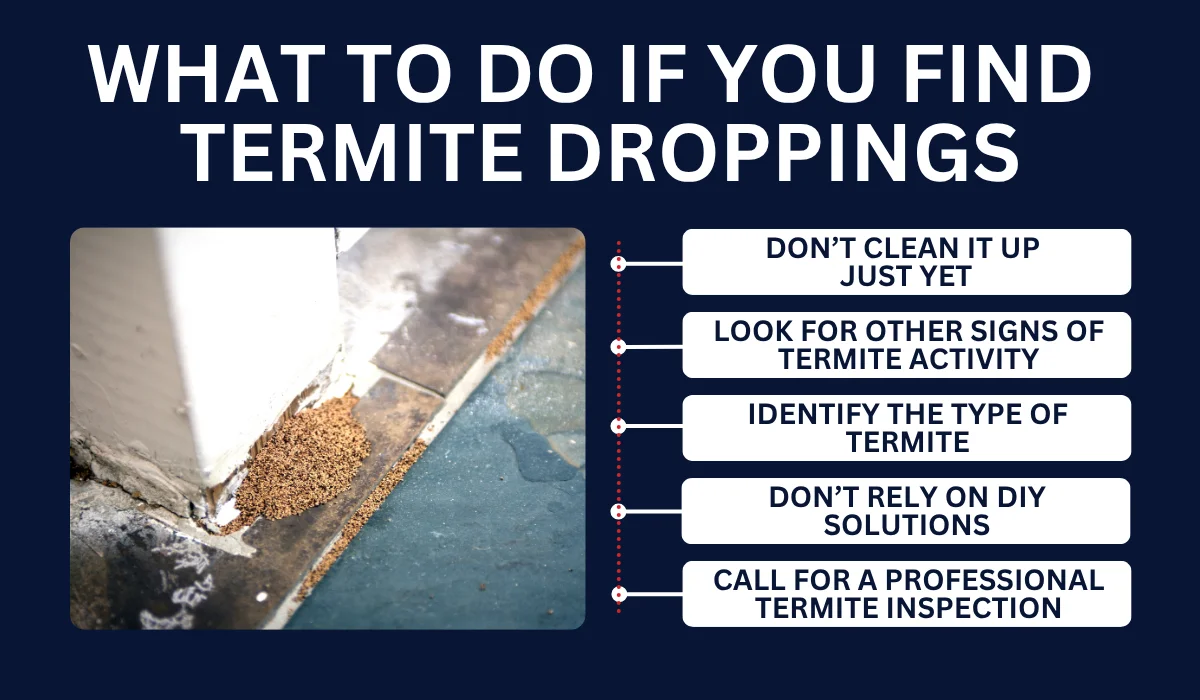
Finding termite droppings does not tell you how large an infestation is or whether the activity is still current. It does mean drywood termites have been present in or near the wood above the pile. Before cleaning everything away, document what you found and check the surrounding area for other signs. A termite professional can use the location of the debris along with nearby wood damage, kick-out holes, mud tubes, or swarmers to identify what is happening.
Don’t Clean It Up Just Yet
It is tempting to sweep up the mess right away, but take a clear photo first and note where the pellets appeared.
The location of the frass can help a technician trace it back toward an opening or section of infested wood. Once the area is documented, you can clean it and monitor whether fresh pellets return.
Look for Other Signs of Termite Activity
Inspect the surrounding area for kick-out holes, wood that sounds hollow when tapped, visible damage, discarded wings, or swarmers. If you suspect subterranean termites, check for mud tubes along foundations, walls, piers, or other hard surfaces. LaJaunie’s identifies mud tubes, drywood pellets, damaged wood, wings, and swarmers among the common signs homeowners may notice.
Identify the Type of Termite
Knowing whether you are dealing with drywood or subterranean termites matters because they behave differently and require different approaches. Drywood termites leave pellet-like frass and live inside the wood they infest. Subterranean termites connect back to the soil and are more closely associated with mud tubes.
Don’t Rely on DIY Solutions
The droppings you see are only evidence outside the wood. The termites themselves may be inside walls, flooring, furniture, attic framing, or other structural material.
Treating only the visible pile does not address the source. A professional termite inspection can determine where the activity is coming from and whether treatment is needed.
Call for a Professional Termite Inspection
After you document the frass, schedule an inspection if fresh pellets keep appearing or you notice other signs of termites nearby.
LaJaunie’s technicians inspect South Louisiana homes for signs of drywood and subterranean termite activity, including foundations, crawlspaces, attics, and structural wood. The goal is to identify what is present and recommend the appropriate next step based on the home and where activity is found.
Making the Right Call When You Find Termite Droppings
Knowing how to identify termite droppings comes down to a few details: drywood frass is small, hard, pellet-shaped, and usually found below infested wood. Sawdust and ant debris are more irregular, while subterranean termites are more likely to leave mud tubes than visible pellet piles.
South Louisiana homes can show termite activity in different places depending on whether the house sits on a slab or has a raised crawlspace. If the debris keeps returning, or you also find damaged wood, wings, swarmers, or mud tubes, an inspection can help confirm what you are seeing.
If you are unsure whether the material is termite frass, LaJaunie’s Pest Control can inspect the area and help you determine the right next step. Call us today for a full inspection and a treatment plan that works for your home.
Termite Droppings Identification: FAQs
Are termite droppings dangerous?
Termite droppings are not the part of a termite problem that damages your home. The concern is that drywood frass can indicate termites have been living and feeding inside nearby wood. Avoid handling unknown debris unnecessarily, and have recurring pellet piles inspected.
How do I tell drywood termite droppings from subterranean termite droppings?
Drywood termites leave small, hard pellets that can collect beneath openings in infested wood. Subterranean termites usually do not leave visible pellet piles. Instead, they commonly build mud tubes along foundations, piers, walls, or other surfaces between the soil and the wood.
Does finding termite frass mean termites are still active?
Frass shows that drywood termites have been present, but one pile alone does not confirm whether the activity is current. If you clean the area and fresh pellets appear again, current activity becomes more likely. An inspection can check the surrounding wood for supporting signs.
Where are termite droppings usually found?
Drywood termite frass often collects near window sills, door frames, baseboards, attic framing, furniture, exposed beams, and other wooden areas. In raised South Louisiana homes, crawlspaces and structural wood beneath the living area may also need inspection.