

If you’ve spotted swarming ants in your house, it might look like an invasion from a nature documentary, but those winged invaders are sending you a message.
These aren’t just random ants wandering indoors. In most cases, flying ants mean a nearby ant colony is reproducing and looking to establish new colonies. For homeowners in southern Louisiana, this can be a sign of a deeper infestation and sometimes, a warning about potential termites.
In this guide, you’ll learn why ants swarm, how to tell them apart from termites, and what to do to get rid of flying ants before they settle in.
Key Takeaways
• Swarming ants are usually winged ants in their reproductive stage, signaling a nearby established colony
• They often appear during warm, humid weather conditions common in Louisiana
• Not all swarms mean damage, but carpenter ants can cause issues similar to termites
• Professional pest control helps you identify the species and eliminate the ant infestation before it grows
Why Are Ants Swarming Inside?
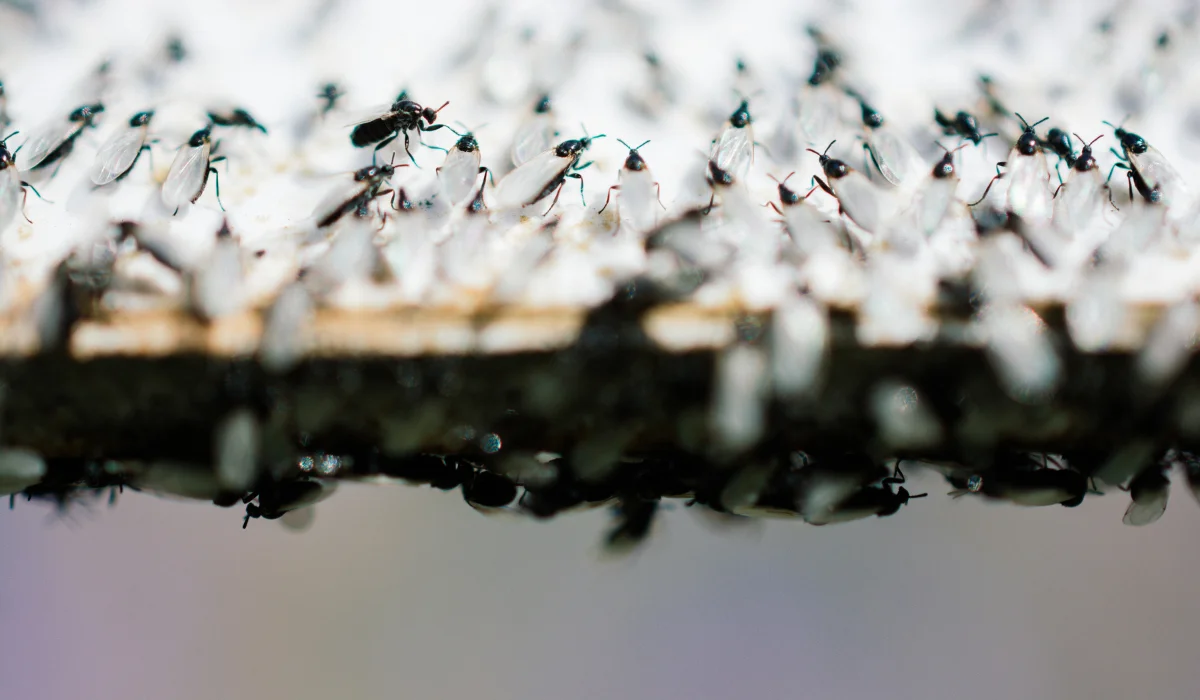
A swarm of flying ants happens during the species’ mating season, when fertile winged males and female ants, called alates, leave the nest in a nuptial flight to mate and start new colonies.
In Louisiana, this often happens during hot, humid afternoons after rainfall. If you see them indoors, they probably slipped in through the small gaps in baseboards, windows, or attic vents. Sometimes, they’re coming from an ant nest already inside your home.
Here’s the hidden message: swarming ants are telling you there’s either a mature colony nearby or an active nest inside.
Flying Ants vs. Termites: Spot the Difference

It’s easy to mistake flying ants for winged termites, but telling them apart is essential; carpenter ants may damage decaying wood, but termites can cause severe structural destruction.
If you’re not sure which you have, a local exterminator can confirm quickly. At LaJaunie’s Pest Control, our team can spot the difference during an inspection and tailor the proper ant control or termite treatment.
Which Ant Species Swarm in Louisiana Homes?
Several species of ants in our region send out swarmers:
• Carpenter ants - Can tunnel through soft or decaying wood in attics, window frames, and porches
• Fire ants - Aggressive and known for painful stings, but typically swarm outdoors
• Pharaoh ants - Small and often found in kitchens; can spread quickly indoors
• Black ants - Common nuisance ants that usually nest outdoors but can find their way inside
Identifying the type of ant is key to solving the problem before the next swarm.
How Swarms Lead to Bigger Problems
Swarming ants aren’t the real problem; the colony that sent them out is.
An established ant colony can contain thousands of worker ants that forage for food sources in and around your home. If left alone, a single swarm can start multiple new colonies on your property.
In the case of carpenter ants, they don’t eat wood like termites, but they excavate it to create tunnels. Over time, this can weaken structures, especially if they nest in moisture-damaged areas.
What To Do If You See Swarming Ants Indoors
If you notice a swarm inside your home, act quickly:
1. Close entry points - Seal gaps around windows, doors, and baseboards
2. Vacuum swarmers - This removes immediate pests without spreading them further
3. Check for nests - Look near windowsills, attics, or damp wood
4. Call pest control - An inspection will confirm the species and locate hidden nests
At LaJaunie’s Pest Control, we inspect both the interior and exterior, treat entry points, and set up targeted methods, whether that means ant baits for more minor infestations or specialized treatments for carpenter ants.
Common DIY Ant Control Methods and Their Limits
Some homeowners try peppermint spray, store-bought ant baits, or pesticides to get rid of flying ants. While these might kill a few swarmers, they don’t address the source.
Why DIY falls short:
• You may only kill visible ants, leaving the ant nest untouched
• Incorrect products can scatter the colony, making the ant problem worse
• Without species identification, you can’t target the treatment effectively
When It’s Time to Call a Pro
If you’ve tried sealing entry points and cleaning up but still see large numbers of flying ants, you might be dealing with a hidden colony.
A professional pest control company can:
• Identify the ant species through entomology knowledge
• Locate indoor and outdoor nests
• Apply targeted treatments that eliminate colonies without harming pets or family
We’ve handled swarming ants in homes from Houma to Baton Rouge, and we know the local conditions that make infestations thrive.
Preventing Future Swarms
To avoid another wave of flying ants:
• Seal gaps around your home’s foundation and roofline
• Store food in airtight containers
• Keep gutters clear to reduce moisture near wood
• Trim vegetation that touches your house to cut off ant highways
Regular maintenance paired with seasonal pest control can stop swarmers before they start.
Final Thoughts
Swarming ants indoors are more than a seasonal nuisance; they’re a warning that a colony may already be nearby or forming. Catching the problem early, especially in Louisiana’s warm, humid climate, can save you from bigger issues down the line.
If you’re seeing flying ants, let LaJaunie’s Pest Control take a closer look. Our local team knows exactly where to check and how to stop ants before they spread.
Contact us today and get ahead of the swarm.
FAQs
Are swarming ants always a sign of an infestation?
Not always. Some swarms come from outdoor colonies, but if you see them indoors regularly, it often means there’s a nest nearby or inside your home.
How long do swarming ants stay inside?
A swarm may only last a few hours to a day, but if you don’t eliminate the source colony, you could keep seeing swarms during mating season.
Can carpenter ants cause structural damage like termites?
Yes, carpenter ants can damage wood over time by hollowing it out for nesting, especially when moisture has already weakened the wood.