



A large reddish-brown roach moving beside the sink slips behind the cabinet before you can reach it. The sighting seems sudden, but that roach probably followed water, shelter, food, or an opening into the house.
The American cockroach is the largest roach that commonly enters Louisiana buildings. Adults can grow past two inches, which explains the reaction they get from homeowners. Size is only part of the problem. These roaches live around drains, sewer systems, crawl spaces, wet landscaping, and protected outdoor areas.
This guide covers American cockroach identification, common entry routes, health concerns, and the steps that help stop repeat activity.
How to Identify an American Cockroach
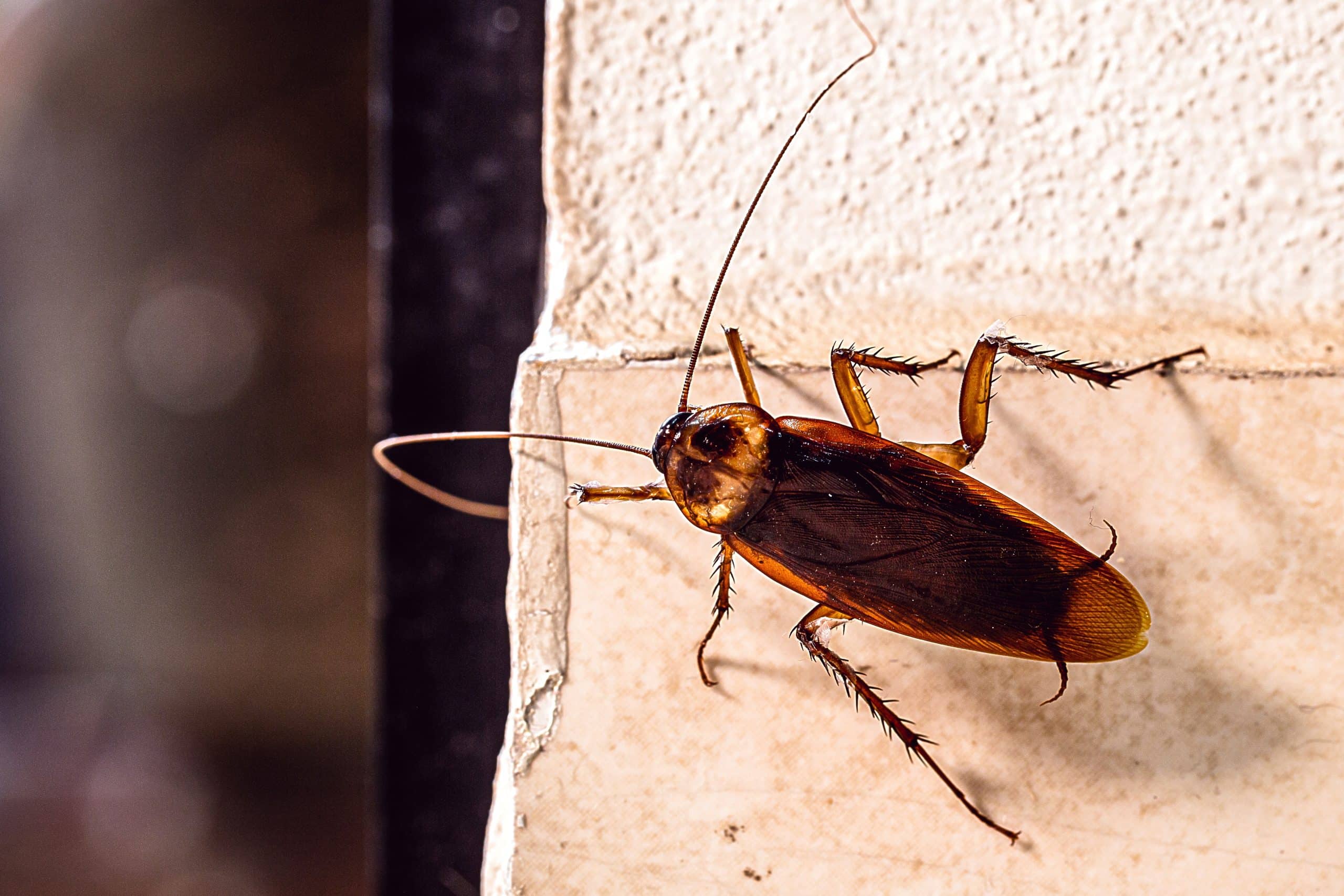
American cockroaches have reddish-brown bodies and a light tan or yellow border behind the head. Adults have long antennae, spiny legs, and full wings. Their bodies are flat enough to move through narrow openings.
American cockroach size is one of the easiest identification clues. According to the LSU AgCenter, the adult body length is between about 1 3/8 and 2 1/8 inches. Young roaches are smaller, lack full wings, and darken as they mature.
Finding one large roach near a doorway may point to an outside visitor. Finding young roaches and adults in the same area may suggest an American cockroach infestation close to the structure.
American Cockroach vs. German Cockroach
The difference between an American cockroach and a German cockroach matters because the two pests behave in different ways. A large roach near a garage drain calls for a different inspection than several small tan roaches beneath a refrigerator. German cockroaches live and reproduce indoors near appliances, cabinets, food, and water. American cockroaches often connect to drains, exterior shelter, crawl spaces, utility areas, or structural gaps.
| Feature | American Cockroach | German Cockroach |
| Adult size | About 1 3/8 to 2 1/8 inches | About 1/2 to 5/8 inch |
| Color | Reddish-brown | Tan or light brown |
| Marking | Light border behind the head | Two dark stripes behind the head |
| Common setting | Drains, garages, crawl spaces, and outdoor shelter | Kitchens, bathrooms, cabinets, and appliances |
| Usual pattern | Often moves inside from another area | Commonly breeds inside |
| Treatment priority | Find routes, moisture, and exterior harborage | Treat indoor breeding sites and interrupt reproduction |
German cockroach work calls for a focused indoor program with reproductive control and follow-up. American cockroach control often begins outside the occupied room.
What Repeated Sightings Tell You
One adult may enter through an open door. A pattern matters more. Roaches found several nights in a row, activity in different rooms, or young roaches near adults can point to a protected site close to the building.
Female American cockroaches place their eggs inside hard cases. According to the University of Florida IFAS, a case commonly holds 14 to 16 eggs. A female may produce nine or ten cases during her life. Young roaches pass through 10 to 13 molts before adulthood.
Those numbers describe reproductive potential, not a guaranteed population. Many young roaches do not survive. Still, hidden egg cases can explain why activity continues after several adults have been killed.
Signs of an American Cockroach Infestation
Look at the size of the roaches, the time of day, and the locations where they appear. That information helps separate a stray visitor from a recurring problem.
| Sign | What It Suggests |
| Adults appear near the same door | A gap or outdoor hiding site may be close |
| Roaches appear near several drains | Connected plumbing or drainage areas need inspection |
| Small and large roaches appear together | Development may be taking place nearby |
| Egg cases are present | Females found protected placement sites |
| Droppings collect behind stored items | The area is being used for shelter or feeding |
| Activity returns after surface spraying | The main harborage or route remains active |
Daytime activity deserves attention, but it does not prove a severe infestation. Cleaning, construction, heat, or water can disturb a hiding site and push roaches into view.
What Attracts American Cockroaches to a Home
What attracts American cockroaches is usually simple: usable moisture, food residue, protected shelter, and a route inside. Those conditions often sit along the boundary between the yard and the structure.
Moisture Near the Structure
A leaking pipe beneath a sink is easy to notice. Outdoor water problems are easier to miss. A downspout may empty beside the slab. Condensation may keep one wall wet. Leaves can block a drain and hold water after a storm.
Raised homes create another set of inspection points. We look beneath the structure for damaged skirting, damp soil, leaking lines, and openings around pipes. An American cockroach in the house may have started below the floor or outside the wall.
Food and Shelter Outside
American cockroaches eat grease, food residue, pet food, garbage, and decaying organic material. They can also survive around compost, damp cardboard, fallen leaves, and buildup inside drains.
Move firewood and stored materials away from exterior walls. Remove wet cardboard instead of leaving it in a garage. Keep mulch shallow near the foundation, and clear leaves from gutters and drains.
Openings Into the Building
Adult American cockroaches can use narrow gaps. Worn garage seals, damaged screens, pipe penetrations, vents, and spaces beneath doors deserve a close look.
A spray along the baseboard cannot repair those routes. When roaches keep appearing in one room, we trace the nearest plumbing, doors, windows, and exterior wall before choosing treatment locations.
Why American Cockroaches Do So Well in Louisiana
American cockroach problems in Louisiana often start outside the living space. Warm weather keeps the insects active through much of the year. Rain adds moisture around foundations, beneath raised homes, and inside drainage systems. Shaded mulch, leaf piles, tree hollows, utility spaces, and wood stored beside a house give them places to hide during the day.
The LSU AgCenter identifies the American cockroach as the most frequently encountered member of its group in the state. It also reports that these roaches often inhabit sewer drainage systems and move above ground at night.
That finding explains why you may see one near a tub, floor drain, garage, or back door after dark. It does not mean every roach came from a sewer. American cockroaches also live in mulch, woodpiles, tree hollows, basements, and other humid sites.
| Property Condition | Why Roaches Use It | Where to Check |
| Wet soil beside the foundation | Provides moisture and shaded shelter | Downspouts, hose bibs, and low areas |
| Gaps beneath exterior doors | Give adult roaches a direct route inside | Garage corners and door sweeps |
| Openings around pipes | Connect rooms to wall voids or outdoor areas | Under sinks and behind appliances |
| Thick mulch or leaf litter | Holds moisture and decaying material | Beds touching the foundation |
| Raised foundations | Create dark, protected spaces beneath the house | Skirting, plumbing lines, and access doors |
| Drainage or sewer access | Offers water, darkness, and organic debris | Floor drains and utility areas |
A clean home can still get American cockroaches. A spotless kitchen will not close a gap beneath the garage door or dry the soil beside a leaking air-conditioning line.
Are American Cockroaches a Health Concern?
American cockroaches feed and travel in places that may contain decaying material, waste, and microbes. A roach can then cross food storage areas, counters, dishes, or utensils. Throw away uncovered food after known contact and clean the surface before preparing another meal.
Droppings and shed body material also collect where roaches rest. The Environmental Protection Agency (EPA) guidance on asthma triggers states that proteins in cockroach feces and saliva can cause allergic reactions or trigger asthma symptoms in sensitive people.
The concern grows when activity continues because more material collects in hidden areas. Removing the active roaches addresses only part of the job. Cabinets, voids, storage areas, and other affected sites may also need cleaning after control is complete.
Health claims should stay measured. A roach sighting does not prove that someone will become ill. The practical concern is contact with contaminated surfaces and allergen material.
How to Get Rid of American Cockroaches
How to get rid of American cockroaches depends on where they are living and how they are entering. Killing the roach on the floor gives immediate relief, but it does not tell you where the next one will come from.
Leaks need repair. Drainage should move water away from the structure. Food residue, pet food, grease, and garbage should not remain available overnight.
Wet cardboard, thick leaf litter, and unused materials beside the house should be removed. Door sweeps, screens, and suitable gaps around pipes or wiring may also need repair.
When to Call Professional Cockroach Control
For repeated cockroach activity, getting professional help may be necessary. Technicians check the room where activity occurred and inspect connected areas. That can include drains, cabinets, plumbing lines, garage seals, windows, doors, attics, crawl spaces, eaves, and the exterior base of the home.
Professional treatment may include cracks, crevices, access points, doors, windows, exterior walls, garages, attics, or other active sites. We select placements from the inspection instead of applying the same pattern to every home.
Heavy use of over-the-counter spray can create problems when it contaminates bait placements or pushes activity into another void. Tell the technician what you have used and where you applied it.
Schedule an American Cockroach Inspection
American cockroaches are hard to ignore, but chasing each visible roach wastes time when the route remains open. A professional inspection gives you a clearer answer about where the activity starts and what needs to change.
LaJaunie’s Pest Control offers cockroach control. We inspect the interior, exterior, and structural routes connected to the sighting. You receive a treatment plan based on your property, a record of the work, and guidance on the conditions that could bring the roaches back. Contact LaJaunie’s Pest Control to learn more or to schedule an inspection.