



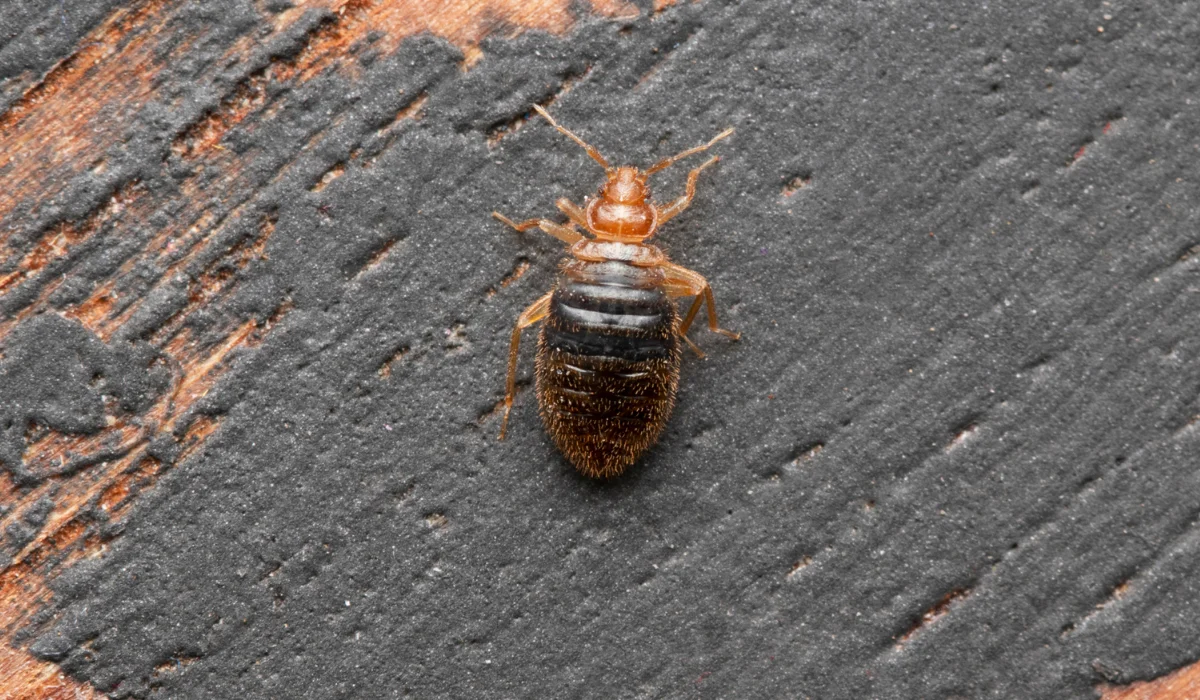
Yes, bed bugs can live in wood furniture, but they do not eat, tunnel through, or burrow into solid wood. Instead, they squeeze into existing cracks, joints, screw holes, drawer tracks, and other narrow spaces, especially in furniture near beds and other places where people rest. If you are checking a wooden bed frame, headboard, nightstand, or dresser, look for live bugs, dark fecal staining, pale shed skins, eggs, and clusters of activity inside protected joints.
Key Takeaways
- Bed bugs do not damage or eat wood. They use existing cracks, hardware openings, joints, and crevices as hiding places.
- Wooden bed frames, headboards, nightstands, dressers, and other furniture near sleeping areas deserve close inspection when bed bugs are suspected.
- Dark spotting, shed skins, eggs, and live bugs inside furniture joints are stronger evidence than bite marks alone.
Can Bed Bugs Live in Wood?
Yes. Bed bugs can hide in wooden furniture, but they do not eat or tunnel into the wood itself. They use existing cracks, joints, screw holes, and other narrow spaces where they can stay protected near places people sleep or rest.
Where They Hide in Wood
Bed bugs can squeeze into joints between boards, recessed screw holes, cracks in older furniture, and spaces behind drawers or hardware. These openings give them shelter without requiring them to damage the wood.
As an infestation grows, they may spread from the bed frame into nearby nightstands, dressers, headboards, or other furniture. That is why inspections should follow the evidence beyond the mattress.
What Bed Bugs Do Not Do to Wood
Bed bugs do not create tunnels or galleries like termites or wood-boring beetles. If you see structural damage, piles of wood material, or new holes in the furniture, another pest may be responsible.
When checking for bed bugs, focus instead on dark fecal spotting, shed skins, eggs, and live insects around existing seams, joints, and hardware.
Where Bed Bugs Hide in Wooden Furniture
Bed bugs tend to stay near places where people spend long periods resting. That makes the wooden furniture around beds, couches, and upholstered chairs especially relevant during an inspection.
Bed Frames and Headboards
Start where pieces of the frame connect. Bed bugs can hide around bolts, screw holes, brackets, joints, slats, decorative grooves, and cracks where the headboard connects to the frame or wall.
A wooden headboard with carved details or multiple joined pieces can contain many narrow hiding spaces. Look closely at the back of the headboard as well as the front because the wall-facing side is darker and less disturbed.
Nightstands and Side Tables
Nightstands sit close to sleeping areas, so inspect drawer tracks, corners, screw holes, undersides, and the joints where panels meet. Pull removable drawers out and inspect both the drawer and the empty space behind it.
Do not focus only on the top surface. Bed bugs generally choose protected crevices rather than exposed areas that are cleaned or disturbed regularly.
Dressers and Storage Furniture
Dressers, storage chests, and cabinets near the bed can provide additional hiding places as an infestation spreads. Check where drawer runners attach, along back panels, around hardware, and beneath the furniture.
If clothing or other belongings are stored inside, avoid moving them into another room before you know whether bed bugs are present. Moving infested items can carry bugs to a new part of the home.
Picture Frames and Other Wood Items
Bed bugs are small enough to hide behind picture frames and other wall-mounted items near resting areas. Wooden trim, baseboards, and furniture footings can also contain gaps that deserve attention during a broader inspection.
This does not mean every wooden object in the room needs to be dismantled. Start near the bed and work outward based on the evidence you find.
What Bed Bug Evidence Looks Like on Wood
Bed bugs themselves can be difficult to spot when they are tucked inside a dark furniture joint. The material they leave behind can make a hiding area easier to recognize.
Several early signs of bed bugs can appear around wooden furniture as well as mattresses and box springs.
Dark Fecal Spots
Bed bug fecal staining may appear as small dark brown or black marks around joints, cracks, screw holes, and other hiding places. Several spots concentrated inside a narrow furniture seam deserve more attention than one random mark on a finished wood surface.
On unfinished or porous wood, staining can soak into the surface and look less defined. Use a flashlight to inspect protected edges and corners where bugs could remain hidden during the day.
Shed Skins
Young bed bugs shed their outer skins as they grow. These cast skins are pale, translucent, and shaped like the insect, although they may be crumpled or difficult to recognize inside a dusty furniture joint.
Finding several shed skins in the same crack or behind a headboard can indicate that bed bugs have been using that area over time. Check nearby seams for live insects and other signs before cleaning the evidence away.
Eggs and Eggshells
Bed bug eggs are very small, pale, and difficult to see without good lighting. Females may place them in protected cracks where they are less likely to be disturbed.
Eggs alone can be easy to mistake for debris. Their presence alongside fecal spotting, shed skins, or live bed bugs makes the evidence much stronger.
Live Bed Bugs
Adult bed bugs are reddish-brown, flattened, and roughly apple-seed sized. Younger stages can be smaller and much lighter, which makes them harder to see against unfinished or light-colored wood.
If you find an insect but are unsure what it is, take a clear photo before disturbing the area. A careful room inspection is more useful than assuming every tiny brown insect in a bed frame is a bed bug.
What LaJaunie’s Technicians Check in Wood Furniture
LaJaunie’s bed bug inspection process goes well beyond checking the mattress. Technicians inspect bed frames and headboards, and when a bed has built-in drawers, they can examine both the drawers and the spaces behind them.
The inspection may also extend to side tables, dressers, storage chests, furniture footings, picture frames, outlets, and windows near the bed. These areas can provide narrow, protected spaces while keeping bed bugs close to where people rest.
That process reflects an important point for Louisiana homeowners: a bed bug infestation is not confined to one material. A wooden bed, upholstered sofa, box spring, picture frame, and nearby wall gap can all provide hiding places if the infestation has spread.
For homeowners in Baton Rouge, New Orleans, Houma, Thibodaux, Metairie, Mandeville, and other Southeast Louisiana communities, the inspection should follow the evidence in the room rather than assuming the problem stops at the mattress.
Do Bed Bugs Damage Wood?
Bed bugs do not eat wood, bore into it, or cause the type of structural damage associated with termites. Finding bed bugs in a wooden bed frame does not mean the frame itself is being consumed.
Cracks and worn joints can make an older piece easier for bed bugs to hide in, but those openings were not created by the bugs. That is why an antique frame, new nightstand, metal bed, or upholstered sofa can all become involved if they provide protected gaps near a host.
If a piece of wood has tunnels, galleries, piles of wood material, or other structural damage, a different pest may be responsible. Bed bug evidence is more likely to consist of live insects, staining, shed skins, and eggs around existing seams.
This distinction can prevent homeowners from throwing out usable furniture simply because bed bugs were found on it. Whether an item can be treated depends on its condition, construction, and the extent of activity.
Can Second-Hand Wood Furniture Bring Bed Bugs Home?
Yes. A used bed frame, nightstand, dresser, table, or other furniture can carry bed bugs if insects or eggs are hidden inside joints and hardware.
Inspect second-hand furniture before bringing it indoors. Pay close attention to screw holes, drawer tracks, back panels, decorative grooves, seams, and any cracks where two pieces of wood meet.
Avoid relying on appearance alone. A clean-looking dresser can still have bed bugs hidden behind a drawer or inside a recessed fastener where they are difficult to see.
Furniture is not the only way bed bugs travel. They are hitchhikers that can move in luggage, bags, clothing, and other personal belongings, which is why bed bug exposure at laundromats is more about items moving between locations than the bugs seeking out a particular building.
Does Louisiana Humidity Make Bed Bugs Hide in Wood?
Louisiana’s humidity does not make wood itself more attractive to bed bugs. These insects choose hiding places based primarily on access to people, darkness, protection, and narrow spaces where they can remain undisturbed.
Indoor conditions also give bed bugs shelter from outdoor weather. A bed frame inside an air-conditioned Baton Rouge apartment or a wooden nightstand in a Thibodaux home can provide suitable hiding places regardless of how humid it is outdoors.
Louisiana’s climate is therefore less important than the layout of the room and how easily bed bugs can move between resting areas and nearby hiding places. Wood furniture becomes relevant because of its joints and crevices, not because the wood is damp.
The same principle applies to other materials. Bed bugs may also be found along floor edges and nearby soft surfaces, and bed bugs can hide around carpeted areas without actually living deep in carpet as their preferred habitat.
How to Check Wooden Furniture for Bed Bugs
A careful inspection can help you determine whether a wooden item is involved before you start moving furniture or treating the room. Use a bright flashlight and work slowly from the sleeping area outward.
Start With the Bed
Inspect the headboard, frame joints, slats, bolts, brackets, screw holes, and any built-in storage. Check both visible surfaces and protected areas facing the wall or floor.
Look for several signs together rather than relying on one dark mark. Live insects, cast skins, eggs, and clustered fecal staining provide stronger evidence.
Remove Drawers When Possible
Pull drawers from nightstands, dressers, and bed frames so you can inspect the tracks and empty cavities behind them. Check the underside and rear joints of each drawer before putting it back.
This step matters because the front of a dresser may look clean while bugs remain hidden in the darker interior structure.
Inspect Nearby Furniture
Continue to furniture beside the bed, then check picture frames, baseboards, and other protected crevices if the evidence extends beyond the frame.
If you are unsure whether you have bed bugs, documenting where each sign appears can help determine whether you are seeing an isolated insect or a broader pattern.
Avoid Moving Furniture Between Rooms
Do not carry a suspected bed frame, mattress, dresser, or nightstand through the house simply to get it out of the bedroom. Bed bugs can drop from an infested item and establish activity elsewhere.
If an item truly must be removed, it should be contained before it is moved. LaJaunie’s preparation guidance specifically warns against removing infested furniture without first wrapping it securely.
Do Bite Marks Prove Bed Bugs Are Hiding in Your Furniture?
No. Bite-like marks can support suspicion when they appear alongside physical evidence, but skin reactions do not tell you where bed bugs are hiding or prove that bed bugs caused the marks.
Some people react to bed bug bites quickly, while others may notice marks later or have little visible reaction. The timing of when bed bug bite marks appear is one reason bites are less useful for locating an infestation than fecal spotting, cast skins, eggs, and live bugs.
Other bites and skin irritation can also look similar. Even suspected yellow sac spider bites cannot reliably be identified from appearance alone, so a skin mark should not replace an inspection of the bed and surrounding furniture.
If you are trying to determine whether bed bugs are living in a wooden frame, focus on physical evidence in the furniture itself.
What Can You Do About Bed Bugs in Wood Furniture?
Finding bed bugs in a bed frame does not automatically mean the furniture needs to be thrown away. Many items can be included in a professional treatment plan if their construction allows the hiding areas to be reached.
DIY steps are most useful for reducing spread, collecting visible bugs, and preparing for a complete treatment rather than trying to treat every hidden crack on your own.
Vacuum Accessible Cracks and Joints
A vacuum with a narrow crevice attachment can remove visible bed bugs, shed skins, and debris from accessible furniture joints. Move slowly along seams and hardware rather than running the tool only over exposed surfaces.
Vacuuming does not reach every hidden insect or egg. Empty the contents promptly into a sealed bag outside so collected bugs do not remain inside the home.
Use Bed Bug Interceptors
Interceptors placed beneath bed or furniture legs can help monitor bed bug movement. They are most useful when the bed is positioned so blankets and other items are not creating alternate paths between the floor and mattress.
Interceptors are monitoring tools, not a complete treatment. Continued captures tell you that bed bugs are still moving through the area.
Use Mattress and Box Spring Encasements
Bed-bug-rated encasements can contain bugs already inside a mattress or box spring and make future inspection easier by creating a simpler outer surface.
An encasement does not address bugs hiding in a wooden frame, nightstand, or wall gap. It should be treated as one part of a broader approach.
Handle Laundry Carefully
Bedding, clothing, and other washable items from an affected room should be handled in a way that avoids carrying bed bugs into clean areas. Place items directly into bags or containers for transport rather than moving loose piles through the home.
Hot laundering and drying can play a role for washable items, but hot water alone is not the entire answer for bed bugs. Laundry treatment also does nothing to reach bugs remaining inside furniture joints.
Be Careful With Dust Products
Some retail bed bug products use desiccant dusts such as silica-based dust or diatomaceous earth. Only use a product specifically labeled for bed bugs and for the location where you intend to apply it, and follow the label directions exactly.
More is not better. Heavy piles of dust can be ineffective and create unnecessary exposure, so these products should not be spread broadly over floors, mattresses, or furniture surfaces unless the label specifically directs that use.
When Bed Bugs in Wood Furniture Need Professional Treatment
Professional treatment becomes more useful when bed bugs are present in multiple pieces of furniture, evidence extends beyond the bed, or you continue finding activity after basic monitoring and cleaning.
LaJaunie’s bed bug process addresses the room as a system rather than treating only the mattress. Treatment may include cracks, crevices, bed frames, headboards, box springs, side tables, furniture footings, dressers, storage areas, and other locations based on what the inspection finds.
LaJaunie’s also returns for a follow-up visit approximately two weeks after the initial service. That follow-up matters because bed bug treatment often requires continued inspection rather than assuming one treatment of a wooden frame resolves every hiding place.
For recurring activity in Southeast Louisiana, LaJaunie’s bed bug control service can identify which furniture and surrounding areas are involved and build the treatment around the actual infestation.
Keeping Bed Bugs Out of Wood Furniture in Your Louisiana Home
Bed bugs can live in the cracks and joints of wooden furniture, but they are not feeding on the wood or tunneling through it. The places to watch are screw holes, drawer tracks, headboard joints, frame hardware, back panels, and other narrow spaces near where people sleep or rest.
Finding dark spotting, cast skins, eggs, or live bugs in those areas gives you much stronger evidence than a bite mark or one unidentified insect on the floor. Avoid moving suspected furniture from room to room, and inspect nearby items before assuming the problem is limited to the bed.
If bed bugs are appearing in several pieces of furniture or you cannot determine how far the activity has spread, contact LaJaunie’s Pest Control to have the room and surrounding furniture inspected.
Frequently Asked Questions About Bed Bugs in Wood Furniture
Can Bed Bugs Live Inside a Wooden Bed Frame?
Yes. Bed bugs can hide inside existing cracks, joints, screw holes, hardware openings, and other gaps in a wooden bed frame. They do not tunnel into solid wood. Check the headboard, slats, fasteners, built-in drawers, and wall-facing surfaces for live bugs, staining, shed skins, and eggs.
Do You Have to Throw Away Wood Furniture With Bed Bugs?
Not automatically. Many wooden items can be treated if the hiding places are accessible and the furniture is in usable condition. Moving or discarding furniture without containing it can spread bed bugs through the home, so have the item evaluated before carrying it to another room or outside.
How Can You Tell if Bed Bugs Are Hiding in Wood?
Look inside cracks, joints, drawer tracks, screw holes, and hardware recesses for live reddish-brown bugs, dark fecal staining, pale cast skins, or tiny eggs. Finding several of these signs together near a sleeping area is stronger evidence than a single mark or suspected bite.