

German vs. Oriental cockroaches may both turn up around South Louisiana homes, but they behave differently and usually require different control strategies. German cockroaches are small, light brown roaches that thrive indoors around kitchens and food preparation areas, while Oriental cockroaches are larger, darker roaches associated more closely with damp areas such as crawl spaces, garages, drains, and plumbing. LaJaunie’s technicians inspect where roaches are appearing, what conditions surround the activity, and which species is present before deciding how to approach the problem. That distinction matters because a fast-breeding German cockroach population behind a refrigerator calls for a different plan than dark roaches moving through a damp crawl space or around a drain.
Key Takeaways
German or oriental roach?
Two roaches common in Southern Louisiana, told apart by color, size, and where they hide.
- German cockroaches are small and light brown with two dark stripes, while Oriental cockroaches are larger and dark brown to black.
- German roaches usually establish themselves indoors near food and appliances, while Oriental roaches favor damp areas around drains, crawl spaces, garages, and plumbing.
- Correct identification matters because German cockroach control requires a more targeted approach, while Oriental roach problems often require greater attention to moisture and entry points.
German vs. Oriental Cockroaches at a Glance
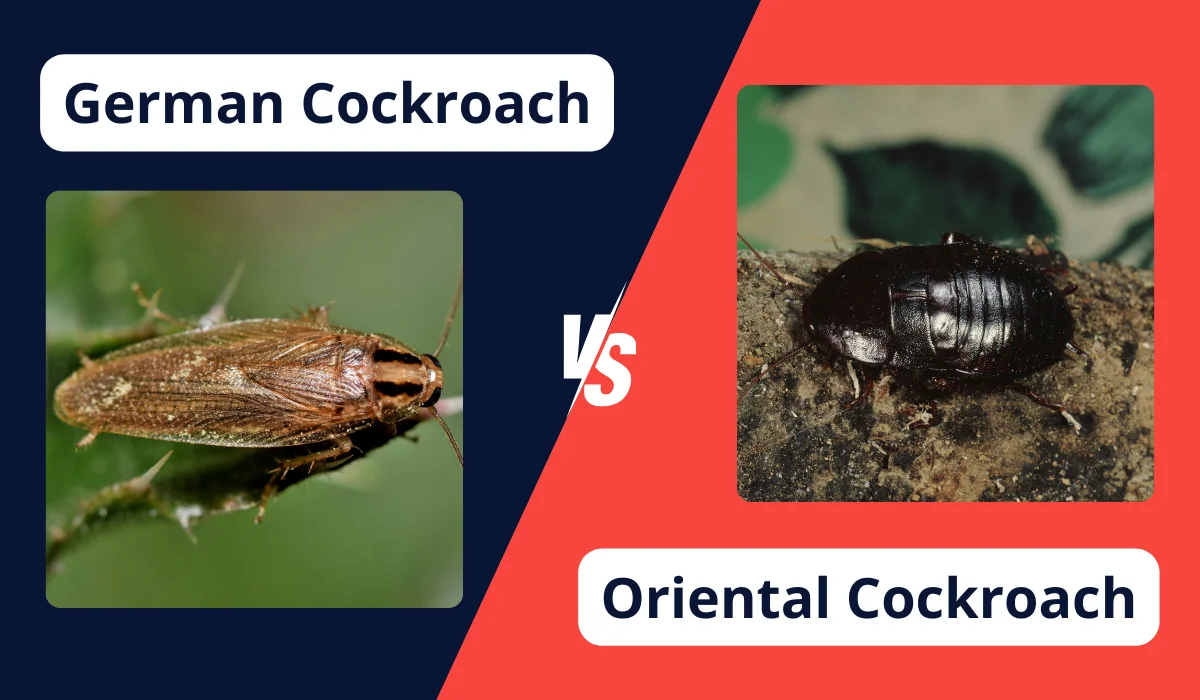
The fastest way to narrow down German vs. Oriental cockroaches is to compare their size, color, hiding places, and the part of the home where you found them. A small tan roach running behind the refrigerator points in a different direction than a dark, inch-long roach near a damp garage or floor drain.
| Feature | German Cockroach | Oriental Cockroach |
|---|---|---|
| Color | Light brown or tan | Dark brown to black |
| Size | About ½ to ⅝ inch | About 1 inch |
| Markings | Two dark stripes behind the head | Glossy, dark body without German roach stripes |
| Common Indoor Areas | Kitchens, pantries, cabinets, appliances | Garages, crawl spaces, drains, utility areas |
| Moisture Preference | Likes warmth and nearby food and water | Strongly associated with damp areas |
| Reproduction | Fast indoor reproduction | Slower reproduction than German roaches |
| Droppings | Small, dark specks that may resemble pepper | Larger dark droppings |
| Common Louisiana Clue | Small roaches repeatedly appearing around kitchen appliances | Dark roaches appearing near damp structural areas or plumbing |
Size and color are useful starting points, but location often provides the stronger clue. German roaches tend to stay close to reliable food, warmth, and water indoors. Oriental cockroaches are more closely associated with moisture around the structure and may move indoors from damp spaces.
The nickname “water bug” does not confirm an Oriental cockroach. Louisiana homeowners sometimes use that name for several large roach species, so body size, color, markings, and where the insect was found should all be considered.
How to Tell Which Cockroach You Have
Cockroach identification matters because South Louisiana has several roach species that can look similar at first glance. LaJaunie’s service information identifies German, Oriental, American, Australian, brown-banded, Louisiana woods, smokybrown, and Asian cockroaches among the species found in the region.
Where you see the roach can narrow down the possibilities. Check the kitchen, pantry, bathrooms, garage, utility areas, crawl space, drains, and the areas behind major appliances rather than relying on color alone.
German Cockroach Identification
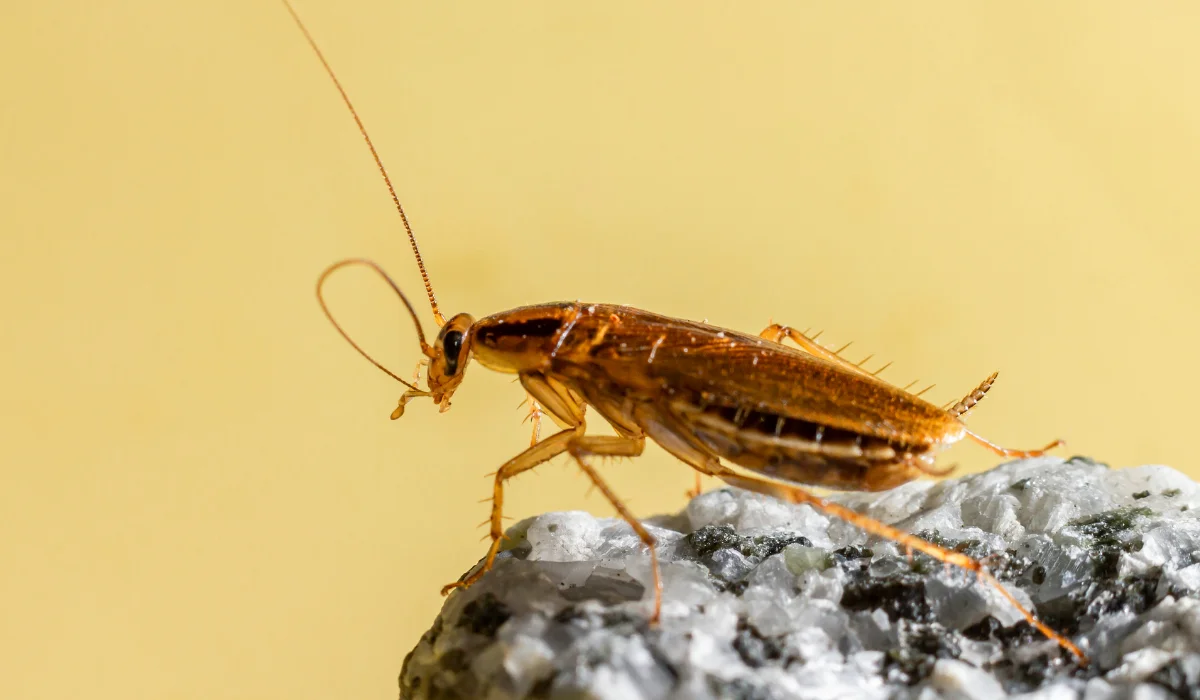
German cockroaches measure about ½ to ⅝ inch long and have light brown or tan bodies. Their most recognizable feature is the pair of dark parallel stripes on the section directly behind the head.
These roaches are strongly associated with indoor environments. Kitchens provide nearly everything they need, including warmth, crumbs, grease, water, and narrow hiding places behind appliances and cabinets.
Repeated sightings of small tan roaches around a refrigerator, dishwasher, stove, pantry, or kitchen cabinets deserve attention. German roaches reproduce quickly indoors, so a few visible roaches may represent more activity in nearby cracks and protected spaces.
For a closer look at this species, our guide on how to get rid of German cockroaches in Louisiana covers their behavior and why infestations often need follow-up service.
Oriental Cockroach Identification
Oriental cockroaches are much darker. Adults are generally dark brown to black and measure around one inch long.
They tend to favor cool, damp environments more than German roaches. Around Louisiana properties, that can put them near plumbing, floor drains, garages, crawl spaces, utility rooms, and other areas where moisture persists.
Finding a dark roach around a sink or drain does not automatically confirm the species, but the location gives an inspector useful context. Homeowners dealing with repeated drain activity can also review our guide on cockroaches in sinks and drains for practical moisture and access-point checks.
Other Louisiana Cockroaches Can Look Similar
German and Oriental cockroaches are not the only possibilities. Brown-banded cockroaches are small and light colored enough to be confused with German roaches, while several larger Louisiana species can be mistaken for Oriental cockroaches.
American cockroaches are especially common in the region. They are much larger than German roaches and generally have reddish-brown bodies. Our guide to the American cockroach in Louisiana explains the features that separate these larger roaches from smaller indoor species.
A clear photo or captured specimen can make identification easier. Sticky monitors can also show technicians which roaches are active and where they are traveling.
Where German and Oriental Cockroaches Hide in Louisiana Homes
Louisiana humidity, frequent rainfall, plumbing, and building design can influence where roaches find shelter. Raised homes may have crawl spaces where moisture collects beneath the structure, while slab homes can have plumbing penetrations, drains, utility openings, and gaps that give roaches routes indoors.
German roaches are less dependent on outdoor conditions because they can establish themselves inside a home. Oriental roaches are more strongly tied to damp environments, so drainage, leaks, and moisture around the structure often deserve closer attention when they are present.
Kitchens and Food Preparation Areas
German cockroaches commonly settle close to food and water. That puts the spaces behind refrigerators, dishwashers, ovens, cabinets, and pantry shelving high on the inspection list.
Grease beneath appliances, crumbs inside cabinets, pet food, spills, and small plumbing leaks can support activity. Their small size also allows them to hide in narrow cracks where homeowners rarely look.
Seeing German roaches during the day can be a sign that hiding areas are crowded or activity is widespread, although the time of day alone cannot tell you how large an infestation is.
Crawl Spaces and Raised Homes
Crawl spaces can hold moisture after periods of heavy rain or when plumbing leaks go unnoticed. Poor airflow and damp soil can add to the problem.
Oriental cockroaches may use these sheltered areas and move toward openings around pipes, doors, vents, or other gaps in the structure. Inspecting the moisture source matters just as much as finding the roach itself.
Raised homes in South Louisiana should also be checked for debris, cardboard, stored materials, or other clutter beneath the structure that makes inspection more difficult.
Slab Homes, Garages, and Utility Areas
Slab homes do not have crawl spaces, but they can still offer cockroaches routes around utility penetrations, door thresholds, plumbing, and drains.
Garages can be especially attractive when they contain cardboard, pet food, garbage, or plumbing fixtures. Gaps beneath garage doors can also allow outdoor roaches to move inside.
Sealing openings and keeping garage areas dry and uncluttered makes it easier to spot activity before roaches move farther into the home.
Why German and Oriental Cockroach Treatment Is Different
Correct identification changes the control plan. LaJaunie’s technicians do not treat every cockroach species as though it behaves the same way because German cockroaches have different reproduction and hiding patterns from larger roaches associated with outdoor or damp environments.
LaJaunie’s service guidelines specify that German roaches require a more thorough approach and an insect growth regulator to interrupt reproduction. The initial German roach service also includes a two-week follow-up, with another follow-up around the fourth week when the technician determines it is necessary.
German Cockroach Control Requires a Targeted Indoor Approach
German cockroaches spend much of their time inside cracks and protected areas close to food and water. Treatment needs to reach those areas without driving roaches away from carefully placed baits.
Bait placement and an insect growth regulator can play important roles in managing an indoor German roach population. The growth regulator interferes with reproduction, while follow-up visits give the technician a chance to assess activity and adjust treatment.
Homeowner preparation matters too. Cleaning food residue, reducing clutter, fixing leaks, and avoiding products that interfere with professional bait can make the treatment plan more effective.
Oriental Cockroach Control Focuses More on Moisture and Access
Oriental cockroaches have a stronger connection to damp structural and outdoor areas. That makes moisture correction and exclusion an important part of reducing conditions around the home.
LaJaunie’s cockroach prevention guidance recommends repairing leaking pipes and faucets, keeping gutters clear, sealing openings in exterior walls and foundations, covering vents and drains, and correcting gaps around garage doors.
Treatment may still be needed when Oriental roaches are active, but ignoring the damp area or access route can allow the same conditions to remain. A technician can inspect where activity is concentrated and determine what needs to be addressed around the structure.
What to Do When You Find German or Oriental Cockroaches
Finding one cockroach does not always tell you the size of the problem. Instead of immediately treating the spot where you saw it, note the roach’s size, color, location, and time of the sighting.
Then inspect nearby food, water, clutter, drains, appliances, and possible entry points. Those details can help determine whether you are dealing with an indoor German cockroach population or a larger roach moving through damp structural areas.
Remove Easy Food and Water Sources
Clean crumbs and grease from counters, cabinets, floors, and the areas beneath major kitchen appliances. Store pantry goods and pet food in closed containers, and do not leave dirty dishes sitting overnight.
Water matters just as much. Repair dripping faucets and leaking pipes, wipe up standing water, and check beneath sinks for damp cabinet material.
For Oriental roaches, also look beyond the kitchen. Check garages, utility rooms, crawl spaces, drains, and foundation areas for recurring moisture.
Use Sticky Monitors to Track Activity
Sticky monitors can help show where cockroaches are traveling and whether activity is concentrated in one area.
Place them along walls and near suspected hiding areas such as sinks, refrigerators, cabinets, garbage areas, and utility spaces. Avoid putting them in locations where children or pets can reach them.
Monitoring also gives a professional better information about what has been happening between sightings.
Check Droppings and Hiding Areas
Roach droppings can provide another clue. German cockroach droppings are small and may resemble pepper, while larger species can leave more noticeable dark waste.
If you are unsure what you found, our guide to what cockroach poop looks like compares common signs and where droppings tend to collect.
Homeowners also use the word “nest” for areas where many roaches gather, although cockroaches do not build nests like birds. Our guide on what a cockroach nest looks like explains what these concentrated hiding areas can look like.
Why DIY Cockroach Control Can Make Identification and Treatment Harder
Store-bought products can complicate a German cockroach problem when they cause roaches to scatter away from bait placements or move deeper into cracks. LaJaunie’s service notes specifically warn that heavy residual products can interfere with professional baits.
That does not mean every home maintenance step is a mistake. Cleaning, repairing leaks, reducing clutter, sealing openings, and monitoring activity can all support a control plan without disrupting the work a technician is doing.
Be Careful About Mixing DIY Products
Using several products at the same time can make it difficult to tell what is working. Some treatments may also interfere with bait-based German cockroach programs.
Homeowners considering powders often ask whether diatomaceous earth kills cockroaches. Placement and application matter, and more product does not automatically mean better control.
Families with pets should also think carefully about where any pest product is placed. Our guide to pet-safe cockroach treatments covers practical precautions for households with animals.
Do Not Treat Every Species the Same Way
A product used in the wrong location may do little to address the source of the problem.
German cockroaches hiding behind a refrigerator require a different strategy from Oriental roaches entering through a damp utility area. The treatment plan should account for the species, where it is living, and what is allowing it to remain there.
That is one reason proper identification should come before repeated DIY applications.
Signs You May Have More Than One Cockroach
An occasional large outdoor roach that enters through a door is different from repeated sightings of small German roaches inside kitchen cabinets. The pattern of activity matters.
Look for repeated sightings, droppings, egg cases, shed skins, unusual odor, and live roaches in more than one part of the home. These signs can point to established activity rather than a single insect that wandered indoors.
Repeated Small Roaches in the Kitchen
Seeing several small tan roaches around appliances or cabinets strongly favors an indoor species such as the German cockroach.
Nymphs are even smaller than adults, so seeing roaches of several sizes in the same area can indicate active reproduction nearby.
Because German roaches multiply quickly indoors, waiting for the population to disappear on its own can give them more time to spread into adjoining cabinets, rooms, or appliances.
Droppings and Egg Cases
Droppings behind appliances, inside cabinets, or along wall edges indicate areas where roaches are spending time.
Egg cases are another sign worth noting. German cockroaches can produce egg cases containing many young, which is one reason populations can build quickly under favorable indoor conditions.
Take note of where these signs appear instead of cleaning everything before an inspection. Knowing the exact location can help the technician target the areas where activity has been concentrated.
Health Concerns Around Roach Activity
Cockroaches can move through unsanitary areas and then across countertops, food storage spaces, and kitchen surfaces. Their droppings and shed material can also contribute to indoor allergens.
Some homeowners are also concerned about whether roaches bite. It is uncommon, but our guide on whether cockroaches bite people while they sleep explains when bites may occur and what other causes should be considered.
Regardless of species, keep food preparation surfaces clean and address established indoor activity rather than allowing the population to grow.
When to Call for Professional Cockroach Control
Professional help makes sense when you are seeing German roaches repeatedly, finding nymphs or egg cases, catching roaches in several monitors, or continuing to see activity after cleaning and moisture corrections.
It is also worth scheduling an inspection when you cannot confidently identify the species. The treatment that works for a German cockroach population in the kitchen may not address the conditions bringing Oriental cockroaches into a damp garage or crawl space.
LaJaunie’s technicians inspect the property for current and potential pest problems before treating. That can include interior areas, the exterior base of the home, windows, attic, garage, access points, cracks, and other locations connected to pest activity.
For an established infestation, LaJaunie’s cockroach control service can identify the roach and build the service around the species and conditions found.
Getting the Right Cockroach Identification in South Louisiana
German vs. Oriental cockroaches may look like two versions of the same household pest, but their behavior makes correct identification important. Small German roaches around kitchens and appliances point toward an indoor breeding problem, while larger Oriental roaches around drains, crawl spaces, garages, and damp structural areas call for closer attention to moisture and access.
LaJaunie’s Pest Control has served South Louisiana since 2008, and its technicians are trained to identify the cockroach species and the conditions supporting the activity. If roaches keep showing up or you are not sure what species you found, contact LaJaunie’s to have the problem inspected and determine the next step.
Cockroach Identification FAQs for Louisiana Homes
What Kind of Cockroach Do I Have in My Louisiana Home?
Start with size and color. Small tan roaches with two dark stripes behind the head are often German cockroaches. Dark brown or black roaches around one inch long may be Oriental cockroaches. Larger reddish-brown roaches could be American cockroaches, so location and markings should also be considered.
How Can I Tell a German Cockroach From an Oriental Cockroach?
German cockroaches are smaller, light brown or tan, and have two dark stripes behind the head. They commonly hide around kitchens and appliances. Oriental cockroaches are larger, dark brown to black, and favor damp areas such as crawl spaces, garages, drains, and plumbing areas.
Why Does Cockroach Species Matter for Treatment?
Different cockroaches behave and reproduce differently. German cockroaches require a targeted indoor approach that can include bait, an insect growth regulator, sanitation, and follow-up visits. Oriental cockroach control places greater emphasis on damp areas, leaks, drains, structural openings, and other conditions that allow roaches to enter or remain nearby.