

If you want to remove spider webs around your home, start with a vacuum or long-handled duster indoors and a web brush or broom outside. Removing the silk is the easy part. Keeping it from coming back means paying attention to where insects gather, how spiders are getting inside, and which sheltered areas give them a good place to build. Around South Louisiana homes, porches, eaves, window frames, garages, and outdoor lights can all become repeat webbing spots when insects stay active nearby.
Key Takeaways
- Use a vacuum or long-handled duster for indoor webs and a broom, web brush, or similar tool for exterior areas you can reach from the ground.
- Webs alone do not tell you that you have a dangerous spider or a large infestation. Fresh webbing, repeated spider sightings, and egg sacs provide more useful context.
- If webs return quickly, focus on reducing insect activity, sealing entry points, cleaning sheltered areas, and addressing recurring spiders rather than only knocking the webs down.
Why Spider Webs Keep Appearing Around Louisiana Homes
Spiders build webs where they have a reasonable chance of catching food. Porch lights, windows, garages, covered patios, and eaves often attract moths, flies, mosquitoes, and other small insects, which gives web-building spiders a reason to stay nearby.
South Louisiana’s long warm season gives insects and spiders plenty of time to stay active. A protected porch corner that catches flying insects can support repeated web-building even after you remove the old silk.
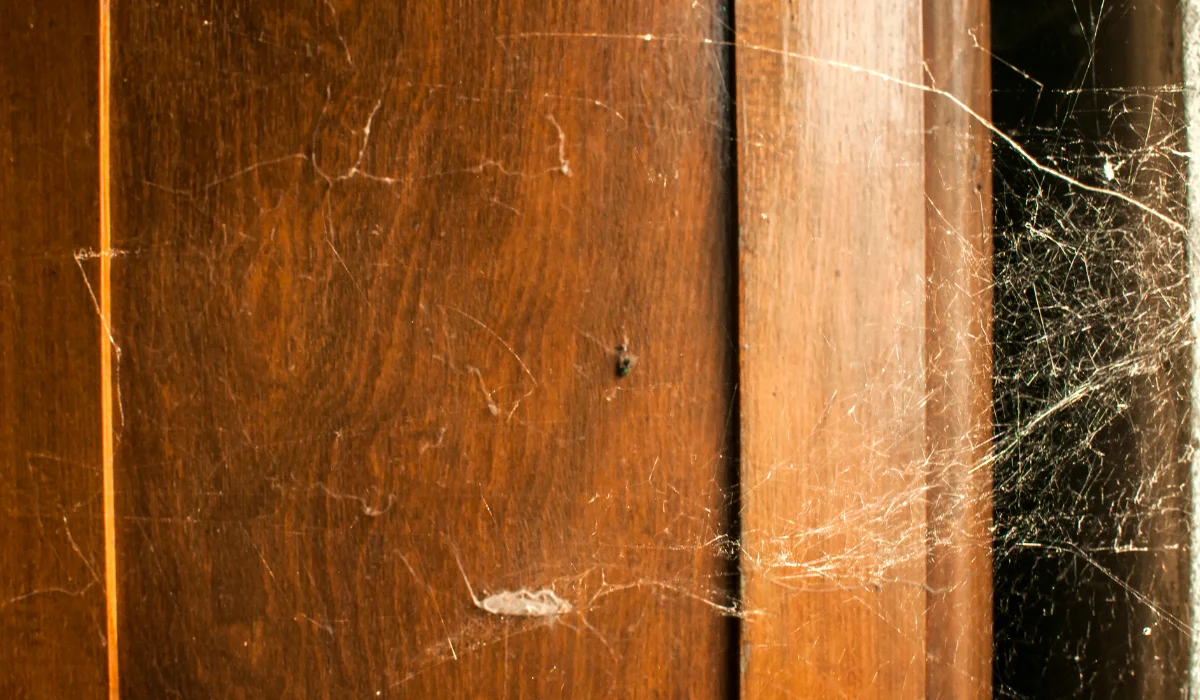
That does not mean every web points to an infestation. Some spiders abandon damaged or unproductive webs and build somewhere else, while older webs can remain attached long after the spider has left. Dusty cobwebs in a quiet corner may simply be old silk rather than evidence of current activity.
If fresh webs keep appearing in the same location, look at the conditions around that spot. Exterior lighting, gaps near windows, clutter, and high insect activity can all make an area attractive to spiders.
How to Remove Spider Webs Indoors
Removing indoor spider webs is usually straightforward when you can reach them without climbing or moving heavy furniture. The goal is to collect the web, trapped insects, and any visible egg sacs without spreading debris through the room.
A vacuum and an extendable duster handle most indoor situations. Which one works better depends on where the web is located and whether you are dealing with loose silk, dusty cobwebs, or an occupied web.
Use a Vacuum for Corners and Tight Spaces
A vacuum hose is useful around baseboards, window frames, closets, behind furniture, and other areas where loose webs collect. Move slowly enough to pick up the silk and any debris caught in it instead of brushing everything onto the floor.
Vacuuming also works well when you find a visible egg sac attached to a web. Afterward, empty the vacuum contents into a sealed trash bag outside so the collected material does not remain in the house.
Attics, storage rooms, and garages deserve extra attention because undisturbed boxes and stored belongings provide plenty of sheltered hiding places. Moving stored items away from walls and keeping those areas less cluttered can also make future cleaning easier.
Use a Long-Handled Duster for High Corners
An extendable web duster works well along ceilings, upper corners, ceiling fixtures, and other indoor areas that are difficult to reach with a vacuum hose. Rotate the duster as you move through the web so the silk wraps around the tool rather than falling onto furniture below.
Work from the highest areas downward, then vacuum or wipe the floor when you finish. This prevents you from cleaning the same area twice.
If the web is far beyond the reach of an extension tool, avoid balancing on furniture to get to it. The web itself is rarely worth creating a fall hazard.
How to Remove Spider Webs Outside
Outside, spider webs commonly collect under eaves, around porch ceilings, between railings, beside windows, and near exterior lights. A long-handled broom or web brush can remove most of them without putting much force on siding, screens, or trim.
Start by clearing visible webs, then wipe or brush away egg sacs and trapped insects that remain attached to the surface. Checking the area again several days later can show whether you removed an old abandoned web or whether a spider is actively rebuilding there.
Large outdoor webs are not automatically a sign that something is wrong with the home. Some outdoor web-building spiders create highly visible webs between trees, shrubs, porches, and other supports. Banana spiders in Louisiana are one example of a spider homeowners may notice because of the size of the spider and its web.
Be Careful With Pressure Washing
A pressure washer is more force than most spider webs require. Used too close to the house, high-pressure water can affect screens, painted surfaces, seals, siding, or gaps around exterior materials.
For routine web removal, a web brush, broom, or lower-pressure rinse is usually easier to control. If you already plan to wash an exterior surface, follow the manufacturer’s care instructions for the material rather than increasing pressure just to remove silk.
Second-story eaves present a different problem because reaching the web can require a ladder or awkward positioning. If you cannot reach the area safely from the ground with an extension tool, leave the high webbing alone rather than stretching from a ladder.
What Can a Spider Web Tell You About the Spider?
A web can give you clues about how a spider lives, but it does not always identify the species. Orb-shaped webs, tangled cobwebs, funnel-like retreats, and small irregular webs are built by different groups of spiders, and some common spiders do not rely on webs to catch prey at all.
That is why the spider itself is more useful for identification than the web alone. The common house spiders found in Louisiana vary in size, color, behavior, and where they tend to appear around a home.
Size can also make a harmless or low-risk spider seem more alarming than it is. The size and speed of a huntsman spider can get a homeowner’s attention quickly, but those traits alone are not enough to judge whether a spider poses a concern.
The opposite problem happens with very small spiders. Seeing a tiny black spider on a windowsill or wall does not provide enough information for a reliable identification because several spiders can look similar from a distance.
If identification matters, take a clear photo from a comfortable distance rather than relying only on web shape or body color. That provides more useful information without requiring you to handle the spider.
Do Spider Webs Mean You Have a Dangerous Spider?
No. Finding a spider web does not mean a brown recluse, black widow, or another medically significant spider is hiding nearby.
Brown recluse spiders are a good example of why web-based identification can be misleading. They make small, irregular silk retreats in secluded areas rather than the large, obvious capture webs people commonly notice across porches or windows. Several brown spiders found in Louisiana can also be mistaken for one another based on color alone.
Black widows can build irregular webs around quiet, protected areas such as sheds, garages, outdoor furniture, and other spaces with limited disturbance. If you see a spider you suspect is a widow or recluse, avoid handling it and focus on getting a clear identification.
The approved LaJaunie’s brown recluse guidance also notes that these spiders tend to favor quiet storage areas rather than exposed living spaces, which is another reason an ordinary porch web should not automatically be treated as evidence of a recluse.
What If You Find a Bite-Like Mark?
A skin mark does not tell you whether a spider caused it. Many bites, stings, skin irritations, and unrelated conditions can look similar, especially without seeing the insect or spider involved.
That is why spider bite pictures are better treated as comparison information rather than proof of what caused a mark. The appearance of a reaction alone is not enough to identify a spider species.
The same caution applies to suspected yellow sac spider bites. If you did not see the spider bite you, it can be difficult to connect a skin reaction to a specific species.
How a mark changes over time can also matter when deciding whether medical care is needed. Information about how long a suspected spider bite lasts can provide general context, but worsening pain, spreading redness, serious swelling, trouble breathing, or other concerning symptoms should be evaluated by a medical professional.
Do Natural Spider Repellents Keep Webs Away?
Peppermint oil, vinegar, citrus scents, and other home remedies are frequently recommended for spiders, but they should not be treated as dependable long-term spider control. Results can vary, and spraying a scented mixture does not remove the insects spiders are feeding on or close the places they use to enter a home.
Some scented products may cause a spider to avoid a recently treated surface for a period of time. That is different from preventing new spiders from entering the area or stopping webs from returning after the scent fades.
Homeowners also need to think about the surface being sprayed, along with children and pets that may contact it. Instead of repeatedly applying a homemade mixture, put most of your effort into web removal, reducing insect activity, sealing gaps, and cleaning sheltered areas.
If the same corner is covered in a new web a few days after cleaning, the conditions around that corner are more useful to investigate than the scent you sprayed there.
How to Keep Spider Webs From Coming Back
Long-term web reduction starts with making the area less useful to spiders. Removing the web clears what you can see, while prevention focuses on food, shelter, and access.
Reduce the Insects Spiders Are Feeding On
Spiders go where prey is available. Outdoor lights near doors, windows, and covered patios can attract flying insects, creating good hunting locations for spiders.
Consider whether every exterior light needs to stay on all night and keep doors and window screens in good condition. Reducing insect activity around these areas can make them less productive places for web-building spiders.
Seal Gaps Around the Home
Check weather stripping, window frames, door sweeps, screens, utility openings, and other small gaps that allow spiders or their prey to move inside. Seal practical openings when repairs are needed instead of depending on repeated web removal after spiders have already entered.
Garages often need attention because doors do not always seal tightly along the bottom and sides. Keeping stored items organized and off the floor also makes it easier to spot fresh webs before they accumulate.
Clean Repeat Webbing Areas Regularly
A porch corner that develops fresh webbing every week deserves more attention than a dusty web that has been hanging in an attic for months. Removing fresh silk as part of routine cleaning can help you identify which areas have current spider activity.
Pay attention to egg sacs at the same time. An egg sac attached behind outdoor furniture, beneath an overhang, or inside a storage area tells you more about active spider use than an old strand of silk by itself.
When Recurring Spider Webs Need Professional Attention
Recurring webs become more useful as a pest-control clue when they return quickly, appear throughout several parts of the property, or accompany frequent spider and insect activity. A professional inspection can look beyond the silk and identify the conditions supporting the problem.
LaJaunie’s standard pest-control process includes checking exterior walkways, windows, the exterior base of the home, and, when appropriate, areas such as attics and garages. Technicians also de-web first- and second-story areas up to 25 feet as part of the documented service process.
That broader inspection matters because repeatedly knocking down a porch web will not address insects gathering around the same area, gaps around the home, or spiders sheltering nearby. The goal is to understand why the activity keeps returning instead of treating every strand of silk as a separate problem.
If spider activity continues despite regular cleaning and basic prevention, LaJaunie’s spider control service can address the spiders as well as the conditions around the home that are contributing to repeat activity.
Keeping Spider Webs Under Control Around Your Louisiana Home
Removing spider webs around your Louisiana home does not require an aggressive cleaning method. A vacuum, web duster, or long-handled brush can handle most reachable webs, while regular cleaning helps you distinguish old cobwebs from areas where spiders are actively rebuilding.
If the webs keep returning, look beyond the silk. Reducing insects around lights and windows, sealing practical entry points, cleaning storage areas, and monitoring fresh webbing will do more for long-term control than repeatedly spraying a home remedy on the same corner.
When webbing is widespread, high off the ground, or accompanied by frequent spider activity, professional spider control can help identify what is drawing spiders to the property and address areas that are difficult to reach safely.
FAQs About Removing Spider Webs
What Is the Easiest Way to Remove Spider Webs Indoors?
A vacuum hose or long-handled web duster works well for most indoor spider webs. Use the vacuum around baseboards, closets, and behind furniture, while an extension duster can reach ceiling corners. If you collect an egg sac, empty the vacuum contents into a sealed outdoor trash bag afterward.
Why Do Spider Webs Keep Coming Back After I Remove Them?
Fresh webs usually return because the location still provides spiders with food, shelter, or both. Areas near exterior lights, windows, garages, and covered porches can attract insects that spiders hunt. Removing the web helps temporarily, but reducing insects and correcting entry points addresses the reason spiders keep choosing the area.
Does Removing a Spider Web Get Rid of the Spider?
Not necessarily. The spider may still be hiding nearby, may have abandoned the web already, or may build a new web in the same area. After removing the silk, watch for fresh webbing and spider activity. Repeated rebuilding is a stronger sign of current activity than an old dusty cobweb.