

No, paper wasps do not normally reuse an old nest, but new queens may build in the same spot or nearby the following season. In South Louisiana, LaJaunie’s technicians see repeat activity around the same eaves, porch corners, and other sheltered areas because those locations continue to offer protection from rain and disturbance. If the conditions stay favorable, another queen may choose the same part of the home even though last year’s colony is gone.
Key Takeaways
- Paper wasps abandon old nests after the colony declines, so a nest from last season is not usually reused.
- New queens may choose the same eave, porch corner, shutter, or overhang because the location still provides good shelter.
- In South Louisiana, checking familiar nesting areas in early spring can help you spot new nests before colonies grow larger.
Do Paper Wasps Return to the Same Nest?
Paper wasps do not normally move back into an old paper nest and restart the colony there. Once the seasonal colony declines, the old comb is left behind and gradually becomes brittle and weathered.
What often returns is the activity, not the colony. A new queen may select the same porch corner, eave, shed, or overhang because the physical conditions that made it useful last year have not changed.
That distinction explains why homeowners sometimes feel like the same wasps return every spring. A new nest several inches or a few feet from last year’s nest can make it look like the old colony came back when a different queen has simply chosen the same sheltered part of the house.
Why Paper Wasps Keep Returning to the Same Spot
The simplest explanation is shelter. Paper wasps commonly choose locations that protect their open-comb nests from rain, wind, and frequent disturbance.
Around Louisiana homes, that can include eaves, porch ceilings, roof overhangs, garage rafters, shutters, sheds, and other covered exterior surfaces. If one of those locations remains protected from season to season, another queen may select it the next year.
Food also affects where a colony can thrive. Adult paper wasps visit flowers for nectar, while workers hunt other insects to feed developing larvae. A sheltered nest near gardens, shrubs, trees, and other insect activity can put those resources close by.
The same pattern explains why paper wasps can keep returning to certain areas around a home even after an old nest has been removed. Changing the conditions around the nesting site matters more than simply taking down the abandoned comb.
Where Paper Wasps Build Nests Around Louisiana Homes
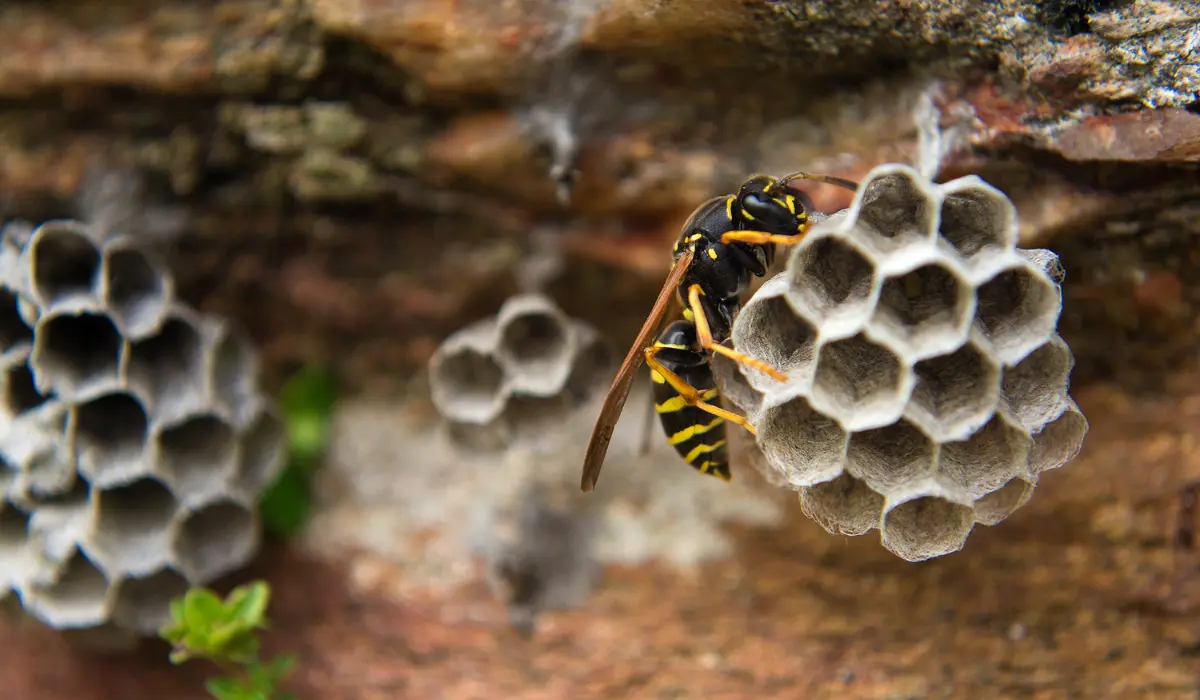
Paper wasp nests are usually open, umbrella-shaped combs with visible cells. They are often attached to a surface by a narrow stalk rather than enclosed inside a large outer shell.
Around homes in Houma, Thibodaux, New Orleans, Baton Rouge, and nearby South Louisiana communities, common nesting areas include eaves, covered porches, shutters, exterior fixtures, sheds, and garage areas.
Some homeowners confuse different mud or paper nests around the exterior. The difference between mud daubers and paper wasps is especially useful when the nest itself is easier to see than the insect that built it.
Paper wasps may also build in more concealed structural areas. A wasp nest in a soffit can be harder to see because the insects may disappear through a gap rather than land on an exposed comb.
Paper Wasp Species Found in Louisiana
Louisiana is home to several paper wasps in the genus Polistes. Polistes exclamans, often called the Guinea paper wasp, is one species found in the Gulf South. Red paper wasps such as Polistes carolina are also familiar around homes and vegetation in the Southeast.
These wasps share the basic paper-wasp habit of building exposed comb nests from chewed plant fibers. Their nests may look similar even when the adults differ in color.
Species identification can still matter because homeowners often use the word “wasp” for paper wasps, yellowjackets, hornets, mud daubers, and other insects with different nesting behavior.
Louisiana-specific information from the LSU AgCenter provides local context for the wasps and other stinging insects homeowners may encounter in the state.
Louisiana Paper Wasp Seasonal Calendar
Paper wasp timing in South Louisiana can shift with temperature and weather. A warm late winter can bring activity earlier than a cooler spring, so the calendar below is a practical seasonal pattern rather than a fixed schedule.
| Time of Year | What Homeowners May Notice |
|---|---|
| January to February | Overwintering queens remain sheltered much of the time but may become active during warm spells |
| March to April | Queens emerge more consistently, scout protected sites, and begin small new nests |
| May to June | The first workers appear and colonies begin expanding |
| July to September | Established colonies are easier to notice, with regular traffic around active nests |
| October to November | Colonies begin declining as new reproductive wasps leave and cooler weather arrives |
| December | Old nests are typically inactive, while surviving queens shelter separately |
For homeowners in Houma, Thibodaux, and the New Orleans area, March and April are useful months to check eaves, porch ceilings, shutters, sheds, and other protected areas. The start of a wasp nest can be small enough to miss during a quick walk around the house.
By summer, a nest that began with one queen can have regular worker traffic around it. At that point, the location and level of activity matter more when deciding whether to approach the area.
What Happens to Paper Wasp Nests Over Winter?
As the season winds down, the paper wasp colony declines. Workers and the original founding queen do not continue maintaining the nest indefinitely.
New reproductive females leave the colony, mate, and seek protected places to spend the cooler period. They do not remain inside the old paper nest waiting for spring.
That seasonal cycle also explains why the lifespan of a wasp depends heavily on its role in the colony. Workers generally have a much shorter life than reproductive females that survive long enough to begin another colony.
The abandoned nest can remain attached to the structure for months after the colony is gone. Louisiana’s mild winters may make the change less obvious than in colder states, but the old nest does not simply restart when temperatures rise.
How to Tell if an Old Paper Wasp Nest Is Active
Do not judge activity from the appearance of the nest alone. A dry-looking nest can still have wasps nearby, especially during a seasonal transition.
Watch from a safe distance for repeated flights to and from the comb. An active paper wasp nest usually has visible adults landing on the nest, tending cells, or returning to the same location.
The absence of daytime traffic also does not always tell the entire story. Wasp activity changes with light, temperature, and time of day, and wasps can become less active at night, which is why a nest may look quiet at one time and active later.
If you are uncertain, observe the area from a distance at different times rather than moving closer to inspect the nest.
Are Paper Wasps Aggressive?
Paper wasps are generally less defensive away from the nest than yellowjackets, but they can sting when the colony is disturbed.
The chance of a defensive response increases when someone bumps the nest, reaches into the area around it, knocks it down, or blocks the wasps’ normal flight path. Paper wasps can sting more than once.
Nest location matters as much as nest size. A colony under an unused shed overhang presents a different situation from one beside the front door or directly above a patio table.
A skin reaction alone also does not reliably identify what caused it. Yellow sac spider bites and other suspected bites can resemble unrelated skin irritation, so seeing the insect provides much stronger identification than judging the mark alone.
What Should You Do With an Old Paper Wasp Nest?
If a nest is clearly inactive and easy to reach from the ground, removing the abandoned comb can clean up the area and make future inspections easier.
Do not assume removing the old nest alone will prevent another queen from using the same location. If the overhang remains protected and undisturbed, a new nest can still appear nearby.
After removing an inactive nest, check the surrounding area for damaged screens, unused openings, sheltered corners, or other features you can correct. Then watch the same area during early spring when queens begin scouting.
If you cannot confirm that the nest is inactive, or reaching it requires a ladder or puts you directly beside wasp traffic, leave it alone. LaJaunie’s wasp control service can address active nests and wasp activity in difficult-to-reach areas.
How to Prevent Paper Wasps From Returning to the Same Area
Preventing repeat nesting starts with the location rather than the old nest. If paper wasps keep choosing one side of the house, look for the shelter or access that makes that area appealing.
Check Eaves and Overhangs in Early Spring
Inspect the places where nests appeared in previous years before colonies have time to grow. Small starter nests are easier to spot when a queen is just beginning construction.
Pay particular attention to porch ceilings, eaves, shutters, sheds, and garage areas. These sheltered surfaces can remain attractive year after year.
Close Unused Openings
Repair damaged screens and close practical gaps that allow wasps into wall voids, attics, soffits, or other concealed areas.
Do not seal an opening that wasps are actively using. If insects repeatedly disappear into the same gap, the activity should be addressed before the opening is closed.
Reduce Nearby Food and Water
Keep outdoor trash covered, clean food spills after meals, and avoid leaving pet food outside for long periods.
Standing water can also keep insects active around the yard. Fix leaking fixtures and empty containers that repeatedly collect rainwater.
Watch Familiar Nesting Sites
If paper wasps used the same eave last year, make that area part of a short spring inspection routine.
A nest that is easy to miss early in the season may become much more noticeable once worker activity increases. Keeping an eye on familiar nesting locations is one of the simplest ways to keep paper wasps away from frequently used areas before a larger colony develops.
When a Recurring Wasp Nest Needs Professional Attention
A new paper wasp nest does not automatically require professional removal. Location, access, colony activity, and the people using the area all matter.
A nest next to a frequently used doorway, above a porch, high under the roofline, or in a place where children or pets regularly pass deserves more caution. The same is true when anyone in the household has a serious allergy to stings.
LaJaunie’s technicians commonly handle wasp issues around foliage and exterior areas near South Louisiana homes and can treat eaves up to 25 feet when needed. Professional service makes more sense when reaching the nest would put you close to active wasps or require working from a ladder.
For nests around Houma, Thibodaux, New Orleans, Baton Rouge, Metairie, and other South Louisiana communities, professional wasp control can address the active nest and the surrounding area.
Keeping Paper Wasps From Reappearing Around Your Louisiana Home
Paper wasps do not normally move back into an abandoned nest, but that does not mean they will avoid the same part of your home. A dry, sheltered eave or porch corner can remain attractive to new queens season after season.
The best time to get ahead of repeat nesting is early spring. Check previous nest locations, repair practical openings, reduce nearby food and water, and watch for queens beginning small new combs.
If a nest is active, difficult to reach, or located beside an area your family uses every day, contact LaJaunie’s Pest Control for help identifying the wasp and determining the appropriate next step.
FAQs About Paper Wasps Returning to the Same Nest
Do Wasps Come Back to the Same Spot Every Year?
They can. Paper wasps usually do not reuse the old nest itself, but a new queen may build another nest in the same eave, porch corner, or overhang. If the location still provides shelter from rain and disturbance, it can remain attractive from one season to the next.
Do Paper Wasps Reuse Old Nests?
Paper wasps generally abandon old nests after the seasonal colony declines. The surviving new queens spend the cooler period somewhere else and build new nests when conditions warm. An old nest may stay attached to the house, but that does not mean the previous colony is living inside it.
Why Do Paper Wasps Keep Building Nests in the Same Place?
The location may offer exactly what a new queen needs: overhead cover, protection from rain, limited disturbance, and access to nearby food sources. Removing an old nest does not change those conditions, so another queen can select the same sheltered area the following spring.