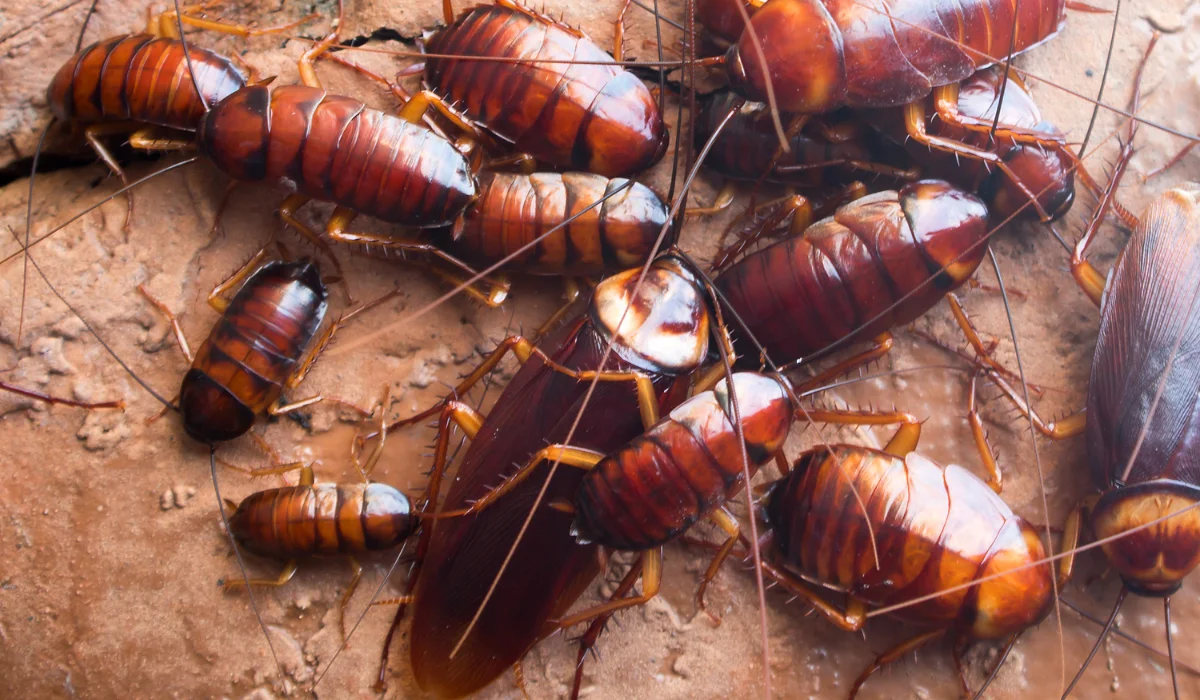




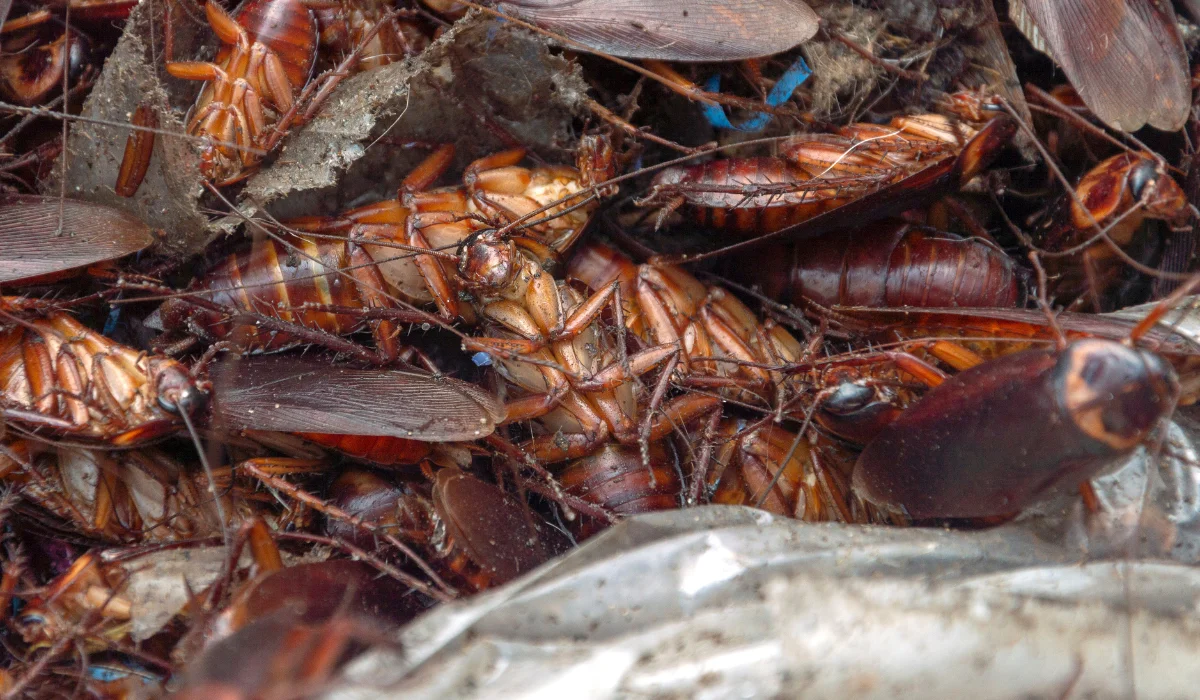
If you move a refrigerator and find dark droppings, shed skins, egg cases, and several roaches packed into the same tight space, you may have found what homeowners commonly call a cockroach nest. So, what does a cockroach nest look like? It is usually a hidden gathering area surrounded by several signs of repeated cockroach activity rather than a constructed nest like you would see from birds or wasps.
In South Louisiana, warm temperatures and persistent humidity give roaches plenty of places to find moisture and shelter. LaJaunie’s technicians encounter several local species, including American cockroaches, often called palmetto bugs, and German cockroaches, which commonly become established indoors. Knowing what a cockroach nest looks like and where to search can help you recognize the problem before activity spreads into more rooms.
Key Takeaways
- A cockroach nest is a hiding and gathering area marked by droppings, egg cases, shed skins, dead roaches, smears, and repeated activity.
- Common hiding areas include behind appliances, under sinks, inside cabinets, near plumbing, and in other dark spaces close to food and moisture.
- German and American cockroaches behave differently, so identifying the species and locating activity helps guide the right control approach.
What Does a Cockroach Nest Actually Look Like?
A cockroach nest does not have a defined structure. Roaches gather in protected cracks, voids, cabinets, appliance spaces, and other locations that give them quick access to food, water, and shelter. The word “nest” usually describes an area where several roaches and signs of their activity have accumulated.
You may not see every sign at once. A newer hiding area might contain only droppings and a few live roaches, while a long-established site may contain egg cases, shed skins, dead insects, staining, and a noticeable odor. The more evidence concentrated in one small location, the more likely you are looking at a primary hiding area rather than a place one roach passed through.
Roach Droppings
Cockroach droppings are one of the easiest signs to spot around an active hiding area. Smaller species such as German cockroaches can leave dark specks that resemble black pepper or coffee grounds.
You may find droppings:
- In cabinet corners
- Along drawer tracks
- Beneath sinks
- Behind refrigerators and stoves
- Around appliance motors
- Along baseboards and wall edges
Repeated droppings in the same location are more useful than a single isolated speck. When they appear alongside egg cases, shed skins, or live roaches, they provide stronger evidence that you are close to an established hiding area.
Egg Cases
Cockroach egg cases are called oothecae. Their color, size, and shape vary by species, but they generally look like small brown or tan capsules with ridges or seams along the surface.
Finding an egg case near droppings or live roaches can point to active reproduction nearby. German cockroaches are especially important to identify because they have a different reproductive pattern and require a more thorough control approach than many of the larger outdoor species LaJaunie’s treats in South Louisiana.
The appearance and placement of cockroach eggs and egg cases can also vary by species, which is another reason an egg case should be considered alongside the other evidence in the area.
Shed Skins and Dead Cockroaches
Young cockroaches shed their outer covering several times as they grow. These light, papery skins can collect in protected areas where roaches spend a lot of time.
You may find shed skins mixed with droppings, empty egg cases, dead roaches, or pieces of legs and antennae. A cluster of these materials suggests the location has been used for more than a brief visit.
One dead cockroach does not automatically mean you found the main hiding area. Several dead roaches and shed skins concentrated behind an appliance or inside a cabinet provide stronger evidence that you are close to an established harborage.
Dark Smears and Greasy Marks
Cockroach activity can leave dark or greasy-looking marks along surfaces they repeatedly contact. These marks may show up along walls, cabinet corners, door frames, appliance edges, or narrow cracks.
Roaches also use scent cues to communicate and gather in favorable hiding areas. When the same route leads toward moisture, food, and shelter, activity can become concentrated in a small section of the home.
Smears by themselves can be difficult to identify because ordinary kitchen grime can look similar. Look for them alongside droppings, roaches, egg cases, or other signs rather than relying on one stain to confirm an infestation.
Where Do Cockroaches Nest in Your House?
Where cockroaches gather depends on the species, but most indoor hiding areas share several traits. They are dark, protected, close to food or moisture, and rarely disturbed.
LaJaunie’s technicians inspect inside homes for current and potential pest problems, along with areas such as garages, exterior access points, cracks, doors, windows, and other locations that can support activity. Inside a kitchen or bathroom, the search becomes more focused around appliances, plumbing, cabinets, and moisture sources.
Behind Refrigerators and Kitchen Appliances
The space behind a refrigerator is one of the first places to inspect when you suspect an indoor roach problem. It stays dark, receives little disturbance, and can provide warmth from appliance motors.
Crumbs, grease, condensation, and nearby plumbing can make the area even more attractive. Stoves, dishwashers, microwaves, and other large appliances can create similar hiding opportunities.
LaJaunie’s service guidance recommends pulling out and cleaning behind large kitchen appliances as part of cockroach prevention. If you find concentrated droppings, egg cases, and live roaches in one of these areas, you may be close to a major hiding site.
Under Sinks and Around Plumbing
Cabinets beneath kitchen and bathroom sinks provide the darkness and moisture roaches seek. Even a small leak around a pipe or faucet can keep the area damp enough to support activity.
Inspect the corners of the cabinet, gaps where pipes pass through the wall, and the underside of the sink. Look for droppings, smears, egg cases, or live roaches disappearing into openings.
Fixing leaks matters because removing a dependable water source makes the area less favorable. LaJaunie’s prevention guidance specifically recommends repairing leaking pipes, faucets, and hoses to reduce conditions that support cockroaches.
Cabinets, Pantries, and Food Storage Areas
Cockroaches do not need much food to remain active. Crumbs, grease, open packages, pet food, and residue around pantry shelves can support them.
Check back corners, shelf supports, drawer tracks, cardboard packaging, and narrow gaps between cabinets and walls. German cockroaches in particular can hide in extremely tight indoor spaces.
Store food securely, clean spills, and avoid leaving food on countertops overnight. These sanitation steps will not remove an established infestation by themselves, but they reduce competing food sources and make the home less supportive of continued activity.
Cardboard Boxes and Stored Clutter
Cardboard boxes provide narrow seams and folds where cockroaches can hide without much disturbance. Boxes stored near food, moisture, garages, or utility areas deserve extra attention.
If you bring deliveries or stored boxes indoors, inspect them before placing them in a pantry, kitchen, or closet. German cockroaches can be transported between locations in boxes, bags, appliances, and other belongings.
Reducing unnecessary cardboard and clutter also gives you fewer places to search during an inspection. It becomes easier to see droppings, egg cases, or live roaches when shelves and storage spaces are not packed tightly.
Wall Voids, Cracks, and Hidden Gaps
Sometimes the visible signs lead toward an area you cannot easily reach. Roaches can hide in cracks around cabinets, gaps near plumbing, wall voids, and spaces behind trim.
You may see them disappear into the same opening repeatedly after turning on a light. Droppings or staining around that opening can provide another clue that the area is being used regularly.
In New Orleans homes, cockroach hiding places can include wall gaps, appliance spaces, plumbing areas, cabinets, and other sheltered locations where heat and moisture remain steady.
Other Signs a Cockroach Nest Is Nearby
You may know a cockroach hiding area is nearby before you actually see it. Odor, young roaches, and repeated nighttime sightings can all point toward a larger population tucked away out of view.
These signs matter most when they appear together. One roach near an open door may be an occasional invader, while recurring nymphs, droppings, and odor in the same kitchen cabinet suggest established indoor activity.
A Musty or Oily Odor
Large cockroach populations can produce a noticeable musty or oily odor. The smell may come from a combination of droppings, shed material, dead roaches, food residue, and scent cues left by the insects.
You may notice the odor most strongly when opening a cabinet or moving an appliance that has not been disturbed in a while. Small enclosed spaces can concentrate the smell.
An odor alone is not enough to confirm a roach infestation, so look for physical evidence as well. Droppings, egg cases, skins, and live activity provide a much clearer picture.
Nymphs in Kitchens or Bathrooms
Nymphs are immature cockroaches. Seeing several young roaches indoors can be a strong sign that reproduction is occurring nearby.
German cockroach nymphs often remain close to protected indoor areas with reliable food and moisture. If you repeatedly see small roaches around a refrigerator, dishwasher, sink, or cabinet, check those areas closely.
This is one reason species identification matters. LaJaunie’s service notes explain that German roaches require a more thorough approach than larger species such as American, Australian, and brown-banded cockroaches.
Roaches Appearing During the Day
Cockroaches are generally more active when the home is quiet and dark. Seeing roaches during the day does not automatically tell you how large the infestation is, but repeated daytime activity deserves attention.
A roach may be disturbed from a hiding place when you move an appliance, open a cabinet, or clean a cluttered area. You may also see one traveling between nearby food, water, and shelter.
Track where the roach goes rather than only focusing on where you first noticed it. The direction it runs can lead you toward a crack, appliance gap, cabinet void, or other hiding area worth inspecting.
Which Cockroaches Commonly Infest South Louisiana Homes?
South Louisiana supports several cockroach species. LaJaunie’s service materials identify American, German, Australian, brown-banded, Louisiana woods, smokybrown, Asian, and Oriental cockroaches in the region.
Two of the most familiar to homeowners are American cockroaches and German cockroaches, but they do not behave the same way. Knowing which one you have can help explain where the activity is coming from and why one treatment strategy may work better than another.
German Cockroaches
German cockroaches are small, usually about 1/2 to 5/8 inch long, with light brown or tan bodies and two dark stripes behind the head.
They are strongly associated with indoor environments and can become established around kitchens, food storage areas, appliances, cabinets, and other protected locations. Droppings, nymphs, egg cases, and repeated sightings are all common signs of a German cockroach infestation.
LaJaunie’s service protocol treats German cockroaches differently because controlling their reproduction is an important part of the process. Sanitation, reducing food and water, and avoiding actions that interfere with bait placement all contribute to the treatment plan.
American Cockroaches
American cockroaches are among the largest roaches Louisiana homeowners commonly encounter. Their size, outdoor habits, and preference for warm, damp environments are part of why the American cockroach is one of Louisiana’s biggest roach problems.
These larger roaches can enter homes from outdoor areas, drains, garages, utility spaces, and other access points. In Louisiana, homeowners also commonly use the term palmetto bug for large cockroaches, although what Louisiana homeowners call a palmetto bug can refer to more than one type of large roach.
Finding one large roach does not always mean you have the same type of indoor infestation associated with German cockroaches. Still, repeated activity deserves investigation because moisture, structural gaps, debris, and outdoor conditions can keep bringing larger roaches close to living spaces.
Can Cockroaches Bite People?
Cockroaches are much more likely to avoid people than approach them for a bite. When homeowners wake up with unexplained skin irritation and also know roaches are present, however, it is understandable to wonder whether the two are connected.
Although it is uncommon, cockroaches can bite people while they sleep under certain conditions. A bite-like mark by itself does not confirm that a cockroach caused it, so evidence of the pest inside the home still matters.
Other household pests can leave marks that look similar. Even yellow sac spider bites can be difficult to identify from skin appearance alone, which is why pest identification should rely on physical evidence whenever possible.
What LaJaunie’s Technicians Look for During a Cockroach Inspection
Finding a cockroach nest requires more than seeing one roach and placing a product nearby. LaJaunie’s service process includes checking interior and exterior areas for both current pest activity and conditions that can support future problems.
Around the home, technicians inspect areas such as windows, the exterior foundation, garages, attics when appropriate, access points, cracks, doors, and other problem areas. For an indoor cockroach problem, the evidence inside helps determine which areas need the most attention.
Evidence of Repeated Activity
Technicians look for concentrated signs rather than relying on one isolated roach. Droppings, egg cases, live adults, nymphs, shed skins, and repeated sightings can help narrow down where the population is spending time.
The type of cockroach also matters. LaJaunie’s notes identify German cockroaches as a species that requires a more thorough treatment plan than several of the larger roaches commonly found in South Louisiana.
That species-specific approach helps explain why accurate identification is part of effective service. What works for an occasional outdoor roach entering the house is not necessarily the right approach for an established German cockroach population behind kitchen appliances.
Food and Water Sources
LaJaunie’s cockroach prevention guidance puts strong emphasis on sanitation. Technicians may notice open food, crumbs behind appliances, garbage, pet food, dirty dishes, grease buildup, or other resources that make an area easier for cockroaches to use.
Water receives the same attention. Leaking pipes, faucets, hoses, standing moisture, and poor drainage around the home can all contribute to conditions that support roaches.
Correcting those issues does not replace treatment when an infestation is established. It removes resources the population depends on and supports the work being done in the hiding areas.
DIY Products That Can Interfere With Treatment
One mistake LaJaunie’s service team sees is repeated use of store-bought sprays or heavy residual products before professional service. The company’s service notes warn that these products can counteract the treatment plan and make bait less effective.
Powders are another common DIY approach. Diatomaceous earth can kill cockroaches through direct contact, but placement and environmental conditions affect how useful it is, and it does not replace identifying the source of an established infestation.
Using more products is not always better. If you plan to schedule professional service, tell the technician what you have already used and where you applied it so the existing treatment can be taken into account.
What to Do if You Find a Cockroach Nest
If you find what appears to be a cockroach nest, focus first on documenting where the activity is concentrated. Note whether you are seeing adults, nymphs, droppings, egg cases, or recurring activity in the same area.
Then address the conditions you can safely correct, including food debris, standing moisture, leaks, and unnecessary clutter. Avoid scattering roaches through the home by aggressively disturbing every hiding space at once.
Clean Food and Grease From the Area
Remove exposed food and clean crumbs, grease, and residue from nearby surfaces. Pull out appliances when you can do so safely and clean underneath and behind them.
LaJaunie’s service guidance recommends washing dishes daily, vacuuming floors, keeping food off counters, cleaning behind large appliances, and removing household garbage regularly.
These steps make the environment less supportive of cockroaches while giving you a clearer view of new droppings or activity after cleanup.
Fix Water Sources
Repair dripping faucets, leaking plumbing, and other persistent moisture sources. Check under sinks and around appliances that use water.
Outside the home, keep gutters and downspouts clear so water is less likely to collect around the foundation. Moisture control is especially useful in South Louisiana, where humid conditions already give roaches more opportunities to find damp shelter.
Once the area is dry, it also becomes easier to tell whether new water is coming from a leak that still needs repair.
Seal Obvious Openings
Check cracks near plumbing, gaps around baseboards, exterior openings, vent areas, and spaces around doors. Sealing obvious access points can limit how easily roaches move between areas.
Make sure garage door seals fit properly and cover appropriate vents or drains where needed. Exterior gaps around the foundation also deserve attention when larger species are entering from outdoors.
Sealing should support an overall control plan rather than make you think the problem is solved. Roaches already established inside still need to be addressed.
Avoid Repeated Store-Bought Spraying
Repeated spraying can make professional bait-based work harder. LaJaunie’s service notes identify overuse of store-bought sprays and heavy residual products as a common mistake because they can interfere with bait effectiveness.
If you have already used several products, do not try to compensate by adding more. Keep a record of what you used and where.
When a technician arrives, share that information. It gives the service team a better understanding of what has happened in the area and how to approach the infestation.
When to Call LaJaunie’s for Cockroach Control
Professional service makes sense when you continue seeing cockroaches after cleaning, find nymphs or egg cases, notice activity in several rooms, or cannot locate the main hiding areas. German cockroach problems are especially worth addressing with a structured plan because they require a different approach from many of the larger species found around Louisiana homes.
LaJaunie’s cockroach control service starts with identifying the problem and determining where activity is concentrated. German cockroach service uses a more thorough treatment process focused on the way the species reproduces and hides, while other species may call for a different approach based on where they are entering and living.
Making the Right Cockroach Control Choice for Your Louisiana Home
Knowing what a cockroach nest looks like gives you a better starting point when activity appears around your kitchen, bathroom, garage, or another part of the home. Droppings, egg cases, shed skins, nymphs, dead roaches, and repeated activity in the same protected space all point toward a hiding area that deserves attention.
South Louisiana homes can encounter several cockroach species, so identification matters as much as finding the hiding spot. LaJaunie’s Pest Control has served Louisiana homeowners since 2008, and its technicians are trained and certified by the Louisiana Department of Agriculture. If cockroaches keep returning or you find evidence of an established infestation, you can contact LaJaunie’s Pest Control to have the problem evaluated.
Frequently Asked Question
Where Do Cockroaches Nest in Your House?
Cockroaches gather in dark, protected areas near food and water. Common locations include behind refrigerators and stoves, beneath sinks, inside cabinets, around plumbing, in wall gaps, and within clutter or cardboard. Concentrated droppings, egg cases, shed skins, and repeated sightings can help identify the main hiding area.
How Do You Destroy a Cockroach Nest?
Start by identifying where cockroaches are gathering, cleaning food residue, fixing moisture sources, and reducing clutter. Avoid repeatedly spraying the area because some store-bought products can interfere with bait-based treatment. Established infestations, especially German cockroaches, often require a species-specific professional control plan and follow-up.
Does Seeing Baby Cockroaches Mean There Is a Nest Nearby?
Seeing several cockroach nymphs indoors can indicate that reproduction is occurring nearby. Young German cockroaches often remain close to protected areas with food, water, and shelter. Check behind appliances, inside cabinets, around sinks, and near cracks for droppings, egg cases, shed skins, or additional roach activity.